




Panel Upgrades vs Meter Collar Options for Older Homes

Older Home, New Energy with US Power: How southern california owners can go solar, add ev charging & heat pumps without breaking the bank.
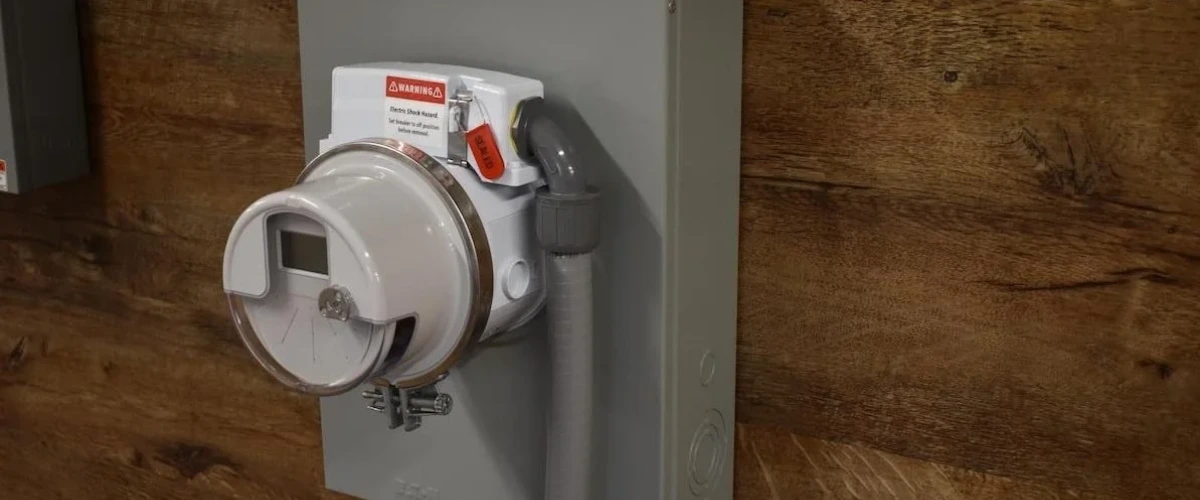
Buying an older home in Southern California can come with charm — mature landscaping, classic architecture, and a sense of stability. But when it’s time to electrify — to add an EV charger, rooftop solar, home batteries, or heat pumps — that classic 100-amp underground service can turn into a major roadblock.
If your electrician quoted $40,000 and 18 months just to upgrade service, you’re not alone. That kind of cost and delay can kill momentum — especially when the benefits of electrification (lower bills, clean energy, future‑proofing) are strong.
Yet, there are paths forward. With smart panels, dynamic load management, and modern solar + battery systems, many homeowners are finding ways to start electrifying now — without waiting years or spending tens of thousands up front. This blog explores your options, including trade‑offs, costs, and what works best for Southern California homes.
Why Old Electrical Panels Often Fall Short
- Modern loads are heavier. EV chargers, heat pumps, electric water heaters/dryers, and battery systems add substantial load — far beyond what a 100A panel was designed for.
- Code compliance and safety. Even if you never trip a breaker, overloading a panel beyond today’s load calculations can be a red flag for inspectors or future buyers.
- Solar, batteries, and EVs demand smarter distribution. A standard panel may work for basic circuits — but once you add solar inverters, battery backup, EV charging, or battery + solar + appliances, you risk overloading circuits or losing future flexibility.
Given these realities, it’s no surprise many homeowners with older electrical setups scramble when they try to modernize.
Option 1: Install a Smart Panel (e.g., SPAN) — Get “Smart Control” Without Full Service Upgrade
What is a Smart Panel
A smart panel replaces your traditional breaker box with a modern “energy hub” that monitors and controls circuits via software. SPAN is one of the most popular choices in 2025. It lets homeowners:
- Monitor energy usage per circuit in real time.
- Remotely turn circuits on/off or schedule them (great for managing EV charging, water heaters, or large loads).
- Prioritize or shed loads dynamically (e.g., EV charging only when solar is producing or when other major appliances are off).
- Integrate with home battery storage and manage backup power intelligently.
Typical Cost — and How It Compares to a Full Upgrade
- The SPAN panel alone retails for about US $3,500 before installation.
- A traditional 200A panel is far less expensive (often $200–$500 for just the hardware) but lacks smart features.
- Depending on installation complexity, expect total costs (panel + labor + configuration) in the “few thousands” — usually much cheaper than a full 400A service upgrade.
Why Smart Panels Appeal for Electrification
- A smart panel can “buy you time” — letting you start with EV charging, solar, or battery storage without immediately upgrading service.
- Great for homeowners planning gradual electrification: maybe start with solar + battery now, add EV charger later, then optionally expand.
- Useful for time-of-use rate plans: you can manage when high-draw appliances run, optimizing energy use.
- Better for backup and resilience: when paired with a battery, you can prioritize essential circuits during outages.
Drawbacks to Consider
- Smart panels like SPAN are typically capped at 200A service, so if your long‑term electrification needs exceed that (multiple EVs, large heat pumps, heavy appliances), you may still end up needing a service upgrade.
- The cost is notably higher than a basic panel, and with installation and commissioning you may not save a ton vs. standard upgrade — but you gain flexibility and control.
- If you skip upgrading the meter base or service line (underground wiring, utility side), you may face the same obstacles later when scaling up.
Option 2: Dynamic Load Management Devices — Lower‑Cost “Smart Control Lite”
If a full smart panel feels too expensive or overkill, there are lighter‑weight alternatives: dynamic load management systems, devices that throttle or schedule devices based on available load, and smart EV chargers that adjust current based on overall home usage.
One example: Emporia (among others) offers solutions that monitor home consumption and limit EV charging or large loads so the total draw never exceeds the panel’s capacity.
Benefits
- Typically far less expensive than a smart panel — some systems cost around US $600.
- Great if you’re mainly adding one EV charger, or want to spread out high-draw appliances (EV + heat pump + water heater) without upgrading panel/service.
- Can help avoid the immediate need for a service upgrade while giving you flexibility to add solar + storage later.
Limitations
- Not as robust as smart panel: usually limited to EV charging or a few high-draw loads — less control across all circuits.
- Doesn’t provide full circuit monitoring or the kind of battery + solar + EV integration that a smart panel offers.
- Still constrained by the physical limits of your meter base and service wires. If those are undersized, load management only delays the inevitable.
Option 3: Full Service Upgrade — 200A or 400A (Utility + Meter + Panel)
Ultimately, the cleanest, most future‑proof solution for a fully electrified home is a complete service upgrade: new meter base (also called a meter collar), new underground feed (if needed), new main panel (often 200A or 400A), and rewiring as necessary.
Typical Cost Range in California (2025)
- A standard 100A → 200A electrical panel upgrade (straightforward panel swap, no major wiring) often runs US $1,300–$3,000.
- More complex upgrades — especially those involving underground utilities, relocations, or a jump to 400A — rise in cost. Depending on complexity, labor, and permitting, the total can run significantly higher.
- The $40,000 / 18‑month quote you received is likely on the high side — possibly reflecting extensive underground work, trenching, utility coordination, or a 400A upgrade requirement.
Why This Option Has Strong Long-Term Value
- Removes nearly all limitations: you can add multiple EVs, heat pumps, home batteries, induction stoves, dryers — whatever you like — without worrying about overloaded circuits or panel capacity.
- Easier future expansions: if you remodel, add rooms, ADUs, or additional systems, you already have the capacity.
- Avoids “band‑aid” solutions: no need for load management tweaks, special chargers, or circuit juggling. Clean, stable infrastructure.
- Increases resale value: future buyers will appreciate modern, code-compliant, high-capacity service — and not resent being restricted if they want EVs, solar, or expanded electrical load.
When It Makes Sense (Especially for Southern California)
- If you plan multiple high-draw installations (EV + battery + heat pump + induction appliances).
- If your home wiring or meter base is old, underground, or difficult to access — delaying may increase cost further.
- If you value long-term peace of mind and expect 10–20+ years of electrified home living.
- If you plan to take full advantage of solar + battery storage + EV charging + backup power.
Option 4: Hybrid or Phased Approach — Combine Smart Panel or Load Management Now, Upgrade Service Later
For many Southern California homeowners, the best path is a phased or hybrid approach:
- Install a smart panel (or load‑management solution) now — so you can start solar + battery + EV charging (at limited capacity), begin benefiting from clean energy, and claim available incentives.
- Monitor actual usage over time (especially once solar, battery, and EV are in use). Smart panels make this easy.
- Plan a full service upgrade when needed — perhaps when you add more circuits, heavy appliances, or a second EV.
This gives you flexibility and reduces upfront pain.
Why Solar + Battery (e.g., via QCells + Storage) Belongs in the Conversation
When you electrify, solar and batteries — paired with any of the above panel choices — can significantly improve outcomes:
- As of 2025, solar installation costs in California have become more favorable: most systems run between US $2.50 and $3.50 per watt before incentives.
- A typical 6 kW system (sufficient for many medium-size homes) can cost $15,000–$21,000 pre-incentive, with larger systems (10 kW or more) for heavier loads.
- After applying the 30% federal Investment Tax Credit (ITC), solar becomes far more cost-effective — and adding battery storage often unlocks better utility savings, especially under time-of-use electricity rates.
- Using a smart panel + solar + battery lets you:Automatically route solar generation to critical loads (EV charger, heat pump, etc.)Use stored energy during peak demand or outagesAvoid or defer expensive service upgrades by managing load intelligently
- Automatically route solar generation to critical loads (EV charger, heat pump, etc.)
- Use stored energy during peak demand or outages
- Avoid or defer expensive service upgrades by managing load intelligently
Given your long-term plans — EV, solar, battery, heat pumps — a QCells-based solar + storage system remains a compelling option within a broader electrification strategy.
Learn more about QCells solar + battery systems.
What About Inspections, Permits, and Code Compliance in 2025
- California code (and many local jurisdictions) now expects modern homes to have at least 200A service — especially if EV chargers or heat pumps are involved.
- A smart panel alone doesn’t change your service line or meter capacity — so utility-mandated upgrades (especially underground wiring) may still be required if the service infrastructure is rated for lower amps.
- Permits, inspections, and potential rewiring add to cost and complexity — especially in older homes. This can be a key driver of high upgrade quotes (like your $40,000/18 mo).
How to Decide: Key Questions to Ask Yourself
Recommendation Framework for Southern California Homeowners
- If you plan a gradual electrification (one EV, a few heat pumps/water heaters, maybe a battery later): Start with a smart panel or load-management solution.
- If your home has old underground service, or you plan many high-load devices (EV + heat pumps + future expansion): Consider budgeting for a full service upgrade to 200A or 400A.
- If you want to start solar + battery ASAP while keeping flexibility: Use a hybrid approach — smart panel now, upgrade service when load demands increase.
- If you plan for maximum resale value, future‑proofing, or heavy electrification: Full service upgrade is the cleanest and most robust path.
What This Means for You — Based on Your Situation
Given your scenario: 100A underground service, desire for EV + charger, solar, batteries, heat pumps — but reluctance to spend $40K now — the hybrid approach seems most balanced.
- Install a smart panel (SPAN or similar) to accommodate EV charger and solar + battery integration now.
- Begin electrification this year to take advantage of solar incentives.
- Monitor actual energy usage and battery/solar performance.
- Once usage grows (e.g., more circuits, more appliances), plan for service upgrade — ideally coordinated with your next major project (EV, heat pump, home renovation).
This lets you make progress without committing to a massive upfront expense — but keeps future flexibility open.
Electrification Is a Journey — Not a Single Step
Older homes often present challenges, but modern solutions — smart panels, dynamic load management, solar + storage — offer new flexibility. For Southern California homeowners, the key is planning: knowing your current limitations, your future goals, and how to phase upgrades in a way that balances cost, time, and benefit.
Whether you start with a smart panel, go straight to a full service upgrade, or take a hybrid path — what's most important is beginning the journey now. With incentives, rising electricity costs, and a shift toward clean energy, electrifying your home is not just a trend — it's the future.
If you’d like, US Power can help you in upgrading the numbers (solar size, battery sizing, upgrade electrical panel or panel upgrade cost) and design a tailored path for your home. Reach out today to get a free consultation.
Frequently Asked Questions (FAQs)
Does a panel upgrade require rewiring?
It depends on your home’s current electrical setup. Simple upgrades (e.g., 100A → 200A) often only replace the panel, but older homes with outdated wiring, underground service, or heavy load needs may require partial or full rewiring to meet code and ensure safety.
How long does a panel upgrade take?
A straightforward 100A → 200A panel swap usually takes 1–2 days, including inspection. Complex upgrades involving underground lines, relocations, or 400A service can take several weeks to months, depending on permitting and utility coordination.
Are electrical panel upgrades tax deductible?
Panel upgrades are generally not tax-deductible as a direct expense. However, if the upgrade is part of a home improvement for energy efficiency (like solar or battery installation), it may increase eligibility for federal or state energy tax credits.
How much does it cost to do a panel upgrade?
Costs vary based on service size and complexity:
- 100A → 200A panel: $1,300–$3,000
- 200A → 400A or complex underground upgrades: $10,000–$40,000+Smart panels or phased solutions may reduce upfront costs while adding flexibility.
How much are electrical panel upgrades?
Electrical panel upgrades generally cost $1,300 to $3,000 for standard 200A swaps. More extensive upgrades, including new service lines, trenching, or 400A panels, can run $10,000–$40,000 depending on location, labor, and permitting.
Frequently Asked Questions


How Much Does It Cost to Install Solar Panels for a 1600 Sq Ft Home?
See solar panel costs and savings with US Power for 1,600 sq ft homes in CA.
SoCal Homeowners Face 10% Utility Hike— Go Solar Today!
Avoid SCE’s 10% rate hike with solar savings with US Power and Qcells Technology.

Beat California’s High Energy Rates with Smart Solar
Combat rising electricity costs with smart home solar solutions from US Power.








Derechos de autor © 2025 US POWER | Energía solar y techosUS Power - Axia by QCells. All Rights Reserved.

¡Obtenga una estimación solar instantánea usando el satélite!