



What to Do When Your Solar Installer Gives You the Wrong Panels
Thousands of California homeowners discover their solar installer provided different panels than promised. Here's your complete guide to verifying equipment, fixing documentation, and ensuring you're protected.
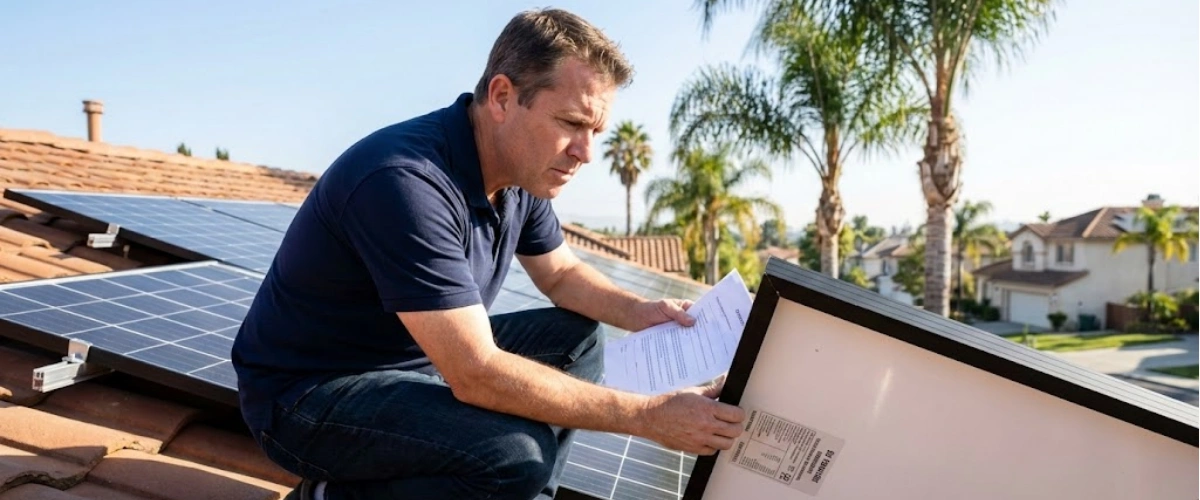
You trusted your solar installer. You signed for specific equipment. Installation day arrived, and suddenly everything feels off. Panel boxes don't match paperwork. Your monitoring app shows different specifications. When you reach out? Radio silence.
Across Southern California, homeowners discover significant discrepancies between contracted and installed equipment. Some find out weeks later. Others don't realize until warranty claims years down the road. The good news? There are things you must know before going solar to avoid this entirely—but if you're already in this situation, you have options and acting quickly protects your investment better.
Why Solar Panel Mix-Ups Happen More Than You Think
Southern California's solar boom has created a perfect storm for equipment confusion. Supply chain issues, manual data entry errors, and overwhelmed customer service teams mean thousands of homeowners receive different panels than contracted.
Supply Chain and Documentation Failures
Solar installers face genuine inventory challenges, but reputable companies communicate immediately when equipment changes are necessary. They get your written approval before substituting panels. Unfortunately, many installers simply swap equipment without notification.
Here's what most homeowners don't know: monitoring systems like Enphase don't automatically detect panel specifications. Installers manually enter this data during setup. A rushed technician might select the wrong model from a dropdown menu or enter what was originally quoted rather than what was actually installed. This creates a paper trail that doesn't match reality—causing warranty nightmares years later.
Common Equipment Mix-Ups in Solar Installations
Understanding typical substitution patterns helps you know what to look for.
Panel Wattage Downgrades and Brand Swaps
Contracted for 400-watt panels but received 370-watt panels? The difference directly affects production capacity—a 17-panel system loses over 500 watts of capacity, meaning real money over 25 years. Brand substitutions are equally problematic. Premium Tier 1 panels with 25-year warranties get swapped for generic panels with shorter coverage, affecting both performance and protection.
Inverter and Monitoring Mismatches
String inverters replaced with microinverters (or vice versa) without notification. Enphase monitoring swapped for SolarEdge. These changes affect monitoring capabilities, maintenance costs, and features you specifically requested. Many of these issues stem from common solar installation mistakes that experienced installers know how to avoid.
How to Verify What's Actually on Your Roof
Check physical panel labels. Every panel has a backside label with exact model number, wattage, serial number, and manufacturing date—your definitive truth. Access your roof safely or use binoculars. Labels show formats like "REC Solar REC410AA" or "QCells Q.PEAK DUO 410." Photograph for records.
Get permit and utility documents. Building departments have stamped permit plans showing equipment specs. Utilities have interconnection agreements. Request copies and compare to physical installation.
Review contracts. Your original contract establishes what you agreed to purchase. No signed change order? Any substitutions were unauthorized.
Understanding how solar panels work with inverters helps evaluate whether substituted equipment matches specifications.
Understanding Panel-Inverter Compatibility
Your panels and inverters must be properly matched. "Better" panels don't automatically mean better performance with inadequate inverters.
Why Panels Are Rated Higher Than Inverters
410-watt panels on 366-watt microinverters might seem wrong, but it's standard. Panels are rated under ideal lab conditions—real-world production runs 70-85% of rated capacity due to heat, dust, and shading.
Enphase IQ8AC pairs with 400-410 watt panels. IQ8HC suits 460-480 watt panels. Mismatched combinations waste capacity or money. Use Enphase's compatibility calculator to verify your configuration.
What Documentation Your Solar Installer Should Provide
Pre-installation: Final system design plans, building permit application, utility interconnection application locking in equipment specifications.
Post-installation: Photos of roof attachments and electrical connections. Stamped final inspection documents—required for legal permission to operate (PTO).
Warranty and monitoring: Equipment warranty registrations with confirmation numbers. Fully configured monitoring with accurate specs and login credentials.
Understanding what proper solar documentation includes ensures protection from day one.
Red Flags That Signal Poor Solar Installation Practices
Certain warning signs indicate your installer cuts corners or lacks professional standards.
Zero written communication about equipment changes. Professional companies document everything. If panels changed from 460-watt to 400-watt without written notification, that's a contract violation.
Missing or incomplete documentation. Installation completed weeks ago but no permit documents, warranty info, or monitoring access? This jeopardizes your warranty protection and legal options.
Refusal to correct monitoring data. Your installer ignores requests to fix incorrect Enphase specifications, claiming it doesn't matter. False—accurate data is essential for troubleshooting and warranty claims.
Communication blackout. Your installer won't return calls or emails. This suggests deeper operational problems.
If you're experiencing these issues, understanding how to choose a solar company in Los Angeles becomes critical. These red flags often indicate the 5 warning signs when choosing a solar company that should make any homeowner cautious.
Why Correct Documentation Protects Your Warranty
Inaccurate records create warranty nightmares. Manufacturers require proof of genuine equipment purchase. Mismatched paperwork and physical panels lead to denied claims. System expansions get delayed without accurate records. Home buyers flag discrepancies that kill deals or force price reductions.
Understanding solar panel warranties for Southern California homes shows why accuracy matters.
Your Step-by-Step Action Plan
Step 1: Document everything. Photograph panel labels, inverter models, monitoring screenshots, and contract specifications.
Step 2: Send formal written request. Email installer requesting written confirmation of all equipment specifications within 10 business days.
Step 3: Verify official records. Get permit documents from building department and interconnection agreement from utility. Compare with physical installation.
Step 4: Escalate if ignored. After two unanswered requests, escalate to management via certified mail. File CSLB complaint if still ignored.
Step 5: Consider legal options. For significant fraud, consult a consumer protection attorney. California strongly favors homeowners in contractor fraud cases.
Knowing what to expect from your solar installation helps you recognize when your experience deviates from standards.
How US Power Does Solar Documentation Right
You deserve to know what proper installation practices look like.
Transparent equipment from day one. US Power's quotes specify exact QCells panel models and inverter specifications. No vague "equivalent or better" language. As exclusive QCells partners with factory-direct pricing, we control supply chains—no substitutions. 3-6 week timelines reflect reliable availability.
Complete documentation packages. Every customer receives stamped permits, utility approvals, warranty registrations, monitoring access with accurate data, and detailed specifications.
CSLB-licensed consultants who respond. Our entire team holds California contractor licenses. We answer phones, respond to emails, and address concerns promptly. 175+ five-star Google reviews confirm our communication quality.
25-year comprehensive warranties. QCells panels include 25-year product, performance, and workmanship warranties. We register equipment warranties on your behalf with confirmation numbers and portal access.
Solution for Solar Equipment Discrepancies
Discovering your solar installer provided different equipment than contracted is frustrating—but you're not powerless. Verify physical equipment, request proper documentation, and escalate when necessary to protect your investment.
The solar industry needs to do better. Homeowners deserve transparent communication and the equipment they contracted for. Companies like US Power prove professional installations with complete transparency are possible.
Take action now to verify equipment, correct records, and protect warranties. Your roof, your money, your documentation—make sure they all match.
Frequently Asked Questions
Can my installer legally change equipment without telling me?
Will wrong monitoring data affect my system's performance?
What if I discover wrong panels years after installation?
Should I accept "equivalent or better" substitutions?


4 Ways Californians Can Lower Demand Charges
Cut peak power costs in California with four smart ways to reduce demand charges.

Your guide to solar panel roof mounts in 2025
Learn how roof mounts enhance energy savings and durability when you switch to solar.

Solar Power Basics for Southern California in 2025
Electricity rates climbing past $0.30/kWh, SoCal homeowners are are turning to solar.








Derechos de autor © 2025 US POWER | Energía solar y techosUS Power - Axia by QCells. All Rights Reserved.

¡Obtenga una estimación solar instantánea usando el satélite!