




Can You Oversize Solar Panels on MPPT Controller? (2026 Guide)

Thinking about adding more solar panels than your MPPT controller is rated for? Here's what actually happens when you exceed current limits—and whether your equipment is at risk.
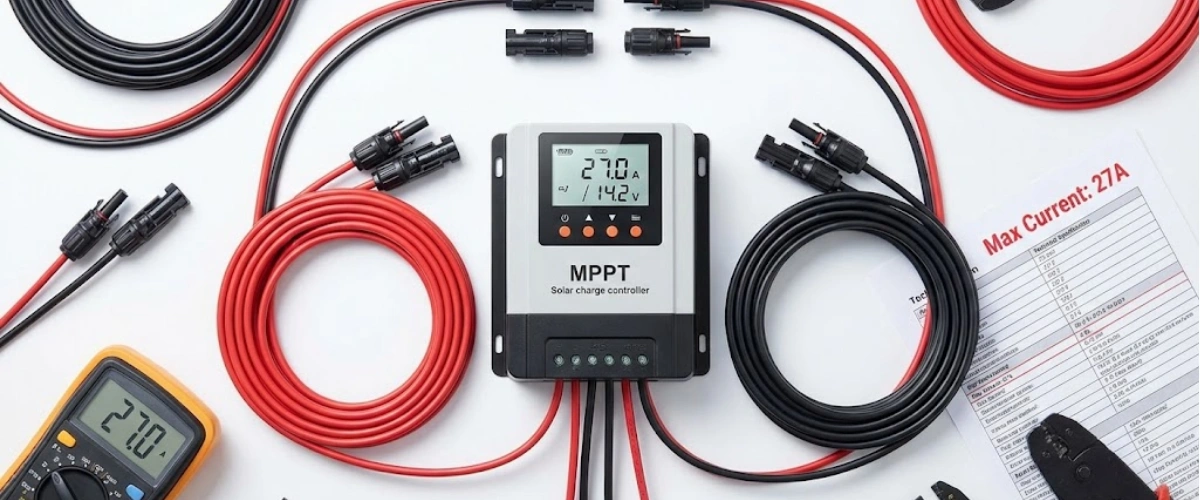
You've invested in a portable power station or battery backup system. The specs say your MPPT controller handles 60 volts and 27 amps maximum. But you want better performance during winter or cloudy days in Southern California.
So you're wondering: what if I connect more solar panels than the rated amperage? Will it damage the controller? Or will the MPPT just limit what it draws?
This confusion isn't new. Reddit threads, solar forums, and even installers give conflicting answers. Some say you'll fry your equipment. Others claim MPPTs automatically protect themselves. The truth sits somewhere in between, and it matters for your wallet and your system's lifespan.
Here's what you need to know before connecting that extra panel.
Understanding MPPT Current Limits: Drawing vs. Pushing Power
The confusion starts with how solar panels actually work. Many people think panels "push" current like a water hose under pressure. That's not quite right.
Solar Panels Are Current Sources With Voltage Control
Solar panels are indeed current sources. They generate electrons when sunlight hits their cells. However, the MPPT controller acts as the load that determines how much current actually flows.
Think of it this way: your panels can provide up to their rated amperage. But the controller decides how much to draw based on battery state, charging algorithms, and its own limitations.
What That 27-Amp Rating Really Means
When your charge controller says "27 amps maximum," it's telling you the highest current it can safely handle without overheating or damaging internal components. This is a hard engineering limit, not a suggestion.
If your solar array can theoretically provide 40 amps at operating voltage, the controller faces a problem. It needs to limit current draw to stay within spec. But how well it does this depends on the manufacturer's design and safety margins.
The Voltage vs. Current Difference
Here's a critical distinction: Never exceed voltage limits. If your controller maxes out at 60 volts, even 61 volts can instantly damage sensitive electronics. Voltage limits are absolute.
Current limits work differently. Controllers can sometimes handle brief overcurrent situations through how solar panels and batteries work together thermal management and current limiting circuits. But sustained overcurrent creates heat, stress, and eventual failure.
The Truth About Over-Paneling Your Solar Array
Now for the answer you actually want: can you safely connect more panel capacity than your MPPT's rated amperage?
Most Modern MPPTs Include Current Limiting
Quality MPPT controllers from reputable manufacturers include current limiting circuits. When input exceeds their rating, they reduce the load to stay within safe operating temperature.
This doesn't mean you can ignore ratings completely. It means there's usually some built-in protection against brief overcurrent situations.
The 1.3x to 1.5x Over-Paneling Rule
Solar professionals often mention an "over-paneling ratio" of 1.3x to 1.5x. For a 27-amp controller, that means your array's theoretical maximum might safely reach 35 to 40 amps under perfect conditions.
Why does this work? Because your panels rarely produce their maximum rated output simultaneously. Cloud cover, temperature effects, less-than-perfect sun angles, and other factors typically reduce actual production below nameplate ratings.
When Over-Paneling Makes Sense
Over-paneling benefits homeowners who want consistent power during:
- Winter months with shorter days
- Morning and evening hours with angled sunlight
- Cloudy or overcast conditions common in coastal Southern California
- Shaded situations where some panels underperform
By adding extra panel capacity, you maintain adequate charging even when conditions aren't ideal. The sizing your solar system correctly approach ensures your batteries stay charged year-round.
When Oversizing Makes Sense (And When It Doesn't)
Not every situation benefits from over-paneling. Here's how to decide if it's right for your setup.
Good Candidates for Over-Paneling
You should consider oversizing your array if:
You live in areas with variable weather. Southern California's marine layer and winter clouds reduce panel output significantly. Extra capacity compensates.
Your batteries need consistent charging. Systems that cycle batteries daily benefit from extended charging windows. Solar batteries maximize your savings through proper sizing.
You use power throughout the day. If you're running loads while charging, extra panel capacity prevents battery depletion.
Your controller has documented over-panel capability. Some manufacturers explicitly allow and spec oversizing ratios. Check your manual or contact support.
Poor Candidates for Over-Paneling
Skip the extra panels if:
Your controller lacks current limiting. Older or budget controllers may not protect themselves adequately. Exceeding ratings voids warranties and risks damage.
You already hit voltage limits. If you're at 60V maximum with your existing series configuration, adding panels means going parallel, which may not be practical.
Your existing array rarely hits maximum output. If your current panels never reach rated power, adding more just wastes money. Focus on optimizing placement or cleaning first.
You're doing DIY installation without expertise. Electrical work requires knowledge and safety equipment. Improper wiring can create fire hazards or void your homeowner's insurance. Professional solar installation protects you and your investment.
The Real Risk: Warranty Voidance
Many charge controller warranties explicitly state you cannot exceed manufacturer specifications. Even if your controller survives oversizing, you've voided coverage.
When equipment fails three years later for an unrelated reason, the manufacturer may deny your claim if they discover you exceeded ratings. This costs more than buying a properly sized controller from the start.
How US Power Sizes Solar Systems to Avoid These Problems
When you upgrade from a portable power station to a full home solar installation, proper system design eliminates these concerns entirely.
We Match Equipment to Your Actual Needs
US Power's CSLB-licensed consultants don't guess at system sizing. We analyze your electricity usage, roof characteristics, and budget to design systems where every component works within optimal parameters.
Our exclusive partnership with QCells means we specify American-made panels with known performance characteristics. We pair them with inverters and charge controllers rated for the actual load, not theoretical maximums.
Factory-Direct Pricing Means No Equipment Compromises
One reason homeowners over-panel cheap equipment is they're trying to stretch limited budgets. When you save 15-20% through our factory-direct QCells pricing, you can afford properly rated components from the start.
Our systems include:
- Correctly sized inverters for your panel array
- Adequate battery capacity for your backup needs
- Proper wiring and breakers meeting California electrical code
- 25-year comprehensive warranty covering panels, workmanship, and performance
You'll never wonder if you're damaging equipment or leaving performance on the table. Everything works together as engineered.
We Design for Southern California's Unique Conditions
Cookie-cutter systems from national companies ignore local factors. We account for:
- SCE and PG&E rate structures under NEM 3.0
- Marine layer impacts on coastal installations
- Fire safety requirements in high-risk zones
- HOA restrictions common in Southern California neighborhoods
This attention to detail means your system performs optimally without equipment stress or common solar installation mistakes that plague DIY or poorly designed installations.
Beyond Portable Systems: Why Whole-Home Solar Eliminates These Concerns
If you're wrestling with MPPT limitations on a portable power station, you've already identified a bigger need: reliable, adequate power for your home.
Whole-Home Systems Use Grid-Tie Inverters
Professional residential solar installations don't rely on charge controllers with restrictive amp limits. They use grid-tie inverters designed to handle large panel arrays safely.
These inverters manage much higher power levels with built-in protection and monitoring. You can scale your system based on your needs, not equipment limitations.
Battery Backup Without the Guesswork
Modern battery systems like QCells Q.HOME CORE integrate seamlessly with whole-home solar. The battery management system handles charging safely regardless of your panel array size.
You get the backup power you want for outages, plus the ability to shift your solar generation to evening hours when SCE's time-of-use rates peak. This maximizes savings without technical complications.
The Economics Make More Sense
A properly sized home solar system with battery backup costs less per watt than cobbling together multiple portable units. You also get:
- 30% federal solar tax credit (available through December 31, 2025)
- Increased home value averaging 4.1% in California
- Net metering credits that carry year-round under NEM 3.0
- 25-year warranty covering the entire system
When you choose the right solar panels for residential installation, you're making a financial investment, not buying a gadget.
Moving Forward: Getting Solar Right From the Start
The technical confusion around MPPT controllers and panel sizing reveals a larger truth: solar energy systems work best when designed holistically by professionals who understand both equipment and local conditions.
If you're considering solar for your Southern California home, you deserve more than internet forum advice. You need accurate information, proper equipment sizing, and installation backed by real warranties.
US Power delivers this through our exclusive QCells partnership, CSLB-licensed consultants, and transparent pricing. We've completed 180+ installations with five-star reviews because we get the technical details right while making the process simple for homeowners.
Whether you're upgrading from portable power or going solar for the first time, start with a free consultation. We'll analyze your needs, show you exactly what properly sized equipment costs with factory-direct pricing, and answer every technical question honestly.
Your solar journey shouldn't begin with confusion about amp ratings. It should start with clarity, confidence, and a system designed to perform flawlessly for decades. Learn more about our complete guide to solar panel systems so you can make informed decisions.
Frequently Asked Questions
Will my MPPT controller automatically limit current if I exceed its rating?
Can I damage my charge controller by connecting too many solar panels?
What's the difference between current sources and voltage sources in solar?
Should I just buy a larger MPPT controller instead of oversizing panels?
Can I split my panels across multiple MPPT inputs to avoid overcurrent?


Maximize Solar ROI Before 30% Credit Ends
Learn how solar panels deliver fast ROI and best payback for California homes.
Do Solar Panels Work in Cold Weather? What California Homeowners Need to Know
Cold weather boosts solar efficiency. CA homeowners: maximize year-round savings.
Why Doesn't My Solar Production Match My Utility Bill?
I produced 400 kWh but only sent 100 kWh to the grid. Where did 300 kWh go?








Copyright © 2025 US Power - Axia by QCells. All Rights Reserved.

Get an instant solar estimate using satellite!