




Why Professional Solar Installation Matters: Safety Lessons from DIY Mistakes

One homeowner's DIY solar setup reveals dangerous wiring mistakes that could cost thousands—or worse. Here's why professional installation isn't just about convenience.
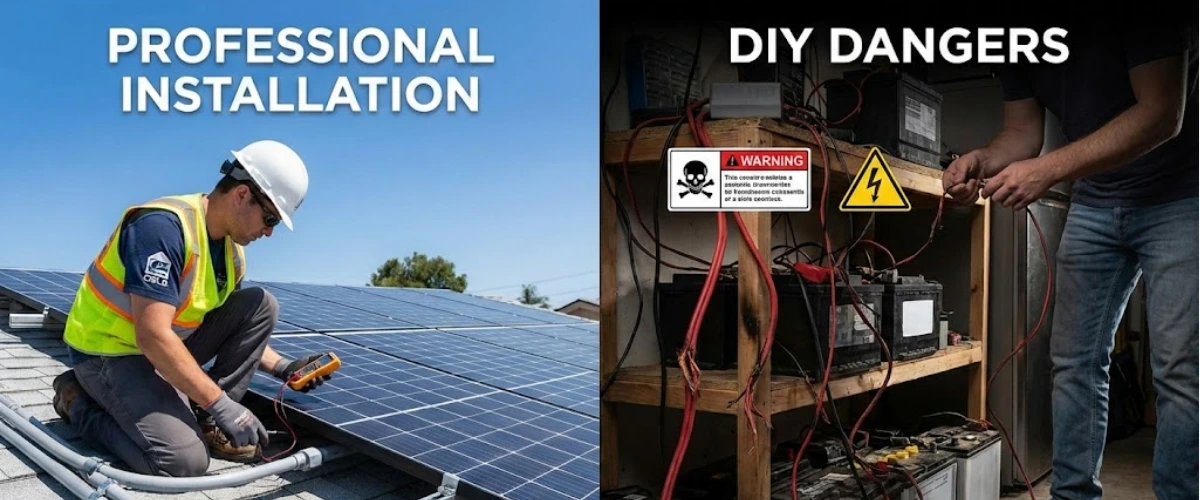
A mobile mechanic recently posted photos of his DIY solar installation to Reddit, asking for a "safety check" on his battery setup. What seemed like a simple question revealed something far more concerning: multiple safety violations that could lead to fires, equipment failure, or worse.
The thread quickly filled with worried comments from experienced installers pointing out undersized wiring, improper fusing, unsecured batteries in a moving vehicle, and battery management issues that could cause thermal runaway.
This isn't about shaming DIY enthusiasts. It's about understanding why solar installation—especially in California where electrical codes are strict and safety standards matter—requires professional expertise. Let's break down what went wrong and what Southern California homeowners need to know before making solar decisions.
What This DIY Solar Thread Reveals About Safety Risks
The Reddit post showed a 3,600-watt hybrid inverter powering a 24-foot enclosed trailer for a mobile mechanic business. Eight solar panels charged six 12V 100Ah LiFePO4 batteries wired in series to create a 24V system.
On the surface, it looked functional. The batteries displayed correct voltages. The system was producing power. But experienced installers immediately spotted problems that could lead to catastrophic failure.
The Wire Gauge Problem That Could Start a Fire
The original poster used 2 AWG welding wire for the main battery connections. For a 3,600-watt system at 24 volts, that's pulling 150 amps at full load. According to the National Electrical Code, 2 AWG copper wire is only rated for about 115 amps in this application.
That 35-amp gap might not sound like much, but it's the difference between safe operation and wire insulation melting during peak demand. One commenter suggested upgrading to 2/0 wire—roughly twice the diameter—but the original poster hesitated because "2/0 copper welding wire will cost me more than I have in the entire system."
This is where DIY solar becomes dangerous. Cost-cutting on critical safety components creates fire hazards that no amount of savings can justify. Professional installers like US Power's CSLB-licensed consultants calculate wire gauge requirements before purchasing materials—not after discovering the system is undersized.
Battery Management Systems and the Balancing Crisis
Each battery in this setup had an internal BMS (Battery Management System), but multiple commenters warned about cell imbalance over time. When batteries connected in series discharge and charge at different rates, voltage imbalances develop. Over months, this leads to some batteries overcharging while others remain undercharged.
The solution? Manual voltage checks every month, or purchasing an active battery balancer. The poster admitted he'd received "conflicting statements about their usefulness" but might buy one because "it can't hurt anything."
Professional installations eliminate this guesswork. Systems designed by experts incorporate proper battery management systems and balancing from day one, with monitoring systems that alert homeowners to issues before they become expensive problems.
The Vibration Factor Nobody Talks About
Here's what makes this particular installation especially risky: it's in a moving vehicle. One commenter warned about "vehicle vibration causing terminals to loosen over time." Screw terminals weren't designed for constant movement. Without proper strain relief and securing methods, connections gradually work loose.
Loose connections in a high-current DC system create resistance. Resistance generates heat. Heat accelerates failure. In the confined space of a trailer, a thermal event could destroy thousands of dollars in equipment—or worse.
The poster's wooden shelf mounting system added another layer of risk. Batteries weighing 30+ pounds each, unsecured, in a vehicle that stops and accelerates regularly. Professional installers would never approve this configuration.
Why Professional Installation Matters More Than Ever
California's solar installation requirements exist for good reasons. The state's electrical codes protect homeowners from the exact issues we saw in that Reddit thread. But here's what many people don't realize: those codes only apply if your installation is permitted and inspected.
The Permitting Process Protects You
When US Power installs a solar system, multiple inspections verify that everything meets code. Electrical inspectors check wire sizing, grounding, overcurrent protection, and dozens of other safety factors. The utility company verifies proper interconnection. Fire marshals ensure roof access and spacing requirements.
DIY installations often skip permitting entirely. No inspections mean no one catches dangerous mistakes until something fails. And when it does, homeowner's insurance may deny claims for unpermitted electrical work.
What CSLB Licensing Really Means
California requires solar installers to hold a C-10 (Electrical) or C-46 (Solar) contractor license issued by the Contractors State License Board. Getting this license requires:
- Four years of experience as a journeyman electrician
- Passing comprehensive exams on the National Electrical Code
- Maintaining liability insurance and bonding
- Continuing education on code updates
When you hire CSLB-licensed, you're not paying for someone to follow YouTube tutorials. You're paying for years of training in electrical theory, code compliance, and safety protocols that prevent the mistakes that end up on Reddit asking for help.
The True Cost of DIY Solar Mistakes
The Reddit poster mentioned that proper 2/0 wire "will cost me more than I have in the entire system." This reveals the fundamental problem with DIY solar: initial costs look attractive until you calculate the total cost of ownership.
Consider what happens when undersized wiring causes a connection to overheat and damage the inverter. That $800 component needs replacing—but now you also need to rewire the system correctly. Total cost: $1,200+ and days without power. A professional installation would have sized everything correctly for maybe $300 more upfront.
Or when batteries develop cell imbalance because there's no proper BMS monitoring. One battery fails prematurely. You need to replace it, but you can't find the same model. Now you're replacing the entire battery bank because mixing battery ages and capacities creates more problems. Total cost: $2,400 instead of the original $600 for one battery.
Professional installations eliminate these cascading failures through proper design, quality components, and warranty coverage.
What US Power Does Differently
Professional solar installation isn't just about following code. It's about designing systems that work efficiently for decades while protecting your home and family.
Factory-Direct QCells Partnership
US Power is California's exclusive QCells factory-direct partner. This means several things for homeowners:
American-made panels from QCells' Dalton, Georgia facility arrive with full manufacturer support. No gray-market panels with questionable warranties. No compatibility issues between components from different suppliers. Everything is designed to work together seamlessly.
Factory-direct pricing eliminates distributor markups, typically saving homeowners 15-20% compared to retail solar companies. Those savings can pay for proper wire sizing, professional-grade mounting hardware, and comprehensive monitoring systems—the exact components DIY installations often skip.
The 3-6 Week Installation Timeline
One of the biggest misconceptions about professional installation is that it takes forever. US Power's solar installation timeline in California averages 3-6 weeks from contract signing to Permission to Operate (PTO).
That includes:
- Engineering and system design (1 week)
- Permitting with local building departments (1-2 weeks)
- Physical installation (1-2 days)
- Inspection and utility interconnection (1-2 weeks)
Compare this to DIY installations where homeowners often spend months researching components, troubleshooting issues, and waiting for parts. The Reddit poster started his project weeks ago and is still asking basic safety questions.
What 165+ Five-Star Reviews Really Mean
US Power maintains 165+ five-star Google reviews from actual customers. These aren't purchased reviews or incentivized feedback. They're from Southern California homeowners who experienced professional installation and are seeing real savings on their SCE and PG&E bills.
Those reviews consistently mention the same themes: transparent pricing with no hidden fees, installers who showed up on time, systems that work exactly as promised, and responsive customer service when questions arise.
DIY solar offers none of this. When something goes wrong, you're on your own. Reddit comments and YouTube videos can't replace the support of a licensed contractor with $2 million in liability coverage backing every installation.
When DIY Solar Makes Sense (And When It Doesn't)
Not all DIY solar projects are dangerous. Small portable systems for camping, emergency backup, or off-grid applications can be perfectly safe when designed appropriately.
The key distinction: scale and permanence.
A 100-watt portable solar setup charging USB devices and running LED lights? That's low voltage, low current, and low risk. Worst case scenario, you damage a $200 solar panel and controller.
A 3,600-watt system with battery storage powering an entire business operation? That's high voltage, high current, and high risk. Failure could destroy tens of thousands in equipment, cause injuries, or start fires.
For Southern California homeowners considering rooftop solar, the answer is clear: professional installation is the only safe choice. California's Title 24 building codes, NEM 3.0 interconnection requirements, and utility company standards make DIY residential solar essentially impossible to do legally and safely.
Before making any solar decision, homeowners should understand the things you must know before going solar in California versus permanent home solar. The requirements, codes, and safety standards differ dramatically.
The 30% Federal Tax Credit Changes Everything
Here's the financial factor that makes professional installation even more compelling: the 30% federal solar tax credit expires December 31, 2025.
For a typical Southern California home solar installation costing $25,000, that's $7,500 in tax credits. DIY installations are eligible—but only if everything is permitted, inspected, and meets code. Most DIY projects don't qualify because they skip permitting or fail inspections.
Professional installations guarantee tax credit eligibility. US Power handles all permitting paperwork, ensures code compliance, and provides the documentation needed for IRS Form 5695. You get the full 30% credit with zero hassle.
After December 31, 2025, the credit drops to 26% for 2026, then 22% for 2027, then disappears entirely. That's a $1,000+ difference in savings per year for waiting. The 30% federal solar tax credit deadline makes 2025 the absolute best time to go solar professionally.
Don't Let DIY Solar Become a Costly Mistake
The Reddit post that inspired this article demonstrates why solar installation requires professional expertise. What started as a cost-saving measure created safety hazards that could cost thousands to fix—or cause catastrophic equipment failure.
Southern California homeowners have better options. Professional installation from US Power provides:
- CSLB-licensed installers with verified experience
- Factory-direct QCells pricing (15-20% below market)
- 25-year comprehensive warranty on panels, workmanship, and performance
- Full 30% federal tax credit eligibility
- Three-to-six-week installation timeline
- Zero safety concerns or code violations
- 165+ five-star reviews from satisfied customers
The 2025 tax credit deadline makes this decision time-sensitive. Every day you wait is a day closer to losing $7,500+ in federal incentives.
Frequently Asked Questions
Can I install solar panels myself in California?
How do I know if my solar installer is properly licensed?
What happens if something goes wrong with a DIY solar installation?
Is professional solar installation really worth the extra cost?
How long does professional solar installation take compared to DIY?


Protect Your Family from Predatory Solar Contracts in SoCal
Avoid solar fraud and protect your energy investment in Southern California.

Bought a House with Solar? Here's How to Pick the Right PG&E Rate Plan
PG&E wants you to choose a rate plan, and you have no idea which one won't cost you.
Why Cheap Solar Installations End Up Costing More
Installers just exposed the hidden cost of bargain solar. Things you should avoid.








Copyright © 2025 US Power - Axia by QCells. All Rights Reserved.

Get an instant solar estimate using satellite!