




Why Cheap Solar Installations End Up Costing More

Before you sign that "unbeatable" solar contract, learn why Southern California homeowners are paying thousands more to fix cheap installations.
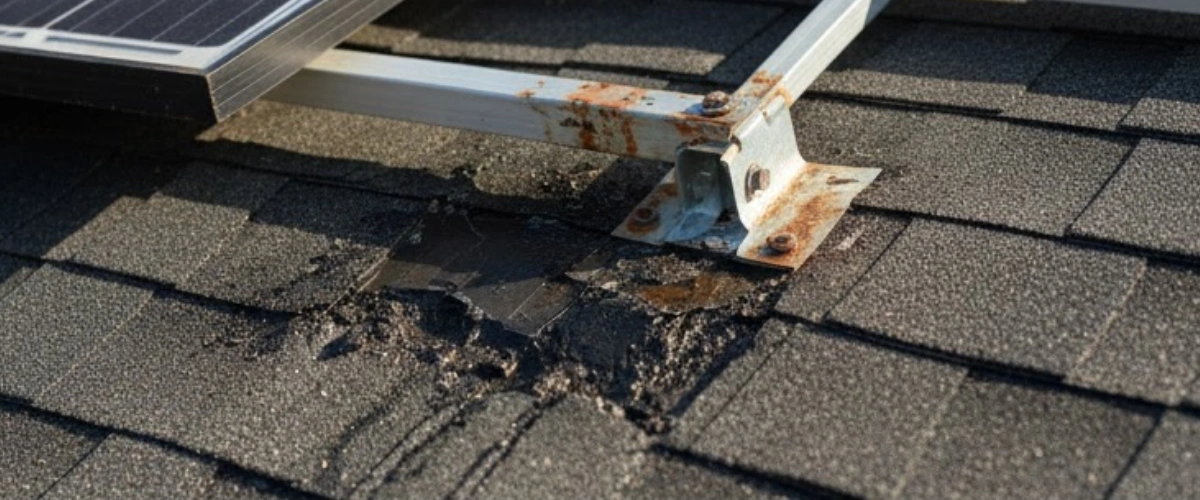
A Southern California homeowner recently posted photos of their "sick install" on a solar forum. The panels looked pristine. The price was unbeatable. The work seemed professional.
Then licensed installers started commenting.
Within hours, they'd identified over $15,000 in hidden problems—code violations that void warranties, water damage risks, and fire safety issues that could cost tens of thousands to repair. The panels looked clean, but the installation was a ticking time bomb.
If you're comparing solar quotes right now and one seems too good to be true, this article will show you exactly why the cheapest option almost always becomes the most expensive.
The Real Cost of That $12,000 Solar Quote
When you see a solar installation priced 30-40% below market average, it's not because the company found a secret supplier or invented a revolutionary installation method. It's because they're cutting corners somewhere—and you'll pay for it later.
The installation that sparked this discussion had a price tag around $12,000 for a system that should have cost $18,000-$20,000. Sounds like a win, right?
Here's what that "savings" actually bought:
Immediate code violations that prevent passing final inspection. Water damage that will cost $8,000-$15,000 to repair foundation issues. Voided warranties because the installation didn't follow manufacturer specifications. Fire safety violations that could result in insurance claim denials if something goes wrong.
The actual cost? Closer to $40,000 when you add repairs, re-installation, and legal fees to fix what was done wrong the first time.
What Professional Installers Saw That Homeowners Missed
The post that exposed these issues wasn't from an angry competitor. It came from licensed solar professionals who install systems every day and know exactly what makes a quality solar installation.
Here's what they spotted in seconds that the homeowner never noticed:
Array Placement Violates Basic Engineering
The panels were installed too close to the roof edge—less than 18 inches from the gutter. When it rains, water flows off the solar array, overshoots the gutter completely, and pours directly onto the home's foundation.
One professional installer commented: "Rain is going to flow from the array, over the gutter, into the foundation." That's not a maybe—it's a guaranteed outcome that causes $10,000-$20,000 in foundation damage over time.
Fire Setback Requirements Ignored
California fire code requires specific setbacks from roof ridges and valleys—typically 18 inches from ridges and 36 inches for the gutter-to-ridge pathway. These aren't suggestions. They're mandatory for firefighter access during emergencies.
The installation in question had zero setback compliance. That means if there's ever a fire, firefighters can't safely access the roof, and your insurance company may deny your claim because the installation violated code. This is exactly the kind of solar installation code violation that costs homeowners their coverage when they need it most.
Single Point of Failure for Waterproofing
Instead of using proper junction boxes (like Soladeck boxes that professionals recommend), the installer used a conduit body with a roof boot—essentially relying on a single O-ring seal to keep water out for 25 years.
As one installer put it: "I wouldn't want to rely on a single O-ring to keep water out for the life of the system." When that seal fails in 3-5 years, water intrusion causes electrical failures, roof damage, and potential fire hazards. Many homeowners wonder does installing solar panels cause roof leaks—and the answer is yes, when installers take shortcuts like this.
5 Hidden Costs of Cheap Solar Installations
The problems don't stop at installation day. Here's where cheap solar really costs you:
1. Warranty Claims Get Denied
Most solar panel manufacturers require certified installation to honor warranties. When you use an unlicensed or poorly-trained installer who doesn't follow specifications, your warranty is void before you even turn the system on.
That 25-year panel warranty you were counting on? It doesn't cover panels damaged by improper installation. You're on your own for repairs, replacements, and lost production. Understanding solar panel warranty claims before installation can save you from this nightmare.
2. Failed Inspections Mean Delays and Re-Work
Code violations don't disappear. When your system fails final inspection (which improperly installed systems almost always do), you face:
- Months of delays while the city reviews corrections
- Additional contractor fees to re-do work
- Lost solar production during peak summer months
- Potential fines for unpermitted work
One Southern California homeowner spent nine months trying to get their cheap installation approved. They lost $3,200 in potential solar savings during that time.
3. Insurance Premium Increases or Coverage Denials
Insurance companies are increasingly savvy about solar installations. If your system violates fire code or isn't installed to manufacturer specs, you could see:
- 15-25% premium increases
- Exclusions for solar-related damage
- Complete coverage denial if the system contributed to a claim
A cheap installation that saves you $5,000 upfront can cost you $2,000+ annually in higher insurance premiums for decades.
4. Electrical Problems From Improper Wiring
Professional installers use proper junction boxes, grounding systems, and wire management. Cheap installers skip steps to save time and money.
The result? Electrical issues that cause:
- Inverter failures ($2,000-$4,000 to replace)
- Arc faults that create fire risks
- Inconsistent power production
- Damage to home electrical systems
These aren't hypothetical risks. They're documented problems that happen when corners get cut.
5. Reduced Home Value at Sale Time
When you sell your home, buyers' inspectors will examine your solar installation. If they find code violations, improper installation, or warranty issues, you'll face:
- Buyer demands for complete re-installation
- Price reductions of $10,000-$30,000
- Deal cancellations if issues are severe
- Requirements to remove the system entirely
A cheap solar installation can actually reduce your home's value instead of increasing it.
What CSLB-Licensed Installers Do Differently
California's Contractors State License Board (CSLB) requires solar installers to demonstrate competency, carry insurance, and follow strict standards. When you hire CSLB-licensed solar installers, here's what you're actually paying for:
Proper Engineering and Planning
Licensed installers don't just slap panels on your roof. They conduct structural analysis, calculate load ratings, plan electrical pathways, and ensure fire code compliance before installation begins.
This planning phase costs money—but it prevents the expensive problems we've discussed.
Manufacturer-Certified Installation Teams
US Power's installation teams are QCells-certified, meaning they're trained on the exact specifications required to maintain warranty coverage. They know proper mounting techniques, waterproofing methods, and electrical standards.
When something is installed correctly the first time, you don't pay to fix it later.
Code Compliance Documentation
Licensed contractors provide complete permitting documentation, inspection coordination, and code compliance verification. This matters when you sell your home or need to prove your system was installed correctly.
Cheap installers often skip permits entirely—a strategy that saves them money but leaves you liable.
Quality Materials and Methods
The difference between a Soladeck junction box ($45) and a conduit body with roof boot ($8) is $37. Multiply that across an installation, and cheap materials save the installer a few hundred dollars—while creating thousands in risk for you.
Professional installers use materials designed for 25+ year lifespans because that's what your warranty requires. US Power's factory-direct pricing allows us to use premium materials while keeping total costs competitive.
How to Evaluate Solar Quotes Without Getting Burned
When you're comparing solar proposals, these questions separate quality installers from corner-cutters:
Ask About Licensing and Insurance
Every installer should provide their CSLB license number, proof of insurance, and worker's compensation coverage. If they hesitate or can't produce documentation immediately, walk away.
Request Detailed Installation Plans
Quality quotes include roof layout diagrams, electrical schematics, and code compliance documentation. If the quote is just "X panels for $Y," it's incomplete.
Verify Warranty Coverage
Ask what's covered, who honors the warranty, and what voids it. Get everything in writing. If the installer says "the manufacturer covers everything," they're lying—manufacturer warranties don't cover installation defects.
Check Installation Timeline
Professional installations take 3-6 weeks from contract signing to Permission to Operate. If someone promises completion in "a few days," they're either lying or skipping critical steps. Understanding the realistic solar installation timeline helps you identify unrealistic promises.
Compare Apples to Apples
A $12,000 quote and an $18,000 quote aren't for the same thing if one includes proper installation and the other doesn't. When you compare solar quotes, look at total value—not just price.
The True Cost of Solar in Southern California (2026 Reality)
Let's talk real numbers. A properly installed residential solar system in Southern California costs $2.50-$3.20 per watt for quality equipment and professional installation.
For a typical 8kW system (enough for most homes), that's $20,000-$25,600 before incentives.
After the federal tax credit (30% through December 2025), your actual cost is $14,000-$17,920.
That might seem expensive compared to a $12,000 quote—until you realize the cheap installation will cost you:
- $5,000-$15,000 in repairs over the first 5 years
- $2,000-$4,000 in lost production during re-work
- $10,000-$30,000 in reduced home value
- Potential insurance claim denials worth tens of thousands
Total real cost of cheap solar: $29,000-$61,000
Total real cost of quality solar: $14,000-$17,920
The math isn't even close.
Quality Solar Installation Is an Investment, Not an Expense
That homeowner thought they'd found a deal. Instead, they discovered that cheap solar installations are expensive lessons in the cost of cutting corners.
The difference between a $12,000 disaster and a $20,000 investment that actually works is simple: licensed installers, quality materials, proper planning, and warranties that mean something.
US Power combines factory-direct QCells pricing with CSLB-licensed installation teams to give you the best of both worlds—competitive pricing without the corner-cutting that turns cheap installations into expensive mistakes.
Southern California electricity rates aren't going down. The 30% federal tax credit expires December 31, 2025. And every month you wait costs you more in utility bills.
Get it done right the first time. Your roof, your wallet, and your peace of mind will thank you.
Frequently Asked Questions
Why are some solar quotes so much cheaper than others?
How do I know if an installer is cutting corners?
What happens if my cheap installation fails inspection?
Can I fix a bad installation later?
Is US Power's pricing competitive with cheap installers?



Maximize Your Solar Investment in 2025 Without Costly Mistakes
Maximize solar ROI in 2025 with smart planning and high-efficiency Qcells solar.

Solar Power Basics for Southern California in 2025
Electricity rates climbing past $0.30/kWh, SoCal homeowners are are turning to solar.
How to Read Your SoCal Electric Bill for Solar Savings
Learn how to decode your California electric bill to maximize solar savings.








Derechos de autor © 2025 US POWER | Energía solar y techosUS Power - Axia by QCells. All Rights Reserved.

¡Obtenga una estimación solar instantánea usando el satélite!