



Where Do Solar Panels Connect to Your Home? (California 2025 Guide)
Your solar installer says they'll connect at the panel, not the meter—is that normal? Learn why utilities like SCE have different connection requirements and what homeowners need to know.
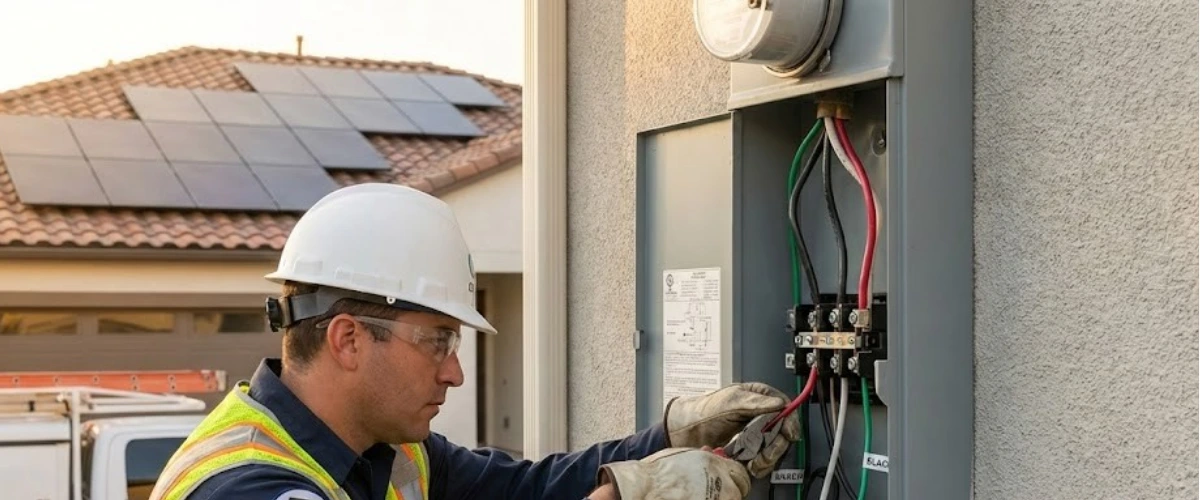
You've signed the contract, picked your panels, and you're excited about slashing your electricity bill. Then your installer casually mentions they'll be "running into your basement panel" instead of connecting at the meter like you expected.
Suddenly you're second-guessing everything. Is this normal? Are they cutting corners? Why does your neighbor's system connect differently?
Here's the truth: where solar panels connect to your home depends on your utility company's requirements, your electrical setup, and California's evolving regulations. And yes, both methods are legitimate—when done correctly.
Let's clear up the confusion so you know exactly what to expect when US Power installs your system.
Why Solar Connection Points Matter for California Homeowners
The connection point isn't just a technical detail. It affects your installation timeline, your system's safety, and even your utility's approval process.
Your Utility Company Makes the Rules
Southern California Edison (SCE), Pacific Gas & Electric (PG&E), and other utilities each have specific interconnection requirements. Some prefer meter connections. Others require panel connections. A few allow both, depending on your system size.
The reason? They're protecting their infrastructure and ensuring your system meets grid safety standards. When your solar panels generate excess power, it flows back to the grid. Your utility needs to control how that happens.
Two Common Connection Methods Explained
Meter Connection (Supply-Side): Your solar system connects before your main electrical panel, typically at or near your meter. This method works well for larger systems and homes with limited panel space.
Panel Connection (Load-Side): Your solar system connects directly to your main electrical panel in your home. This is more common for residential systems under 10kW and homes with adequate panel capacity.
Neither method is inherently better. What matters is proper installation by CSLB-licensed electricians who follow your utility's requirements..
How Solar Panels Actually Connect to Your Home's Electrical System
Understanding the physical connection helps you ask the right questions and spot potential issues before they become problems.
The Step-by-Step Connection Process
Your solar panels generate DC (direct current) electricity on your roof. That power travels through conduit to your inverter, which converts it to AC (alternating current) electricity your home can use.
From the inverter, the connection method depends on your utility's requirements and your home's setup. If connecting at the panel, your electrician will install a dedicated solar breaker in your main electrical panel. If connecting at the meter, they'll install a separate disconnect between the meter and your panel.
Here's what makes how solar panels connect to your electrical panel more complex than it sounds: Your system must integrate seamlessly with your existing electrical infrastructure while meeting modern safety codes.
Why Some Utilities Prefer Different Connection Methods
Co-ops and municipal utilities sometimes have more flexibility than investor-owned utilities like SCE. They may allow meter connections more readily because they control their entire infrastructure.
SCE and PG&E, serving millions of customers, enforce stricter interconnection standards. They want consistency across their service territory. That's why your installer might tell you, "SCE won't let us connect at the meter for your size system."
It's not your installer being difficult. It's California's complex regulatory landscape protecting both you and the grid.
What to Expect During Your Solar Installation in Southern California
Knowing the solar installation timeline helps you plan around work, family schedules, and that December 31, 2025 tax credit deadline.
Pre-Installation: Permits and Utility Approval
Before anyone touches your roof, your installer submits plans to your local building department and your utility company. This is where connection methods get decided.
SCE typically takes 15-30 business days to review interconnection applications. PG&E runs similar timelines. Your installer needs utility approval before they can legally connect your system.
Installation Day: What Actually Happens
US Power's CSLB-licensed electricians arrive with a detailed connection plan already approved by your utility. They'll show you exactly where the connection point will be and explain any concerns you have.
The physical installation takes 1-3 days depending on your system size. The electrical connection itself? Usually just a few hours once the panels and inverter are in place.
Post-Installation: The Inspection and Permission to Operate
After installation, your local building department inspects the work. Once they approve it, your installer requests Permission to Operate (PTO) from your utility. This utility approval process determines when you can actually start generating solar power.
SCE typically grants PTO within 10-15 business days after passing inspection. Until then, your system stays offline.
SCE and PG&E Interconnection Requirements You Need to Know
California's major utilities have specific rules that determine how your solar system connects. Here's what Southern California homeowners face in 2025.
SCE's Latest Interconnection Policies
Southern California Edison updated their interconnection requirements in 2024, affecting how systems connect to the grid. For residential systems under 10kW, they typically require load-side (panel) connections unless your main panel lacks adequate space.
Larger systems may need supply-side (meter) connections with additional disconnect switches. SCE wants clear access to disconnect your system if grid maintenance requires it.
Why NEM 3.0 Changes Everything About Connections
Net Energy Metering 3.0, which took effect in April 2023, dramatically reduced the value of solar energy sent back to the grid. Now you're better off storing excess power in batteries rather than selling it to SCE.
This is why whether to add battery storage has become critical for new solar installations. And battery systems add another connection point your installer must plan for.
Understanding California's Solar Permit Requirements
Before any connection work begins, your installer must secure solar permit requirements in California. Los Angeles, Orange County, Ventura, San Bernardino, and Riverside each have slightly different building codes.
US Power handles all permitting for you, ensuring your connection method meets both local codes and utility requirements. No homeowner should navigate this bureaucratic maze alone.
How US Power Handles Utility Connections Differently
After 165+ five-star Google reviews, we've learned that transparent communication about connection methods prevents 90% of homeowner anxiety.
We Explain Your Specific Connection Method Upfront
During your free consultation, our CSLB-licensed consultants show you exactly where your system will connect and why. We don't wait until installation day to surprise you with technical details.
If SCE requires a panel connection but your panel lacks space, we'll discuss your options: upgrading your panel, installing a sub-panel, or exploring meter connection alternatives.
Our Electricians Navigate Utility Requirements Daily
US Power exclusively installs QCells systems across Southern California. We submit interconnection applications to SCE, PG&E, and local utilities every single day. We know their current requirements, their approval timelines, and how to avoid delays.
When choosing a licensed solar installer, ask them how many SCE interconnection applications they've completed in the past month. The answer reveals their expertise.
3-6 Week Installation Timeline—Including Utility Approval
From contract signing to PTO, US Power averages 3-6 weeks total. That includes permitting, installation, inspection, and utility approval. Other companies quote 8-12 weeks because they're juggling multiple vendors and inexperienced crews.
We control the entire process with our own CSLB-licensed electricians and direct QCells partnership. Fewer hands in the process means faster timelines and fewer mistakes.
Red Flags: When Connection Methods Signal Bigger Problems
Not every installer follows utility requirements correctly. Here's what should make you ask more questions.
They Can't Explain Why They're Using a Specific Method
A legitimate installer will explain exactly why they're connecting at the meter versus the panel. They'll reference your utility's requirements and your home's electrical capacity.
If they say "trust me" or "that's just how we do it," you're dealing with someone who either doesn't understand the regulations or doesn't care about compliance.
They Skip the Utility Interconnection Application
Some installers try to rush installations without proper utility approval. This creates massive problems when you request PTO and your utility discovers non-compliant work.
US Power submits interconnection applications before installation begins. We wait for utility approval before we start work. It takes longer upfront but prevents devastating delays later.
They Don't Discuss Your Electrical Panel's Capacity
Your main electrical panel has a maximum amperage rating—typically 100, 125, or 200 amps for residential homes. Adding solar requires adequate capacity for the new breaker.
If your installer never examined your panel or discussed capacity, they're setting you up for common solar installation mistakes that could delay your project by weeks.
Should You Add Battery Storage During Installation?
With NEM 3.0 reducing the value of grid exports, most California homeowners benefit from installing batteries alongside solar panels.
Why Battery Connection Points Matter
Battery systems add complexity to your electrical connection. They typically connect to your main panel through a separate breaker or sub-panel, creating a critical backup circuit for essential loads.
Your installer must plan battery connections during the initial design phase. Retrofitting batteries later means additional permits, inspections, and electrical work—all costing you more money.
US Power's Integrated Solar + Battery Installations
We recommend battery storage for 85% of our Southern California customers. Under NEM 3.0, storing excess solar power for evening use saves significantly more money than selling it back to SCE at reduced rates.
Our QCells battery systems integrate seamlessly with your solar panels, sharing the same inverter and connection point. This reduces installation complexity and long-term maintenance needs.
Your Next Steps: Getting Started with US Power Solar
You now understand where solar panels connect to your home and why different methods exist. Here's how to move forward confidently.
First, schedule a free consultation—virtual or on-site—with our CSLB-licensed team. We'll evaluate your home's electrical system, review your utility's requirements, and design a connection method that works.
Second, ask specific questions about your installation timeline, permit process, and utility approval. A transparent installer welcomes detailed questions. A sketchy one dodges them.
Third, verify your installer's licensing and insurance. California requires CSLB licensing for solar installations. US Power maintains full licensing, bonding, and insurance to protect both our team and your home.
Frequently Asked Questions About Solar Panel Connections in California
Do solar panels connect to the meter or the electrical panel?
Both methods are used depending on your utility's requirements and your home's electrical setup. SCE and PG&E determine which connection method your system requires based on system size, panel capacity, and local regulations. US Power's electricians follow your utility's specific interconnection guidelines.
How long does it take to get utility approval for solar in California?
SCE typically approves interconnection applications in 15-30 business days. After installation and inspection, Permission to Operate (PTO) takes another 10-15 business days. Total timeline from application to PTO averages 30-45 days, though US Power's streamlined process often beats these averages.
Can I choose where my solar panels connect to my home?
Not entirely. Your utility company and local building codes dictate acceptable connection methods. However, if you have multiple compliant options, your installer can discuss preferences. US Power always explains your options and recommends the most reliable, cost-effective approach.
What happens if my electrical panel doesn't have enough space for solar?
You have three options: upgrade your main panel (typically $1,500-$3,000), install a sub-panel for the solar connection ($800-$1,500), or pursue a meter-based connection if your utility allows it. US Power evaluates your specific situation during the free consultation.
Why do some installers say they can't connect at the meter?
Each utility has specific policies about meter-based (supply-side) connections. SCE restricts meter connections for certain system sizes or requires additional safety equipment. If an installer says they can't connect at the meter, they're following your utility's interconnection requirements—not trying to complicate your project.
Do battery systems require a separate connection point?
Yes, battery systems typically need their own connection to your main panel or a critical loads sub-panel. This allows batteries to power essential circuits during outages while maintaining proper safety disconnects. US Power designs integrated solar + battery systems with streamlined connection points.
Connection Method Matters Less Than Installer Quality
Where your solar panels connect to your home—meter or panel—matters far less than who's doing the connecting.
US Power have installed hundreds of systems across Southern California. We navigate SCE requirements, PG&E regulations, and local building codes daily. We know which connection methods work best for your specific situation.
More importantly, we explain everything upfront. No surprises. No technical jargon. Just honest guidance from consultants who want you to make the best decision for your home and budget.
Your Southern California neighbors are already saving with factory-direct QCells pricing and comprehensive 25-year warranties. Join the 165+ five-star reviews from homeowners who chose transparency over sales pressure.
The 30% federal tax credit expires December 31, 2025. With US Power's 3-6 week installation timeline, you still have time—but not much.
Ready to understand exactly how solar will work for your home? Schedule your free consultation today.
Frequently Asked Questions
Do solar panels connect to the meter or the electrical panel?
How long does it take to get utility approval for solar in California?
Can I choose where my solar panels connect to my home?
What happens if my electrical panel doesn't have enough space for solar?
Do battery systems require a separate connection point?



Bought a House with Solar? Here's How to Pick the Right PG&E Rate Plan
PG&E wants you to choose a rate plan, and you have no idea which one won't cost you.

Affordable Solar Financing Options in Southern California
Save more with affordable and smart solar financing or cash option with US Power.
Why Homeowners Should Consider Owning the Solar System — Not Leasing
Build equity and save with Qcells solar ownership in SoCal. Secure your savings!








Derechos de autor © 2025 US POWER | Energía solar y techosUS Power - Axia by QCells. All Rights Reserved.

¡Obtenga una estimación solar instantánea usando el satélite!