




Do Solar Panels Really Produce What Installers Promise? Real Data

Wondering if solar panels actually deliver on installer promises? A Southern California homeowner shares real production data from their 11.25kW system—46.5kWh in January alone.
You've probably heard the pitch before. "Your system will produce X amount of energy." "You'll save Y dollars per month." "Trust our estimates."
But when the panels finally go live on your roof, do they actually deliver? Or is it just another case of overpromising and underdelivering?
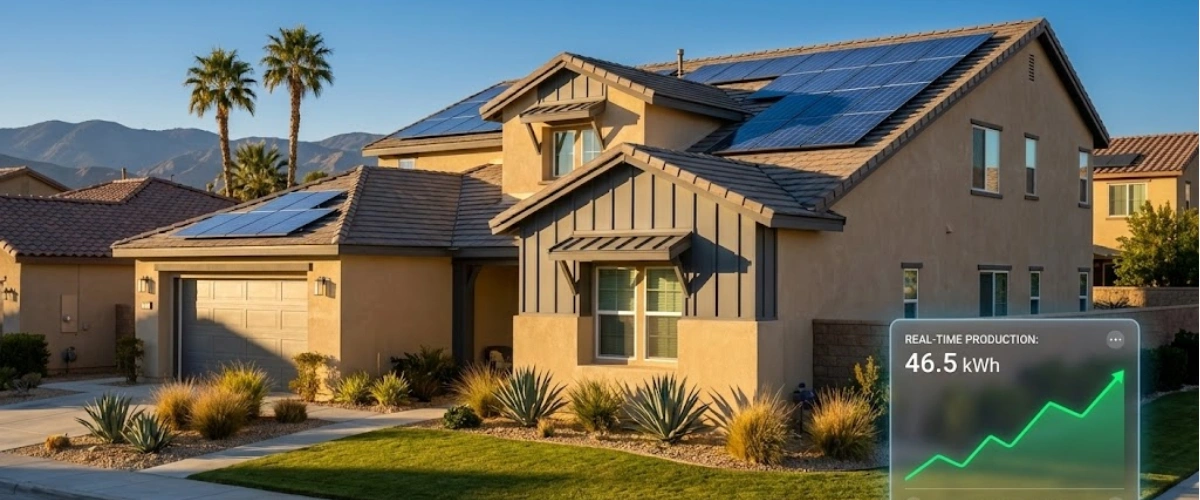
A recent post in the r/solar community answers that question perfectly. A Southern California homeowner with an 11.25kW system shared their January production data: 46.5 kWh generated in a single winter day. The kicker? Their system performed "literally on the DOT" compared to pre-installation estimates.
Let's break down what this means for you, why accurate performance matters, and how to ensure your solar investment delivers exactly what you're promised.
Why Solar Performance Estimates Matter More Than Ever
When you're investing $20,000 to $35,000 in a solar system, you need to know it'll actually work. Not just "kind of" work. Not "close enough." You need precision.
The homeowner in this case installed their system with 25 REC 450-watt panels—15 facing south, 10 facing west—both at a 22-degree tilt. Their system got Permission to Operate (PTO) right before December's rain, so January was their first full month of real-world production.
The Numbers Don't Lie
Estimated production (with weather data): 47.1 kWh
Actual production: 46.5 kWh
Variance: Less than 1.3%
That's not "close." That's pinpoint accuracy. And it's exactly what you should expect from a properly designed system with honest projections.
What Made This System Perform So Well?
The homeowner's setup included several key factors that contributed to meeting estimates:
- Strategic panel placement: Dual-directional arrays (south and west) maximize production throughout the day
- Professional installation: They worked with a highly-rated local installer who understood Southern California's unique sun patterns
- Quality equipment: REC panels are known for consistent performance and durability
- Realistic estimates: The installer used actual weather data and site-specific factors, not inflated projections
Real Performance Data: What 11.25kW Actually Produces
Let's get specific. This system generated 46.5 kWh on a single January day in Southern California. For context, the average California home uses about 20-30 kWh per day.
This homeowner's energy flow broke down like this:
- 47% to home use: 22.3 kWh powering the house directly
- 49% to Powerwall storage: 22.9 kWh stored for evening/night use
- 4% to grid: 1.2 kWh exported (minimal under NEM 3.0)
That energy distribution is textbook NEM 3.0 optimization. Almost no export to the grid during the day, maximum self-consumption, and enough battery storage to cover evening demand.
If you're wondering how solar batteries can maximize your savings, this is exactly the playbook.
January Production: What You Can Really Expect
One of the biggest fears Southern California homeowners have? "Will my system still produce in winter?"
The short answer: Yes, absolutely.
This homeowner's system crushed January production despite shorter days and occasional cloud cover. Here's what you need to know about winter solar production in California:
- Clear winter days are incredibly productive: Less atmospheric haze means more direct sunlight reaches your panels
- Cooler temperatures boost efficiency: Solar panels actually perform better in cooler weather
- Summer will be even better: If January hits 46 kWh, expect 60-70 kWh on peak summer days
Other homeowners in the thread confirmed this pattern. One commenter with a 9.6kW system mentioned they "fully charge batteries on sunny days in December and January" with excess solar to spare for EV charging in summer.
Why NEM 3.0 Makes Battery Storage Essential
Notice that only 4% of this system's production went to the grid? That's intentional.
Under California's NEM 3.0 rules, selling solar back to the grid during the day nets you about 75-80% less than it did under NEM 2.0. The smart play—as this homeowner demonstrates—is to store your excess energy and use it at night when electricity from the grid costs the most.
Their setup included one Powerwall 3 with expansion (approximately 27 kWh total storage), which charged fully during the afternoon and carried the home through the evening peak hours.
Want to understand the NEM 3.0 billing changes and why battery storage isn't optional anymore? The math is simple: store your power when it's abundant, use it when grid rates spike.
Why Your Installer Choice Determines System Performance
Here's something most homeowners don't realize: two identical solar systems can produce drastically different results based purely on installation quality.
The Reddit user specifically praised their installer, noting they were "amazing to work with" and completed installation in just 30 days from contract signing. Multiple other homeowners jumped into the thread confirming they'd also worked with the same company and had similar positive experiences.
What makes a great installer? Based on this real-world example:
Professional System Design
The installer analyzed the homeowner's roof orientation, identified optimal panel placement, and designed dual-directional arrays to maximize production. They didn't just slap panels wherever they'd fit—they engineered the system for peak performance.
Accurate Projections
Using actual weather data and site-specific variables, the installer provided estimates that matched reality within 1.3%. That's the sign of an installer who understands their craft and doesn't inflate numbers to close sales.
Fast, Clean Installation
From contract to install took 30 days. Clean work. No callbacks. System performed exactly as promised on day one.
The lesson? Choosing the right solar installer isn't just about finding the lowest price. It's about finding a company with the engineering expertise and installation quality to deliver results.
Understanding Your Solar System Size
The homeowner's 11.25kW system with 25 panels might sound arbitrary, but it was carefully sized to their home's energy needs.
System sizing depends on several factors:
- Your average monthly electricity usage (in kWh)
- Your roof's available space and orientation
- Your budget and financing options
- Whether you're adding battery storage
- Future energy needs (like EV charging)
This homeowner mentioned they were able to "charge the wall and car this afternoon"—meaning their system was sized with growth in mind.
If you're trying to figure out understanding your solar system size for your specific home, a quality installer will run detailed consumption analysis before recommending a system size.
What to Expect: From Contract to Production
Let's talk timelines, because this is where many homeowners get frustrated.
The Reddit user's experience:
- Contract to installation: 30 days (excellent)
- Waiting for SCE to install switch: 2.5 months (typical, unfortunately)
- Total time to PTO: Just under 3 months
That 2.5-month utility wait? It's not unusual. SCE, PG&E, and other California utilities have been overwhelmed with solar interconnection requests. Some homeowners are waiting 3-4 months just for the utility to install the net meter.
Here's the reality of the solar installation timeline in California:
- Site evaluation and contract: 1-2 weeks
- System design and permitting: 2-3 weeks
- Physical installation: 2-3 days
- City/county inspection: 1-2 weeks
- Utility interconnection approval: 1-3 months (the bottleneck)
Total realistic timeline: 3-5 months from signing to PTO
The good news? Once you get Permission to Operate, your system produces immediately. This homeowner started generating power right before the December rains and saw full production by January.
US Power's Performance Guarantee: What Sets Us Apart
At US Power, we don't just promise accurate estimates—we guarantee them. Here's how we ensure your system performs exactly as projected:
Factory-Direct QCells Partnership
As Southern California's exclusive QCells partner, we source American-made panels directly from the manufacturer. No middleman markups. No compromises on quality. Just premium equipment at 15-20% below market rates.
CSLB-Licensed Consultants
Our team includes California State License Board (CSLB) licensed professionals who understand local building codes, utility requirements, and Southern California's unique solar considerations. They design systems based on real data, not sales targets.
25-Year Comprehensive Warranty
We back every installation with industry-leading protection covering panels, workmanship, and performance. Learn more about our 25-year comprehensive warranty and what it means for your investment.
3-6 Week Installation Timeline
While we can't control utility interconnection delays, we commit to completing your physical installation within 3-6 weeks of permit approval. No drawn-out construction. No endless delays.
Transparent Pricing, Zero Hidden Fees
You'll know exactly what you're paying before we start. No surprise charges. No fine print fees. Just honest pricing for quality work.
Don't Let Utility Delays Cost You the 30% Tax Credit
Here's the urgent part: the 30% federal solar tax credit ends December 31, 2025. It drops to 26% in 2026 and continues decreasing from there.
With utility interconnection delays averaging 2-3 months in Southern California, homeowners who wait until fall 2025 risk missing the deadline entirely.
The IRS requires your system to be "placed in service" (receiving PTO) by December 31st to qualify for the full 30% credit. If SCE or PG&E drags their feet on your interconnection, you could lose thousands in tax savings through no fault of your own.
The solution? Start now. Even if you're just exploring options, beginning the conversation today means you'll have time to navigate utility delays and still capture the full tax credit.
Want to know how to get solar approval faster? Working with an experienced installer who knows how to navigate utility processes can shave weeks off your timeline.
Get Real Performance Data for Your Home
The homeowner in this story didn't get lucky. They didn't hit some magical jackpot with perfect solar conditions. They simply worked with a quality installer who provided accurate estimates and delivered professional installation.
You can have the same results.
Southern California has some of the best solar conditions in the country. With the right equipment, proper installation, and realistic expectations, your system will produce exactly what you're promised—maybe even more.
The question isn't whether solar works. This real-world data proves it does, and does it well. The question is whether you'll take action before the 30% tax credit disappears and SCE/PG&E rates climb even higher.
Frequently Asked Questions
How accurate are solar production estimates?
Will my solar panels produce enough energy in winter?
Do I really need battery storage with solar?
How long does solar installation really take in California?
What happens if my system doesn't meet estimates?


How to Build a Fully Solar-Powered Home in Southern California
Rising rates and changing policies are pushing SoCal homeowners to go fully solar.

Guía para propietarios de viviendas sobre la compra de paneles solares
A simple guide to buying the right solar panels for Southern California homes.
How to Size Your Solar System Correctly in California (2026 Guide)
Stop paying for solar panels you don't need. Learn how to size your solar system.








Derechos de autor © 2025 US POWER | Energía solar y techosUS Power - Axia by QCells. All Rights Reserved.

¡Obtenga una estimación solar instantánea usando el satélite!