




Can You Add Solar Panels to NEM 2.0 Without Losing Status?

Your energy usage doubled with two EVs, but you're locked into valuable NEM 2.0. Can you add panels without losing grandfathered status? Here's what Southern California homeowners need to know.
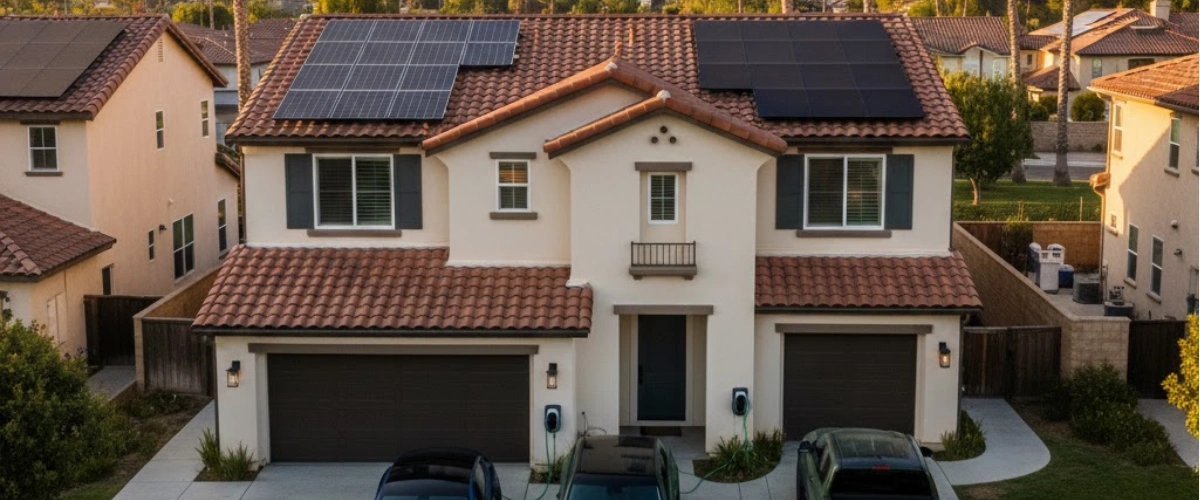
You made the smart move in 2021. You locked in NEM 2.0, got your solar panels installed, and watched your electric bills drop to near zero. Life was good.
Then your lifestyle changed. Maybe you bought an electric vehicle—or two. Or you added a home office, installed a pool, or expanded your family. Now your usage has doubled, and those SCE credits you banked each summer? They're gone by February.
Here's the question keeping thousands of Southern California homeowners up at night: Can you add more solar panels without PG&E or SCE kicking you off NEM 2.0? The answer is more complicated than a simple yes or no, but there are proven strategies to expand your system safely.
Understanding Your NEM 2.0 Grandfathered Status
Net Energy Metering 2.0 is the golden ticket of California solar. If you interconnected before April 2023, you're grandfathered into a rate structure that pays you retail rates for excess solar energy sent to the grid. That means every kilowatt-hour you export offsets your usage at the same rate you'd pay SCE or PG&E.
NEM 3.0 customers? They get paid 75-80% less for their exports. For a typical Southern California home, that's the difference between a 6-year payback and a 12-year payback.
Your NEM 2.0 status is protected for 20 years from your interconnection date. But here's the catch: any modification to your system capacity can trigger a review by your utility company. And if they determine you've materially changed your system, they can force you onto NEM 3.0.
For a detailed breakdown of how this works, check out this NEM 2.0 comprehensive guide.
Why Utility Companies Are Watching
Don't assume SCE or PG&E won't notice if you quietly add panels. Your utility company tracks your system's production data through your inverter. They know exactly how much energy your system is rated to produce.
If your solar generation suddenly jumps by 50-100% without any paperwork filed, expect questions. The utilities are highly motivated to move as many customers as possible from NEM 2.0 to NEM 3.0—it impacts their bottom line significantly.
Why Southern California Homeowners Face This Problem
Your original solar system was sized perfectly for your usage in 2021. But life happens fast, especially in Southern California where EV adoption is exploding.
Here's what's changed for most homeowners:
Electric Vehicles: A single EV adds 3,000-4,500 kWh annually to your usage. Two EVs? You've just doubled your electricity consumption. At Southern California's current rates, that's an extra $150-$250 per month if you're charging from the grid.
Work-From-Home Reality: Your home office runs air conditioning, computers, and monitors 8-10 hours daily. That's an additional 200-300 kWh monthly that wasn't in your original solar calculation.
Rising Electric Rates: Even if your usage stayed the same, how much it costs to charge an electric vehicle and SCE rates have increased 30-40% since 2021. Your 100% offset system from three years ago is now covering only 70-80% of your costs.
The Two-EV Problem
Let's talk numbers. Say you drive 30 miles daily per vehicle. That's 60 miles combined, requiring roughly 20 kWh daily or 600 kWh monthly. Your original 8kW system produced about 1,000 kWh monthly—perfect for your pre-EV usage of 800 kWh.
Now you need 1,400 kWh monthly, but you're still only generating 1,000 kWh. You're pulling 400 kWh from the grid every month at $0.40-0.50 per kWh. That's $160-$200 monthly in true-up charges, completely erasing your solar savings.
The Smart Solution: Zero-Export Solar Systems
This is where solar professionals earn their money. The safest way to add capacity without triggering NEM 3.0 is through a zero-export system expansion.
Here's how it works: You install a completely separate solar system with its own inverter that's configured to never export power to the grid. Current transformers (CTs) monitor your home's electricity flow in real-time. When your home needs power, the zero-export system provides it. When there's excess generation, the system throttles back to prevent grid export.
Your original NEM 2.0 system keeps operating exactly as it did—exporting to the grid, building credits, offsetting your usage. The new system simply reduces how much power you pull from the grid during the day.
For more details on this approach, see zero-export solar systems.
How Zero-Export Protects Your NEM 2.0
The key is that zero-export systems fall under different interconnection rules. Because they never export to the grid, they don't trigger the capacity modification clauses in your NEM 2.0 agreement.
You're essentially running two separate systems:
- System 1 (NEM 2.0): Your original panels that export to the grid and earn full retail credits
- System 2 (Zero-Export): New panels that only power your home loads, never the grid
This configuration requires sophisticated inverter technology and proper CT installation, but it's completely legal and utility-approved when done correctly.
The 10% Rule: Your Other Option
There's another path that's simpler but more limited. Under California's interconnection rules, you can add up to 10% more capacity or 1 kW (whichever is greater) to your existing system without triggering a NEM agreement change.
If you have an 8 kW system, you can add 0.8 kW (about 2-3 panels) without penalty. If you have a smaller 5 kW system, you can still add 1 kW (about 3 panels) because of the minimum threshold.
This won't fully solve a doubled-usage problem, but it helps. Those extra 2-4 panels generate an additional 100-150 kWh monthly—enough to cover one EV's charging if you're careful about timing.
The Gray Area Nobody Talks About
Here's where it gets murky: How many times can you use the 10% rule? The regulations don't explicitly say "once." Some homeowners have successfully added 10% capacity multiple times over several years.
But this is risky territory. Each addition requires proper permitting and utility notification. If SCE or PG&E suspects you're gaming the system, they can force a full review of your interconnection agreement.
Should You Add Battery Storage with Your Expansion?
If you're installing a zero-export system anyway, adding battery storage makes tremendous sense—especially for EV charging.
Here's the strategy: Your zero-export solar generates power during the day. Instead of immediately using it or having it throttle back, the system charges your battery. Then you use that stored solar energy to charge your EVs overnight when SCE's time-of-use rates are lowest.
This solves the fundamental problem many EV owners face: Your cars are at work during peak solar hours. Without a battery, you can't use your solar to charge them. With a battery, you're essentially shifting your solar generation to match your EV charging schedule.
Learn more about how solar batteries can maximize your savings.
Battery Costs vs. Benefits in 2026
Yes, batteries add $10,000-$15,000 to your project cost. But consider this: If you're charging two EVs primarily from the grid at $0.45 per kWh, you're spending $270 monthly or $3,240 annually.
A 13.5 kWh battery can store enough solar energy to fully charge one EV daily. Over the battery's 10-year warranty period, that's $32,000 in grid charging costs avoided. The math works.
Plus, California's SGIP rebates can cover $2,000-$4,000 of battery costs if you're in an eligible utility territory. And the 30% federal tax credit applies to batteries installed with solar.
What Happens If You Get Kicked to NEM 3.0?
Let's be clear about what you're protecting. If you lose NEM 2.0 status, here's what changes:
Export Rates Drop 75-80%: That excess solar you generate on sunny days? Under NEM 2.0, it's worth $0.40-0.50 per kWh. Under NEM 3.0, it drops to $0.08-0.12 per kWh.
Time-of-Use Becomes Critical: NEM 3.0 export values change hour by hour. You'll need battery storage to shift your solar generation to high-value evening hours, or you'll lose most of your system's economic benefit.
Payback Periods Double: A system that would pay for itself in 6-7 years under NEM 2.0 takes 12-14 years under NEM 3.0. For many homeowners, that eliminates the financial incentive entirely.
For a detailed comparison, read about how NEM 3.0 changes everything.
Real Numbers from Southern California Homeowners
A Pasadena homeowner with a 10 kW NEM 2.0 system generates 1,300 kWh monthly. Under NEM 2.0, excess exports earn him $520 in annual credits. Under NEM 3.0, those same exports would earn $125 annually—a $395 annual loss that compounds over 20 years to nearly $8,000 in lost value.
This is why protecting your NEM 2.0 status is worth the extra planning and investment in proper expansion methods.
How US Power Handles NEM 2.0 System Expansions
Not all solar companies understand the nuances of NEM 2.0 expansion. Many will tell you it's impossible to add panels, or worse, they'll add them incorrectly and trigger your removal from NEM 2.0.
US Power's CSLB-licensed consultants specialize in complex expansions. We've completed hundreds of zero-export installations across Southern California, and we understand exactly how to navigate utility requirements.
Our process includes:
- Free NEM 2.0 compliance audit of your current system
- Utility interconnection research to verify your grandfathered status
- Zero-export system design with proper CT placement
- Complete permitting and utility coordination
- Post-installation verification that your NEM 2.0 status remains intact
We also offer factory-direct QCells pricing that's 15-20% below market rates, so your expansion investment goes further.
When you're considering how to choose a solar company, make sure they have specific experience with NEM 2.0 expansions. One mistake can cost you thousands in lost credits.
Before You Add More Panels: Critical Steps
Don't rush into expansion without doing your homework. Here's your pre-installation checklist:
Verify Your Current NEM Status
Log into your SCE or PG&E account and download your original interconnection agreement. Confirm your NEM 2.0 enrollment date and verify your system's registered capacity. Any discrepancies need resolution before you proceed.
Calculate Your Actual Usage Increase
Pull 12 months of utility bills and compare them to your original system design. How much has your usage actually increased? This determines how much capacity you need to add.
Many homeowners overestimate. If you've added 400 kWh monthly usage, you need 3-4 kW of additional capacity, not 8-10 kW. Right-sizing prevents unnecessary costs.
Understand Your Roof Space and Electrical Capacity
Zero-export systems need physical space for panels and available electrical panel capacity for the additional inverter. Have your roof and electrical system evaluated before committing to a design.
Review Permitting Requirements
Southern California cities have varying solar permitting requirements. Some require structural calculations for any panel addition. Others have setback requirements that limit usable roof space. Factor permitting into your timeline—it can add 4-8 weeks to the project.
Here's everything else in things you must know before going solar.
Your Next Steps: Getting Started with Your Expansion
Ready to solve your doubled-usage problem without risking your NEM 2.0 status? Here's what happens next:
Step 1: Free Consultation - Our CSLB-licensed consultants review your current system, utility bills, and expansion goals. We verify your NEM 2.0 status and assess feasibility. This consultation is completely free with no obligation.
Step 2: Custom Design - We create a zero-export system design that fits your roof, matches your increased usage, and complies with all utility requirements. You'll see exactly how much energy you'll generate and what it costs.
Step 3: Permitting and Approvals - We handle all city permitting and utility coordination. You don't deal with paperwork or phone calls. We update you at each milestone.
Step 4: Professional Installation - American-made QCells panels installed by our experienced crews in 3-6 weeks from approval. Every installation includes a 25-year comprehensive warranty covering panels, workmanship, and performance.
Step 5: System Activation and Verification - After city inspection and utility approval, we verify your zero-export system operates correctly and your NEM 2.0 status remains protected.
The typical solar installation timeline for zero-export expansions is 6-10 weeks from consultation to activation, depending on permitting and utility processing times.
Don't Risk Your NEM 2.0—Get Expert Guidance
Your NEM 2.0 status is worth $300-$500 monthly in full retail-rate credits—that's $72,000-$120,000 over the remaining 15-17 years of your 20-year protection period. Losing it because of improper system expansion would be a $100,000 mistake.
Zero-export solar systems let you have both: The capacity to cover your increased usage AND the protection of your valuable NEM 2.0 grandfathered status.
But this isn't DIY territory. You need CSLB-licensed professionals who understand California's interconnection rules, utility requirements, and proper zero-export system design.
US Power has completed hundreds of successful NEM 2.0 expansions across Los Angeles, Orange County, Ventura, San Bernardino, and Riverside. Our customers keep their NEM 2.0 status, eliminate their electric bills, and enjoy the confidence of our 25-year comprehensive warranty.
Southern California's electric rates will keep rising. Your EV charging costs will keep climbing. The question isn't whether to expand your solar—it's whether you'll do it right and protect what you've already earned.
Frequently Asked Questions
Can I add panels from a different manufacturer than my original system?
Will my homeowner's insurance increase?
What happens if I sell my home with two separate solar systems?
Can I add battery storage later if I don't want it now?
How do I charge my EVs if I'm home during the day?


How to Get California's SGIP Battery Rebate Before Funds Run Out in 2025
Solar battery rebates disappearing fast—Call US Power before it's too late.
Arrendamiento frente a la compra de paneles solares en California
Compare real costs of leasing vs buying solar panels for California homeowners.
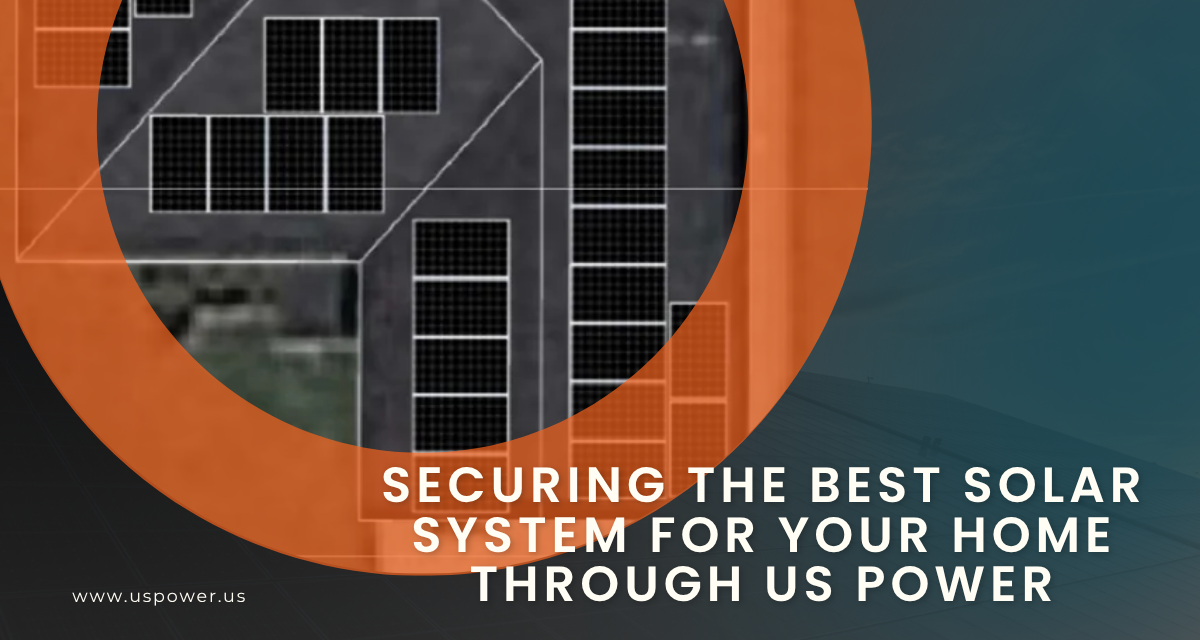
Securing the Best Solar System for Your Home Through US Power
Go solar the right way! Install Qcells panels hassle-free through US Power.








Derechos de autor © 2025 US POWER | Energía solar y techosUS Power - Axia by QCells. All Rights Reserved.

¡Obtenga una estimación solar instantánea usando el satélite!