



How to Get California's SGIP Battery Rebate Before Funds Run Out in 2025
SGIP rebates cover 15-100% of battery costs, but PG&E funding is almost gone.

If you're a California homeowner considering solar and battery storage, you've probably heard about SGIP—the Self-Generation Incentive Program. This state-funded rebate can cover anywhere from 15% to 100% of your battery installation costs, depending on your income and location. But here's the problem: funding is running out fast, especially for PG&E customers.
In fact, recent reports show PG&E's Residential Solar and Storage Equity (RSSE) budget has less than $25,000 remaining. That's barely enough for one or two systems. With the program ending December 31, 2025, and the 30% federal tax credit expiring the same day, California homeowners face a critical decision point.
The good news? If you act quickly and work with an installer who truly understands SGIP applications, you can still secure these life-changing rebates. Here's everything you need to know.
Understanding California's SGIP Battery Rebate Program
The Self-Generation Incentive Program isn't new—it's been around since 2001. But in 2025, it's evolved into California's most powerful battery storage incentive, especially for homeowners in wildfire-prone areas or those on income-qualified utility programs like CARE or FERA.
What SGIP Actually Covers
SGIP provides cash rebates for installing qualifying battery storage systems. Unlike tax credits that reduce what you owe the IRS, SGIP rebates are direct payments made after your system passes inspection and receives Permission to Operate (PTO).
The rebate amount depends on which budget category you qualify for. General market customers (those without income or location qualifications) receive about $150-250 per kilowatt-hour of storage capacity. That means a typical 13.5 kWh battery system might receive $2,000-3,400.
But here's where it gets interesting. If you qualify for equity programs—either through income eligibility or living in a High Fire-Threat District—your rebate jumps to $850-1,000 per kWh. For more details on how these categories work, read our complete guide on California SGIP Rebates for Home Batteries.
The Three Main SGIP Budget Categories
General Market: Available to all PG&E, SCE, SDG&E, or SoCalGas customers. Covers approximately 15-25% of battery costs. Current funding is limited but still available in most territories.
Equity Budget: For low-income customers (at or below 80% of area median income) or residents of disadvantaged communities. Rebate rate is $850/kWh, covering about 80% of installation costs.
Equity Resiliency: The most generous category at $1,000/kWh, covering up to 100% of costs. Available to customers who meet Equity criteria AND live in Tier 2 or Tier 3 High Fire-Threat Districts, or have experienced two or more PSPS (Public Safety Power Shutoff) events.
The challenge? Many installers don't understand these distinctions or have given up on SGIP applications entirely because of the complexity.
Why Solar + Battery Systems Qualify for Higher SGIP Rebates
Here's something most homeowners don't realize: the new Residential Solar and Storage Equity (RSSE) budget—which opened June 2, 2025—requires paired solar and battery systems. You can't apply for battery-only under this $280 million program.
This requirement reflects California's shift under NEM 3.0 (the current solar billing structure). Since April 2023, new solar customers earn significantly less for exporting excess power to the grid. Battery storage is now essential to capture and use your solar energy during expensive evening hours when rates are highest.
As we explain in everything you need to know about solar and battery storage, paired systems deliver three key benefits: lower electric bills through time-of-use optimization, backup power during outages, and maximum solar investment return.
System Sizing Requirements for SGIP
The RSSE program has specific sizing rules. Your solar system must be sized to cover your annual electricity usage (typically 90-110% of your yearly consumption). Battery capacity is capped at 30 kWh for residential applications.
Most Southern California homes install 8-12 kW solar arrays paired with 13.5-20 kWh of battery storage. This configuration qualifies for the full SGIP rebate while providing 8-12 hours of backup power during outages.
The reality is simple: why solar panels alone aren't enough in 2025. Between NEM 3.0's reduced export rates and increasing PSPS events, batteries have shifted from optional to essential.
How Battery Storage Protects You During PSPS Outages
If you live in Southern California's foothills, Ventura County's mountainous areas, or anywhere SCE labels as Tier 2 or Tier 3 fire risk, you've probably experienced a PSPS event. These planned power shutoffs can last 2-5 days during extreme fire weather.
Battery storage changes everything. When the grid goes down, your solar panels continue generating power during daylight hours, charging your battery. At night, the battery keeps critical loads running—refrigerator, medical equipment, internet, lights, phone charging.
The financial impact goes beyond avoiding spoiled food. If you work from home, a multi-day outage means lost income. If you have medical needs, it means safety. This is why SGIP prioritizes customers in high-risk areas with higher rebate amounts.
As detailed in how solar batteries can maximize your savings, the dual benefit of bill reduction plus blackout protection creates a compelling value proposition that pays for itself even without rebates.
Stacking SGIP with the 30% Federal Tax Credit
Here's where things get really interesting: you can combine SGIP rebates with the federal Investment Tax Credit (ITC). This stacking creates the most powerful solar and battery incentive combination in California history.
The federal tax credit is 30% of your total system cost (solar + battery + installation). For a typical $35,000 solar and battery system, that's $10,500 in tax credits. The SGIP rebate is calculated separately and doesn't reduce your federal credit eligibility.
Let's look at a real example. Say you install a 10 kW solar system with a 16 kWh battery for $35,000 total:
- Federal tax credit (30%): $10,500
- SGIP rebate (Equity category, $850/kWh): $13,600
- Total incentives: $24,100
- Out-of-pocket cost: $10,900
But here's the urgency: both incentives expire December 31, 2025. The federal solar tax credit expires December 31, 2025, dropping to 26% in 2026 and 22% in 2027 before disappearing entirely.
The Critical Timeline Problem
Most homeowners don't realize that "installing by December 31" doesn't mean starting your project on December 20. The entire process—consultation, design, permitting, installation, inspection, and utility activation—takes 6-8 weeks minimum.
If you want to capture both the SGIP rebate and the 30% tax credit, you need to start your project by mid-November at the absolute latest. We're already in late December, which means available installation slots are disappearing fast.
How US Power Handles Your SGIP Application Process
This is where most solar companies fall short. SGIP applications are complex, involving multiple forms, income verification (for equity programs), site documentation, and coordination with program administrators. Many installers either don't offer SGIP assistance or charge extra fees to handle it.
At US Power, SGIP application management is included as part of our service—no additional charges. Here's how we handle it.
Our SGIP Application Partnership
We work with specialized SGIP processing partners who handle applications full-time. These aren't general solar installers trying to figure out SGIP on the side—they're experts who submit hundreds of applications annually and understand the nuances of each budget category.
This partnership model emerged from industry feedback. As one Reddit user recently noted, installers who say "SGIP isn't possible" usually mean they don't have an application partner or don't want to deal with the complexity.
When you work with US Power, our process is straightforward. During your initial consultation, we verify your SGIP eligibility based on your income, location, and utility provider. If you qualify for an equity program, we handle the income verification paperwork. Our SGIP partner then submits your application the moment your system receives PTO.
The typical timeline from application submission to fund reservation is 8-12 weeks. You'll receive your SGIP payment as a check or direct deposit once all requirements are met. For guidance on evaluating installers beyond SGIP expertise, check out our Guide to Hiring Solar Battery Installers.
Required Documentation for SGIP Applications
To streamline your application, you'll need to provide several documents. For all applicants: proof of property ownership or landlord approval, copy of recent utility bill, and enrollment in a qualifying demand response program (we handle this enrollment for you).
For equity program applicants, you'll also need income verification—typically your most recent tax return or proof of enrollment in CARE, FERA, or similar programs. If you're applying under the fire-threat pathway, we verify your address against the High Fire-Threat District maps.
The good news: we collect these documents during your consultation so there are no surprises later. Most customers have everything ready within 24-48 hours.
Financing Your Solar + Battery System While Waiting for SGIP
One common concern: SGIP rebates are paid after installation, not upfront. This means you need to cover the full system cost initially, then receive your rebate 2-4 months later.
For customers who don't want to pay cash upfront, solar financing solves this problem. We offer multiple loan options with rates as low as 2.99% APR for qualified buyers. The key is finding a lender who understands that SGIP rebates are coming and structures payments accordingly.
Many of our customers use a loan to cover the initial cost, then apply their SGIP rebate as a principal reduction when it arrives. This approach keeps monthly payments low while you wait for your rebate. For detailed information on financing options, read our guide on How to Find Low-Interest Solar Loans.
Another strategy: time your installation so SGIP and federal tax credit payments arrive close together. For example, if you install in November 2025, you might receive your SGIP payment in January 2026 and your federal tax credit when you file taxes in April 2026. This creates two large lump-sum payments within a few months.
Your Next Steps: Act Before December 31, 2025
California's SGIP program represents a once-in-a-generation opportunity to install solar and battery storage at a fraction of the normal cost. Combined with the 30% federal tax credit, these incentives can reduce your out-of-pocket expense by 60-80%.
But the window is closing. With both incentives expiring December 31, 2025, and SGIP funding already depleted in several categories, waiting even a few weeks could cost you thousands of dollars.
Here's what you should do this week:
Schedule a free consultation with a SGIP-experienced installer (like US Power) to verify your eligibility and get a customized quote. Gather your income documentation if applying for equity programs—recent tax returns or proof of CARE/FERA enrollment. Understand your installation timeline—you need at least 6-8 weeks from contract signing to final activation.
The homeowners who act now will lock in both incentives. Those who wait until early 2026 will face higher costs, lower incentives, and potentially sold-out installation schedules.
Frequently Asked Questions
How long does the SGIP application process take?
What happens if SGIP funds run out before my application is processed?
Do I need solar panels to qualify for SGIP?
Can I apply for SGIP if I'm already on NEM 2.0?
What demand response program do I need to enroll in?


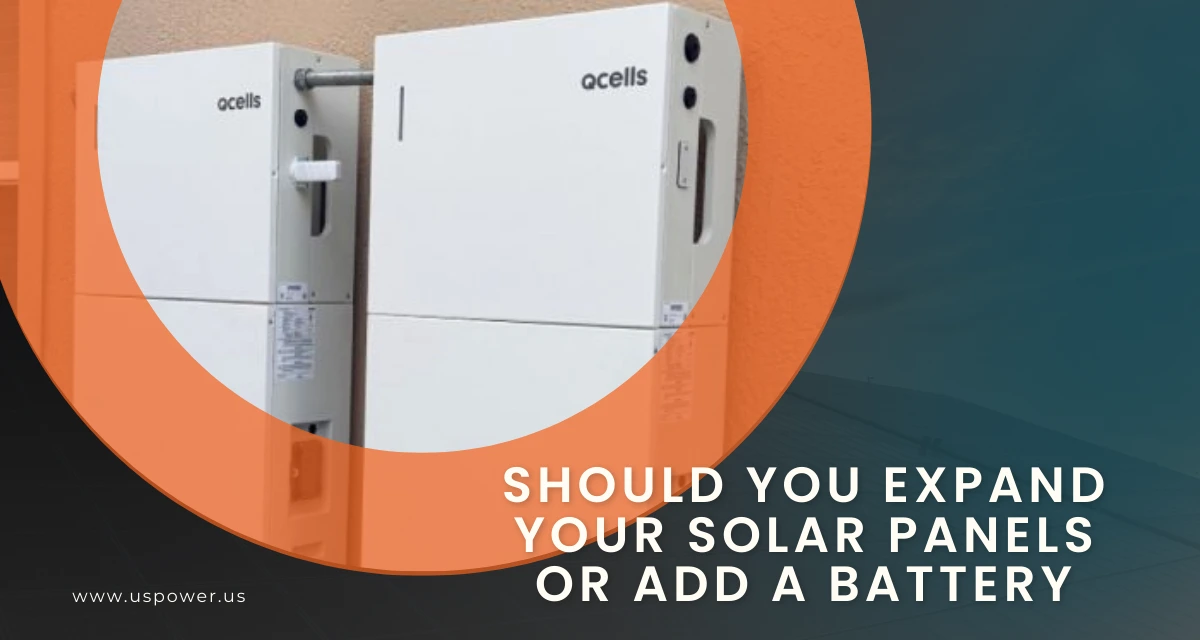
Should You Expand Your Solar Panels or Add a Battery
Solar panels or battery? Learn which saves you the most money with the right setup.

The Future of EV Charging for SoCal Homeowners 2025
Explore upcoming EV charging trends and solutions for Southern California homes.
%20Chargers%20in%20SoCal%202025%20Thumbnail.png)
Easy Guide to Electric Vehicle (EV) Chargers in SoCal 2025
Switch to smarter charging—discover EV charger options and solar savings with us!







Derechos de autor © 2025 US POWER | Energía solar y techosUS Power - Axia by QCells. All Rights Reserved.

¡Obtenga una estimación solar instantánea usando el satélite!