



Solar Panels on the Wrong Side of Your Roof? Here's What to Do
Why your installer changed panel placement and when to worry. Expert guide for SoCal homeowners on solar orientation, installation quality, and your next steps.

You approved the plans. You signed the contract. But when your solar installation crew packed up and left, you discovered something alarming: your solar panels aren't where they were supposed to be.
If this sounds familiar, you're not alone. A growing number of Southern California homeowners are experiencing unexpected changes to their solar panel layouts—sometimes without any advance warning. And while this can be incredibly frustrating, the truth might surprise you: your installer may have actually done you a favor.
But not always.
In this guide, we'll help you understand when panel placement changes make financial sense, when they're a red flag for poor workmanship, and exactly what you should do if your installation doesn't match the approved plans.
The Real Story Behind "Wrong Side" Solar Installations
Why Installers Change Panel Placement (And Why It Often Matters)
When a California homeowner recently discovered that 19 of their 25 solar panels were installed on the east side of their roof instead of the west side as planned, they understandably felt blindsided. The contract specified west-facing panels. The county permits showed west-facing panels. But the actual installation? Mostly east-facing.
Here's what solar engineers and industry professionals revealed about this common scenario:
Shading trumps orientation every time. A large tree on the southern side of the west-facing roof can cast shadows that devastate afternoon production. East-facing panels in full sun will consistently outperform west-facing panels in partial shade—sometimes by 20% or more.
East and west produce nearly identical total energy. While the production curves differ (east peaks in morning, west in afternoon), the total annual kilowatt-hours generated by east-facing and west-facing arrays are remarkably similar—typically within 5-10% of each other when roof pitch and shading are equal.
California's NEM 3.0 changes the game. Under the state's new net billing rules, west-facing panels actually provide more financial value in many cases because they generate power during the expensive 4-9 PM peak rate window. But only if they're not heavily shaded.
When Placement Changes Are Actually Smart Design
Sometimes what looks like a mistake is actually expert optimization:
- Morning fog patterns: In areas like Northern California valleys where morning fog is common but afternoons are sunny, west-facing panels significantly outperform east-facing arrays despite identical orientation angles.
- Temperature considerations: East-facing panels operate cooler during morning hours, potentially producing 10-15% more power than identical west-facing panels that heat up in afternoon sun. In Southern California's intense heat, this can add up to meaningful savings.
- Roof space utilization: Switching sides might allow for more panels, cleaner aesthetics, or better system expansion capability—all legitimate design improvements.
- Structural concerns: Older roof sections, venting requirements, or load-bearing limitations might necessitate placement changes you didn't anticipate.
Red Flags: When Panel Placement Changes Signal Problems
Not every installation change is beneficial. Watch for these warning signs:
Poor Workmanship Indicators
Uncut racking rails extending beyond panels. Professional installers always trim mounting rails flush with the panel array. Long, exposed rails aren't just ugly—they're a sign of rushed or careless work that could indicate deeper quality issues throughout your installation.
No communication about major design changes. Reputable solar companies discuss significant layout modifications before drilling hundreds of holes in your roof. If your installer changed plans without consulting you, that's a serious red flag about their professionalism and attention to detail.
Incomplete installation details. Missing critter guards, unsealed penetrations, or skipped finishing work suggests contractors who prioritize speed over quality. These oversights can lead to common solar installation problems down the road.
When You Should Push Back
If your contract specifies exact placement: Some agreements include binding language about panel locations. Review your paperwork carefully—if it states panels "shall be installed" in specific locations, your installer may be in breach of contract.
If orientation significantly reduces production: Use tools like PVWatts or Aurora to model both the planned and actual system performance. If the new layout projects 15%+ less annual generation with no offsetting benefits, you have grounds to demand corrections.
If no reasonable explanation is provided: Good installers communicate. If your company can't articulate why they changed the design—citing specific shading analysis, production modeling, or structural requirements—they may have simply made an error.
The Hidden Cost of Installation Mistakes
Beyond panel placement, sloppy installation practices can haunt homeowners for decades:
What "Cutting Corners" Really Costs You
Voided manufacturer warranties. QCells, SunPower, and other premium panel makers require installation according to their specifications. Improper mounting, incorrect electrical connections, or code violations can void your 25-year warranty—potentially costing you tens of thousands in future replacement costs.
Failed permitting inspections. Southern California building departments are strict about solar compliance. Installations that don't match permitted plans may fail final inspection, delaying your Permission to Operate (PTO) and preventing you from earning credits for the power you generate. In 2025, PG&E and SCE are missing interconnection deadlines for up to 73% of installations—don't compound delays with permit headaches.
Safety hazards. Electrical code violations, improper grounding, or unsecured panels create fire risks and electrical shock dangers. California's Title 24 requirements exist to protect homeowners, and cutting corners puts your family and property at risk.
Reduced home value. When you eventually sell your home, buyers' inspectors will scrutinize your solar installation. Poor workmanship or unpermitted changes can tank offers or force you to remove and reinstall the entire system.
We Ensure Your Installation Is Done Right—The First Time
The frustration of discovering installation errors weeks after your solar crew left is completely avoidable. Here's how US Power's process protects Southern California homeowners:
Transparent Design Process
Site-specific analysis before installation. Our team uses advanced shade modeling software to assess your property year-round. We identify potential obstructions—trees, neighboring structures, roof features—before finalizing your system design, not after panels are already mounted.
Detailed production modeling for every orientation option. Want to understand exactly how east vs. west vs. southwest-facing panels will perform on your specific roof? We provide you with comprehensive PVWatts projections showing annual kWh generation, monthly production curves, and financial returns for each configuration.
Written approval for any design changes. If our installation team identifies on-site factors that suggest modifying your layout, we stop and contact you before proceeding. You'll receive updated production projections and a clear explanation of why we're recommending changes. No surprises on installation day.
Superior Installation Standards
CSLB-licensed crews with QCells certification. Our installers are factory-trained on QCells panel specifications and California's latest electrical codes. They know exactly how to mount, wire, and seal your system for maximum performance and longevity.
Attention to finish details. We trim all racking rails, install critter guards, seal every roof penetration, and clean up your property completely. Our work passes inspection the first time because we do it right from the start.
25-year comprehensive warranty. Your US Power installation includes 25 years of coverage on panels, workmanship, and system performance. We stand behind our work because we know it's done correctly.
Fast, Compliant Permitting and Interconnection
2-3 week installation timeline after approval. We handle all permitting paperwork with your local building department and coordinate directly with SCE, PG&E, or your utility to secure Permission to Operate as quickly as possible. Our established relationships and permit compliance expertise mean your system goes live fast.
Post-installation support that actually responds. Questions about your production monitoring? Concerns about system performance? Our team provides ongoing support to ensure your QCells panels deliver the savings we promised—not just in month one, but for 25+ years.
What to Do If Your Solar Installation Doesn't Match the Plans
Discovered panel placement issues? Here's your action plan:
Step 1: Document Everything
Take comprehensive photos. Capture wide shots showing overall layout, close-ups of any workmanship issues (uncut rails, unsealed penetrations), and images of any shading sources that might justify placement changes.
Review your contract and permits. Pull out the agreement you signed and compare it to what's actually on your roof. Note specific language about panel locations, system specifications, and installation requirements.
Get a drone perspective if possible. Aerial photography reveals layout details impossible to see from the ground, especially on multi-plane roofs.
Step 2: Communicate Clearly and Document Responses
Put concerns in writing. Email is better than phone calls because it creates a paper trail. Clearly state what you expected based on your contract, what was actually installed, and what explanation you're seeking.
Request production analysis. Ask your installer to provide updated generation projections for the as-built system compared to the originally proposed design. If production is significantly reduced, they should explain what offset benefits justify the change.
Set reasonable deadlines for response. Give your company 3-5 business days to investigate and respond. Professional solar companies will take your concerns seriously and provide detailed answers promptly.
Step 3: Escalate If Necessary
Request third-party modeling. Independent solar consultants can run Aurora or Helioscope simulations showing whether your actual installation is optimized for your property. This objective analysis can either validate your concerns or confirm your installer made smart design choices.
File complaints if you're stonewalled. The California Contractors State License Board (CSLB) investigates complaints about licensed contractors. If your installer refuses to address legitimate concerns, formal complaints get their attention quickly.
Consider legal consultation for contract breaches. If your agreement contains specific language about panel placement and your installer violated those terms, a construction law attorney can review your options. Many offer free initial consultations.
The Solar Orientation Guide: What Actually Matters in Southern California
Understanding the science behind panel direction helps you evaluate whether your installation makes sense:
South-Facing: The Gold Standard (Usually)
South-facing panels in the Northern Hemisphere receive the most direct sunlight throughout the year. In ideal conditions with no shading, south-facing arrays generate approximately:
- 100% of maximum potential production
- Optimal performance 10 AM - 2 PM daily
- Best annual kWh generation per panel
But here's the catch: Under California's NEM 3.0 net billing rules, maximum total production doesn't always equal maximum savings. Export rates during midday (when south panels peak) are now as low as $0.05 per kWh, while self-consumed power during 4-9 PM peak hours saves you $0.50-0.70 per kWh.
This is why southwest-facing systems often generate higher financial returns than due south installations in 2025, even though they produce slightly less total energy.
West-Facing: The NEM 3.0 Sweet Spot
West-facing panels produce about 85-90% of the total annual energy of south-facing arrays, but they generate power precisely when it's most valuable:
- Production peaks 2-6 PM
- Aligns with highest time-of-use rates
- Maximizes self-consumption during expensive peak periods
According to recent Aurora Solar analysis, west-facing systems can provide 15-20% better financial returns than south-facing systems for Southern California homeowners under NEM 3.0 who don't have battery storage, despite lower total production.
Ideal for: Families who are home in late afternoons/evenings, properties with morning shade, homeowners without solar batteries who want to maximize bill savings under time-of-use rates.
East-Facing: The Morning Power Generator
East-facing panels also produce 85-90% of south-facing total output, with these characteristics:
- Production peaks 7-11 AM
- Captures cooler morning temperatures for efficiency gains
- Works well in areas with afternoon marine layer or fog
Ideal for: Homes in coastal Southern California areas prone to afternoon clouds, properties with western shade sources, homeowners who use heavy power in mornings (running AC, charging EVs before work, etc.).
East-West Split Arrays: All-Day Power
Increasingly popular under NEM 3.0, split arrays place panels on both east and west roof planes:
- Flatter production curve throughout the day
- Better self-consumption rates
- Allows larger system sizes when south roof space is limited
Recent industry data shows east-west configurations losing only 10-15% total production compared to all-south installations, while providing significantly better coverage during morning and evening peak rate periods.
Should You Add Battery Storage? The NEM 3.0 Reality
California's shift from net metering to net billing fundamentally changed solar economics. Here's what every Southern California homeowner needs to know:
Why Batteries Now Make Financial Sense
Export rates plummeted. Pre-NEM 3.0, utilities paid homeowners full retail rates for excess solar power sent to the grid. Now export compensation averages just $0.05-0.10 per kWh—roughly 10-15% of what you'd pay buying that same power back during peak evening hours.
Peak rates keep climbing. SCE increased rates by 9% in 2024, with 4-9 PM peak rates now exceeding $0.55 per kWh for many customers. That's $165+ monthly just for typical evening electricity use.
Time-of-use arbitrage delivers massive savings. A properly sized battery system lets you store cheap midday solar power and discharge it during expensive evening peaks, saving $150-250 per month compared to solar-only installations under NEM 3.0.
QCells Battery Storage Through US Power
As the exclusive Southern California partner for QCells solar panels, US Power offers seamless integration with premium battery systems:
✔ Factory-direct Pricing on QCells Q.HOME+ Storage
Our partnership means you pay wholesale pricing for industry-leading battery technology—typically 15-20% less than competitors charge for comparable systems.
✔ Intelligent energy management
QCells batteries work with smart inverters to automatically optimize your power usage patterns, shifting stored energy to peak rate periods for maximum savings.
✔ 25-year comprehensive warranty
Just like our solar panels, your battery system is backed by a quarter-century of protection, giving you confidence in your investment.
✔ Fast installation adds no delays
We coordinate battery installation alongside solar panel mounting or can add storage to existing systems in as little as 2-3 days.
Why Panel Quality Matters as Much as Placement
Your solar installation will live on your roof for 25-30+ years. The quality of the panels themselves is just as critical as where they're placed:
American-Made Excellence
QCells manufactures solar panels in Dalton, Georgia—the largest solar panel factory in the Western Hemisphere. Choosing American-made panels means:
✔ Superior quality control. U.S. manufacturing standards exceed those of many overseas facilities, resulting in lower defect rates and more consistent performance.
✔ Warranty security. When your panel manufacturer has U.S. operations and assets, warranty claims are actually honored. Since 2020, over 100 solar companies have declared bankruptcy, leaving homeowners with worthless warranties on failed panels.
✔ Supporting American workers and supply chains. Your solar investment keeps manufacturing jobs in the U.S. and reduces dependence on foreign supply chains.
Industry-Leading Performance
QCells solar panels deliver:
- Up to 425W power output per panel
- 22.5%+ efficiency ratings
- Less than 0.5% annual degradation (better than the 0.7% industry average)
- Superior low-light performance for early morning and late afternoon generation
The Factory-Direct Difference
US Power's exclusive partnership with QCells means we purchase directly from the manufacturer, cutting out distributor markups. You get:
- 15-20% lower pricing than competitors selling the same panels
- First access to new QCells technologies
- Prioritized warranty service
Real Talk: What Your Free Consultation With US Power Looks Like
Shopping for solar can feel overwhelming. High-pressure sales tactics, confusing proposals, and hard-to-compare quotes leave many homeowners frustrated and unsure. Here's how to choose the right solar company:
No Pressure, Just Honest Answers
✔ 30-minute virtual consultation (no home visit required). Share your roof layout photos and recent utility bills. We'll provide candid feedback about whether solar makes sense for your specific situation—even if that answer is "not yet."
✔ Custom design with shading analysis. Using satellite imagery and advanced modeling software, we'll show you exactly how many panels fit on each roof plane, what production to expect monthly, and which orientation maximizes your financial returns.
✔ Transparent pricing breakdown. You'll see line-item costs for panels, inverters, mounting hardware, labor, permitting, and interconnection fees. No hidden charges. No surprise add-ons.
✔ Real production projections, not inflated promises. We use conservative estimates based on actual PVWatts data for your address, not optimistic marketing numbers that never materialize.
✔ Prefer onsite visits? Book an appointment and we'll contact you. We make sure to make time for you.
Questions We'll Answer (Honestly)
- Is your roof a good candidate for solar, or would structural improvements be needed first?
- How does panel orientation impact your specific savings given your utility rate plan?
- Should you install solar now or wait for technology improvements?
- Does battery storage make financial sense for your household, or is solar-only sufficient?
- What financing options minimize your out-of-pocket costs while maximizing lifetime savings?
Take Action Before December 31, 2025: Your Federal Tax Credit Window Is Closing
The 30% federal solar investment tax credit—which can save Southern California homeowners $8,000-12,000 on average—is scheduled go away after December 31, 2025.
Waiting just one year could cost you an additional $1,500-2,000 in taxes. And with typical installations taking 6-8 weeks from consultation to PTO, time is genuinely running out to secure maximum savings with the solar tax credit.
Ready to Switch to Quality Solar?
The lowest bid isn't the best value when it comes to a 25-year investment mounted on your largest asset. US Power's combination of factory-direct QCells pricing, superior installation standards, and comprehensive post-installation support means you save money both upfront and over decades of system operation.
Schedule Your Free Solar Consultation With US Power
Stop worrying about whether your solar installation is optimized for your home. Let our CSLB-licensed experts provide the answers you need.
What you'll get:
✔ Honest assessment of your roof's solar potential
✔ Multiple orientation options with real production projections
✔ Factory-direct QCells pricing (15-20% below market rates)
✔ No pressure, no obligation—just expert guidance
Work with companies that explain their design choices, document their work, and stand behind their installations. Your roof, your investment, your right to understand exactly what you're getting.
Frequently Asked Questions
Can I make my installer move panels if I don't like the placement?
How much does panel orientation really affect production in Southern California?
Should I be concerned about uncut racking rails?
How long does it take to add battery storage to an existing solar system?
Can I trust production estimates I receive during the sales process?


Homeowner Cuts Energy Use to Zero with Solar and Storage
Slash electricity costs and protect against the rising SCE bills with US Power.
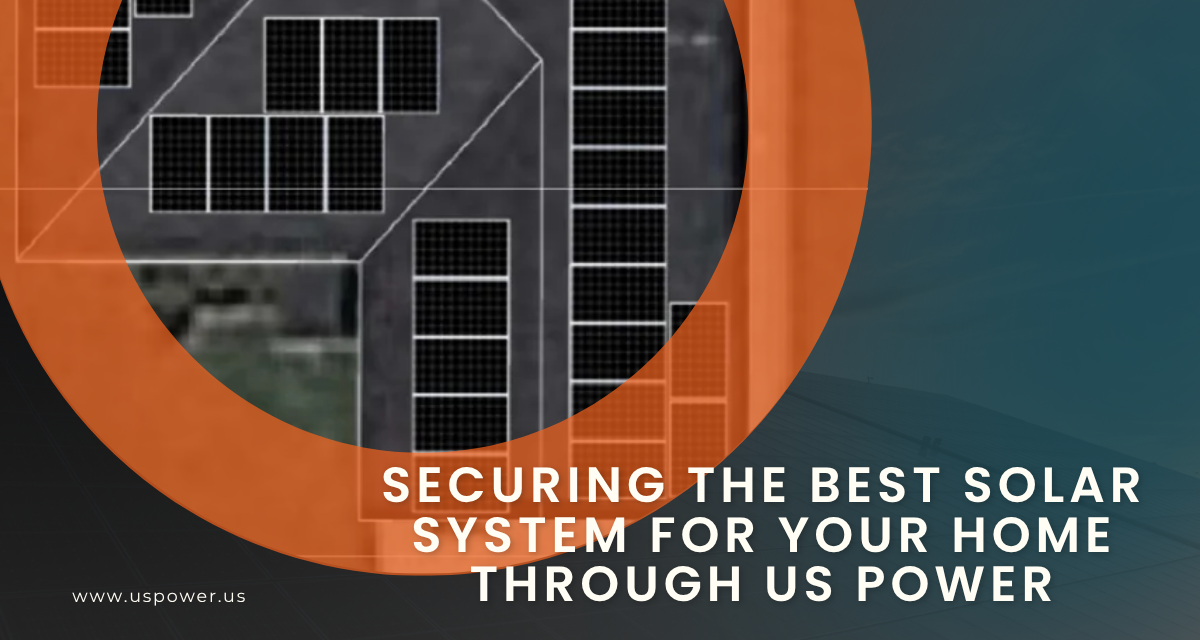
Securing the Best Solar System for Your Home Through US Power
Go solar the right way! Install Qcells panels hassle-free through US Power.
How to Get California's SGIP Battery Rebate Before Funds Run Out in 2025
Solar battery rebates disappearing fast—Call US Power before it's too late.








Copyright © 2025 US Power - Axia by QCells. All Rights Reserved.

Get an instant solar estimate using satellite!