




Why Your Solar Battery Isn't Fully Charging (And How to Fix It)

Your solar panels produce plenty of power, but your battery barely charges past 30%. The problem isn't your equipment—it's how your system was designed. Here's what went wrong and how to fix it.
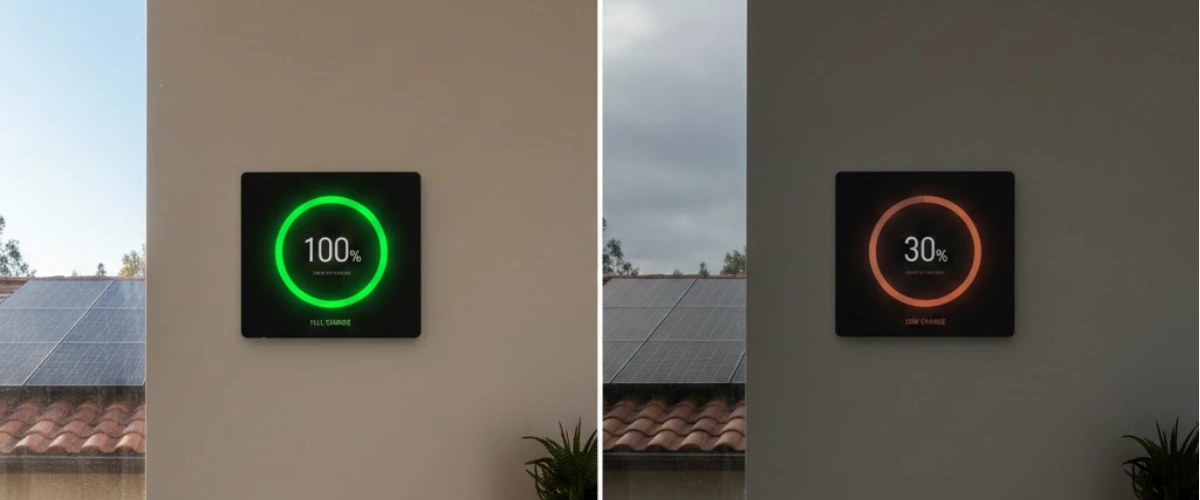
You installed solar panels and batteries to slash your electricity bill. Your installer promised energy independence. But months later, one of your batteries barely charges past 30% while the other hits 100% by lunchtime.
Something's clearly wrong. And if you're dealing with dual electrical panels, unbalanced loads, or a system that can't keep up with your home's needs, you're not alone. The problem isn't your solar panels or batteries—it's how your installer designed the system in the first place.
Why Your Solar Battery Only Charges to 30%
The most common reason batteries fail to fully charge is system design mismatch. Your installer sized your solar array based on your total energy consumption but ignored how that consumption is distributed across your home.
Here's what typically happens: Your home has multiple electrical panels (common in 400-amp service homes with two 200-amp panels). Your installer added equal-sized solar systems to each panel. On paper, everything looks balanced.
But real homes don't work that way. One panel might power your lights, outlets, and small appliances (consuming 0.5-2 kW). The other powers your HVAC, electric vehicle charger, pool equipment, and kitchen appliances (consuming 10-15 kW during peak hours).
The result? One solar system easily powers its panel and fully charges its battery. The other system struggles to keep up, barely charging the battery to 30% before sunset. You're essentially running two independent solar systems that can't communicate or share power efficiently.
The Real Problem: Poor System Design from Day One
Most solar installers use a cookie-cutter approach: calculate your annual kWh usage, divide by solar production capacity, and install that many panels. They rarely perform detailed load analysis to understand when and where you actually use power.
What Your Installer Should Have Done
A proper solar consultation includes:
Load distribution mapping: Identifying which electrical panel powers which appliances and their consumption patterns throughout the day.
Peak demand analysis: Understanding when your heavy loads run (HVAC cycles, EV charging, cooking) and sizing the system accordingly.
Battery integration strategy: Configuring batteries to charge from excess solar production and discharge during peak rate periods under NEM 3.0.
Panel balancing recommendations: Moving high-consumption appliances between panels before installation to create balanced loads.
Instead, many installers simply split everything down the middle. Two panels? Two identical solar systems. Problem "solved"—except it creates the exact situation you're experiencing now.
Why This Matters Under NEM 3.0
California's Net Energy Metering 3.0 changed everything. Under the old system, excess solar production exported to the grid earned you significant credits. Now, those credits are worth 75% less.
This makes how solar batteries maximize your savings absolutely critical. But a battery that only charges to 30% can't store enough energy to power your home during expensive evening hours when SCE and PG&E rates spike.
Your half-charged battery means you're buying expensive grid power at 50-60 cents per kWh when you should be using stored solar energy that costs you nothing. Over a year, this can add $1,500-$2,500 to your electricity costs.
Red Flags You Should Have Seen Before Installation
Looking back, several warning signs indicated your installer was cutting corners on system design:
No Detailed Consumption Analysis
Did your installer request 12 months of electricity bills? Did they ask about your daily routines, when you run major appliances, or if you plan to buy an electric vehicle? If not, they designed your system based on guesswork.
Cookie-Cutter Proposals
Every home is different. If your quote looked identical to your neighbor's (same panel count, same battery size) despite different consumption patterns, your installer used a template approach instead of custom design.
No Load Balancing Discussion
For homes with dual electrical panels, professional installers discuss load distribution before installation. They identify opportunities to balance consumption by moving circuits between panels. This relatively simple step prevents the exact problem you're facing.
Rushed Timeline Pressure
Quality solar companies take time to design systems correctly. If your installer pushed for immediate signing with claims about "limited inventory" or "expiring incentives," they prioritized speed over proper planning.
Many Southern California homeowners face these common solar installation mistakes to avoid because they chose installers based solely on price rather than expertise and thoroughness.
How to Fix an Underperforming Solar Battery System
If your battery won't charge fully, you have several options—each with different costs and effectiveness:
Option 1: Rebalance Your Electrical Loads (Most Cost-Effective)
Hire a licensed electrician to move high-consumption circuits from your overloaded panel to your underutilized panel. This balances power demand across both solar systems without adding equipment.
Best for: Homes where load distribution causes the imbalance. Cost: $1,500-$3,500 depending on circuit complexity. Timeline: 1-2 days.
Option 2: Add More Solar Panels to the Struggling System
Increase solar production on the overloaded panel so it can meet demand and still charge the battery. This works but requires roof space and additional investment.
Best for: Homes with available roof space and budget for expansion. Cost: $5,000-$8,000 for 3-5 additional panels. Timeline: 3-4 weeks.
Option 3: Install Smart Battery Management
Some advanced battery systems can charge from grid power during off-peak hours (when rates are low) and discharge during peak hours. This doesn't solve the solar production issue but maximizes battery utility under NEM 3.0.
Best for: Homeowners who want to optimize existing equipment. Cost: $500-$1,500 for upgraded monitoring and controls. Timeline: 1 day.
Option 4: System Redesign with Proper Integration
The most comprehensive solution involves reconfiguring your entire system so both solar arrays and batteries work together as a unified system instead of two independent installations. This typically requires new inverters and smart controls.
Best for: Homeowners committed to long-term optimization. Cost: $8,000-$15,000 depending on existing equipment. Timeline: 4-6 weeks.
Understanding proper solar system design helps you determine which solution delivers the best return on investment for your specific situation. Learn more about NEM 3.0 battery backup requirements to see why batteries are essential under California's new billing structure.
What US Power Does Differently to Prevent These Problems
At US Power, we learned from thousands of installations across Southern California that proper system design prevents 90% of performance issues before they happen.
Comprehensive Load Analysis (Included Free)
Before proposing any system, our CSLB-licensed consultants spend 60-90 minutes analyzing your home's electrical setup. We review 12 months of utility bills, map your electrical panels, identify major loads, and discuss your lifestyle patterns.
This comprehensive load analysis before installation reveals exactly how much solar capacity and battery storage each panel needs—not industry averages, but your specific requirements.
Panel Balancing Recommendations
For homes with dual electrical panels or 400-amp service, we create load balancing recommendations before installation. Moving a few circuits can eliminate the need for oversized systems and prevent the charging issues you're experiencing.
Our electricians coordinate with your local electrician (or handle it ourselves if you prefer) to ensure balanced distribution before solar installation begins.
Smart Integration with Battery Management
We configure all systems with smart monitoring that tracks production, consumption, and battery status in real-time. You'll know immediately if something's wrong—not months later when you realize your savings aren't materializing.
Our systems integrate with modern smart home platforms, allowing you to see exactly where your power goes and optimize usage patterns for maximum savings under NEM 3.0.
25-Year Comprehensive Warranty
Unlike installers who disappear after installation, US Power backs every system with a 25-year warranty covering panels, workmanship, and performance. If your battery won't charge or your system underperforms, we fix it—no finger-pointing between equipment manufacturers.
This is why choosing the right solar company matters so much. The cheapest quote often becomes the most expensive mistake.
Why Battery Storage Is Essential Under NEM 3.0
Even with perfectly designed solar systems, California's new billing structure makes batteries non-negotiable for maximum savings. Here's why:
Export Credits Dropped 75%
Before NEM 3.0, excess solar production exported to the grid earned you retail-rate credits (around 30-40 cents per kWh). Now, those credits are worth just 5-10 cents per kWh.
Exporting power loses you money. Storing it in batteries and using it during expensive evening hours (50-60 cents per kWh) saves you money. A properly sized battery pays for itself 3-4 years faster under NEM 3.0 than it would have under the old system.
Time-of-Use Rates Punish Evening Consumption
SCE and PG&E's Time-of-Use rates make electricity most expensive from 4-9 PM—exactly when solar production drops and most families cook dinner, run appliances, and charge electric vehicles.
Without battery storage, you're buying expensive grid power during these hours despite having solar panels. With properly functioning batteries, you use stored daytime solar energy instead.
Grid Outages Are Increasing
Southern California experiences more frequent power shutoffs during fire season and grid maintenance. Solar panels without batteries provide zero backup power during outages—they shut down for safety reasons.
A fully charged battery keeps your essential loads running during outages. But a battery stuck at 30% might only last 3-4 hours instead of a full day.
Learn more about battery storage options for California homes to understand which capacity and features make sense for your situation.
Take Control of Your Energy Costs Today
A solar system that doesn't charge your batteries fully isn't saving you money—it's costing you money every single month. Southern California electricity rates keep climbing (SCE increased rates 30% in the past two years), making every wasted kilowatt-hour more expensive.
The good news? Proper system design prevents these issues entirely. And even if you're dealing with an existing problem, solutions exist that don't require starting over from scratch.
US Power's CSLB-licensed consultants have designed and installed over 3,000 solar + battery systems across Los Angeles, Orange County, Ventura, San Bernardino, and Riverside. We understand Southern California's unique challenges: dual panels, heavy AC loads, electric vehicle charging, and NEM 3.0 billing complexities.
Our factory-direct partnership with QCells means you get American-made panels with industry-leading efficiency at prices 15-20% below market. We handle everything—permits, installation, utility coordination, and final inspection—typically within 3-6 weeks of approval.
Most importantly, we design systems correctly the first time. Our comprehensive load analysis, panel balancing recommendations, and 25-year warranty ensure your system performs as promised, not just on paper but in real-world daily usage. Schedule your free consultation today to get expert recommendations tailored to your home's specific needs.
Frequently Asked Questions
Why does one battery charge faster than the other?
Can I add more batteries instead of rebalancing loads?
Will my installer fix this under warranty?
How long does load rebalancing take?
Should I wait for better battery technology?



Can Solar Panels Handle Snow and Ice? 2026 Facts for CA Homes
Your roof can handle more than you think. Learn how you can avoid the problem!
7 Solar Panel Installation Mistakes That Could Cost You Thousands
When solar installers cover your dryer vent, your problems are just beginning.
Why a Bollard Might Be Required for Your Solar or EV Equipment
Protect your solar system, avoid code issues and get approved fast through US Power.








Copyright © 2025 US Power - Axia by QCells. All Rights Reserved.

Get an instant solar estimate using satellite!