




Is Solar Worth It Financially in 2026? Let's Look at the Real Math

Electric bills keep rising. Solar promises savings. But is it worth it financially, or mostly hype? Here's the honest math on payback periods, utility rate increases, and when solar actually makes sense.
Electric bills keep creeping up. Solar ads promise big savings. And if you're like most Southern California homeowners, you've probably been burned by "too good to be true" offers before.
So instead of selling anything, let's just look at the math. Because the question isn't whether solar can save money—it's whether it will save you money based on your specific situation. Here's what you need to know before making a decision that could affect your finances for the next 25 years.
Why Southern California Electric Bills Hit Record Highs in 2026
If your electric bill feels higher than ever, you're not imagining it. PG&E rates jumped from $0.28 to $0.46 per kWh between 2020 and 2025—that's nearly 65% in just five years. SCE customers saw similar increases, with another 8-10% hike hitting in early 2026.
Here's the reality: utility companies aren't slowing down. They're investing billions in grid upgrades, wildfire prevention, and infrastructure repairs. Someone has to pay for that, and it's you.
The Math Nobody Talks About
Say your current bill is $300/month. That's $3,600 per year. Most people assume rates will increase 3-5% annually, but recent trends in California show 8-10% is more realistic for [LINK 1: why electricity bills are so high in Southern California].
At 8% annual increases, here's what you'll pay over 25 years:
- Year 1-5: ~$21,600
- Year 6-10: ~$31,800
- Year 11-15: ~$46,800
- Year 16-20: ~$68,900
- Year 21-25: ~$101,400
Total: Over $270,000 just to keep the lights on. And you control exactly none of that. Understanding why electricity bills are so high in Southern California helps explain why these increases aren't slowing down.
The Hidden Costs Nobody Mentions
Beyond the bill itself, rising rates create a ripple effect. Air conditioning costs spike in summer. Winter heating becomes expensive. Charging an electric vehicle can add $100-150/month during peak hours. Every rate increase compounds across every appliance, every day.
How Solar Panels Actually Work to Cut Your Bill
Solar isn't magic. It's a straightforward trade: instead of renting electricity from the utility company at ever-increasing rates, you generate your own at a fixed cost.
Here's a realistic example from a Southern California homeowner working from home:
- Current bill: $300/month ($3,600/year)
- Solar loan payment: ~$220/month for 20 years
- Small utility connection fee: ~$15-25/month
- Net monthly cost: $235-245 vs. $300 (and rising)
In year one, you save $55-65/month. But here's where it gets interesting: your solar payment stays fixed while utility rates keep climbing. By year 5, you're saving $100+/month. By year 10, potentially $150-200/month. By year 20 when the loan is paid off, you're paying almost nothing while your neighbors are paying $600+ per month.
Net Energy Metering 3.0 Changes Everything
California's NEM 3.0 policy shifted the economics of solar. Export rates (what the utility pays you for excess solar) dropped significantly, making batteries much more important. Instead of sending power to the grid for credits, you store it and use it during expensive evening hours when rates are highest.
This is why solar batteries can maximize your savings under the new rules. Without storage, you're still saving money, just not as much as you could be.
Battery Storage: Essential or Optional?
Under NEM 2.0, batteries were nice to have. Under NEM 3.0, they're nearly essential for maximizing savings. Here's why:
Your solar panels generate power during the day when rates are low (~$0.30/kWh). But you use most of your electricity in the evening when rates spike to $0.55-0.65/kWh. Without a battery, you sell power cheap and buy it back expensive.
With a battery, you store daytime solar and use it during peak evening hours. The math changes dramatically—often adding $40-80/month in additional savings.
The Truth About Solar Quotes and Pricing
One Reddit user nailed it: "The smartest thing I've seen homeowners do is treat the quote like a contract that needs verification—not a sales pitch that needs trust."
Two homeowners with identical $300 bills can get wildly different quotes. One pays $27k cash. Another finances $60k over 25 years. Both claim to "go solar," but only one is making a smart financial decision.
What Trips People Up Financially
It's rarely the panels. It's:
- Dealer fees baked into "low APR" loans that inflate the system cost by 30-40%
- Inflated production estimates that look great on paper but don't match reality
- Pricing way above market norms with no explanation or justification
A well-priced system in Southern California typically costs $2.50-3.50 per watt installed. If someone quotes you $4.50-5.00 per watt, you're likely paying dealer fees that fund the salesperson's commission, not your solar system.
How to Spot a Clean Quote
Knowing how to choose a solar company can save you thousands. Here's what to verify:
- Cost per watt: Should be under $3.50/watt in Southern California
- Production estimate: Should match PVWatts calculator for your specific roof
- Financing structure: Compare total financed cost vs. cash price (difference shouldn't exceed 20%)
- Equipment quality: Check panel and inverter warranties (25 years minimum for panels)
Understanding Real Payback Timelines
Reddit users consistently mention 7-10 year payback as "good" and 15-20 years as "questionable." That's accurate.
The smartest ways to pay for solar dramatically affects your payback timeline. Here's the breakdown:
Cash Purchase
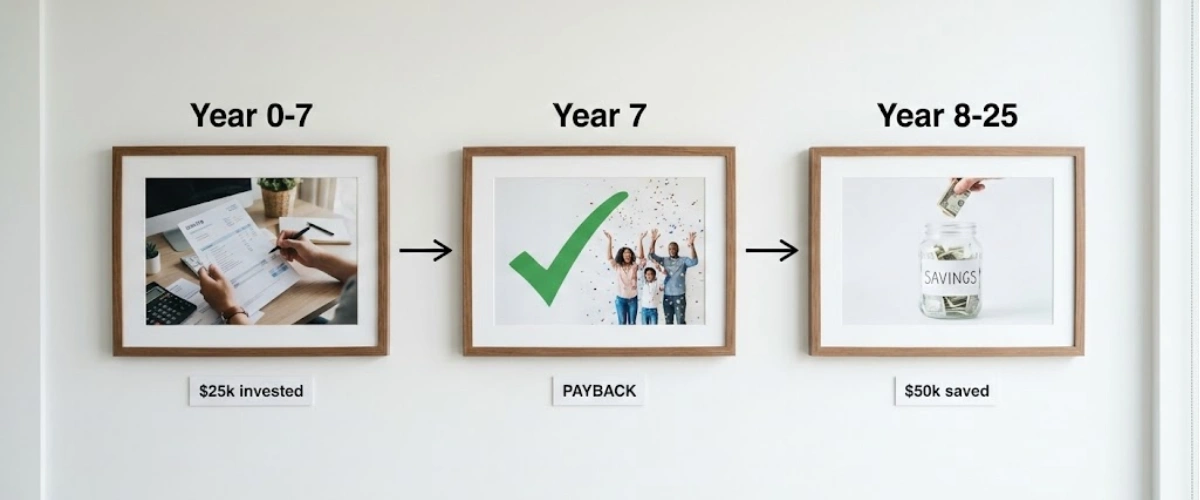
- System cost: $25,000
- Federal tax credit (30%): -$7,500
- Net cost: $17,500
- Annual savings: ~$2,500
- Payback period: 7 years
After 7 years, you're generating free electricity for 18+ more years. That's $45,000+ in savings over the system's lifetime.
Solar Loan (Well-Structured)
- System cost: $25,000
- Monthly payment: $200 for 20 years
- Total paid: $48,000
- Annual savings vs. utility: ~$1,200 (year 1, increasing annually)
- Payback period: 10-12 years
You're still cash-flow positive from month one, and once the loan is paid, you have 13-15 years of free electricity.
Solar Loan (Poorly Structured)
- Inflated cost: $45,000 (dealer fees included)
- Monthly payment: $350 for 25 years
- Total paid: $105,000
- Annual savings vs. utility: ~$1,200 (year 1)
- Payback period: Never
This is where solar becomes a bad deal. The solar panel payback period depends entirely on getting the right price and financing structure.
When Solar Might NOT Make Sense
Solar isn't always the answer. Here are scenarios where it probably doesn't make financial sense:
You're Planning to Move Soon
Solar adds home value, but if you're moving in 2-3 years, you won't capture enough savings to offset the hassle. Home buyers will pay a premium for solar, but usually not dollar-for-dollar.
Your Bill Is Already Low
If you're paying under $100/month, solar economics get tricky. The fixed costs (permits, installation, interconnection) don't scale down proportionally. You might break even, but you won't see compelling returns.
Your Roof Has Issues
Old roof? Heavy shade? North-facing only? These factors either disqualify solar entirely or require expensive workarounds that kill the financial case.
Before making any decision, read about things you must know before going solar to avoid costly mistakes.
The Opportunity Cost Question
One commenter asked about opportunity cost: "What if you invest that money instead?" Fair question.
Solar replaces a guaranteed, rising expense. Stocks might return 6-8% annually, but your utility bill is a negative return that grows 8-10% per year. Solar sits in between: it's a hedge against inflation, provides resilience during outages, and offers predictable savings that compound as rates increase.
It's less "solar vs. investing" and more "should I lock in fixed energy costs now or keep paying variable rates forever?"
What US Power Does Differently from Other Solar Companies
The Reddit thread highlighted a key insight: "Solar can absolutely be worth it if the quote itself is clean. But a bad quote can erase all those projected savings."
US Power eliminates the pricing games through factory-direct pricing with QCells. Here's what that means:
No Dealer Fees
Most solar companies add 30-40% in dealer fees to fund sales commissions and marketing. US Power works directly with QCells manufacturing, passing those savings to you. That's typically 15-20% below market rates.
American-Made Quality
QCells panels are manufactured in Georgia with a 25-year comprehensive warranty covering panels, workmanship, and performance. Not just the panels—the entire installation.
3-6 Week Installation Timeline
While competitors quote 3-4 months, US Power averages 3-6 weeks from approval to activation. Faster installation means you start saving sooner.
CSLB-Licensed Consultants
No high-pressure sales tactics. Just licensed professionals who walk you through the math, answer questions, and let you decide if it makes sense for your situation.
Buy vs. Lease: Which Actually Saves Money?
The Reddit analogy nailed it: solar ownership is like choosing a fixed mortgage over rent that keeps going up.
When you decide whether to buy or lease solar panels, here's what changes:
Buying (Loan or Cash):
- You own the system and receive the 30% federal tax credit
- Fixed payment that eventually ends
- Full control over your system
- Adds home value
- No escalator clauses or hidden fees
Leasing:
- No upfront cost, but no tax credit
- Payment increases 2-3% annually (just like your utility bill)
- No home value increase
- Complications when selling your home
- You never own the system
Most financial advisors recommend buying if you can qualify for financing. The long-term economics heavily favor ownership.
Making the Decision
Solar is worth it financially when three conditions align:
- Your electric bill is high enough ($150+/month)
- You get a fair, transparent quote (under $3.50/watt)
- You're staying in your home (5+ years minimum)
If all three are true, solar typically delivers a 7-10 year payback with 15-20 years of free electricity afterward. That's $50,000-100,000 in lifetime savings for most Southern California homeowners.
If any of those conditions don't apply, solar might still work, but the math needs more scrutiny.
The question isn't whether solar can save money—it's whether it will save you money based on your specific situation, roof, and financing options.
Frequently Asked Questions
Is solar still worth it without the 30% tax credit?
How do I know if my quote is fair?
What if electricity rates don't keep rising?
Does solar make sense if I have low bills now?
What happens if I sell my house?


Affordable Solar Financing Options in Southern California
Save more with affordable and smart solar financing or cash option with US Power.

Protect Your Family from Predatory Solar Contracts in SoCal
Avoid solar fraud and protect your energy investment in Southern California.
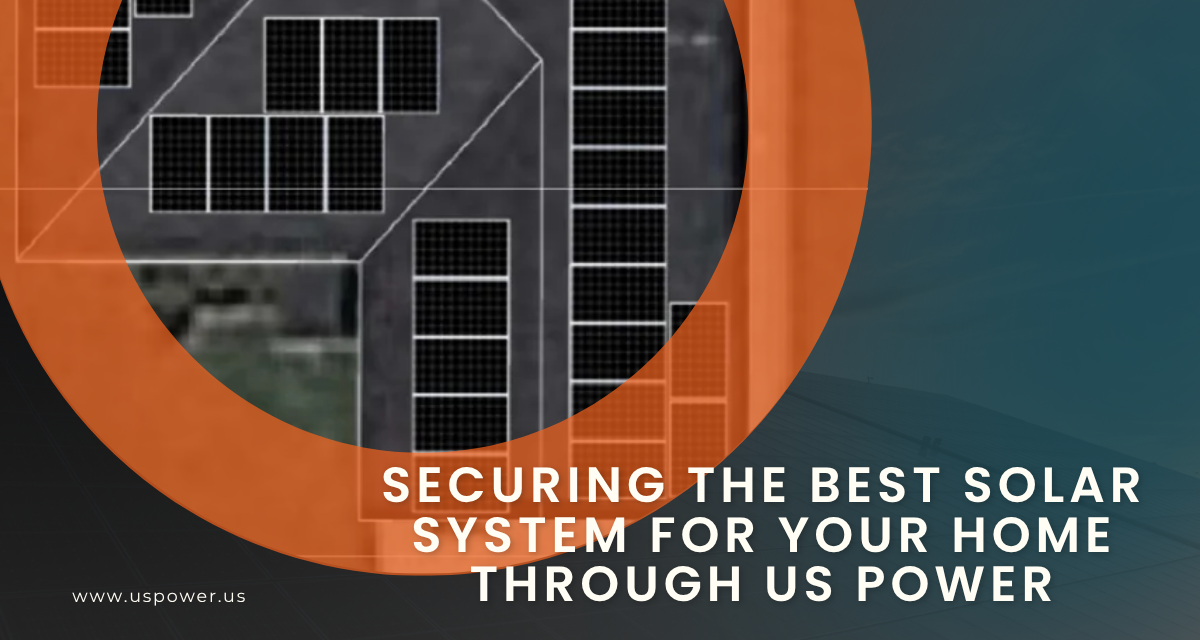
Securing the Best Solar System for Your Home Through US Power
Go solar the right way! Install Qcells panels hassle-free through US Power.







Copyright © 2025 US Power - Axia by QCells. All Rights Reserved.

Get an instant solar estimate using satellite!