




Can You Charge Your Tesla Overnight with Solar in California?

Understand Tesla home and Supercharger charging, battery range, and how solar energy can cover your EV power needs in SoCal though US Power.
Owning a Tesla Model 3 in Southern California comes with exciting possibilities — silent acceleration, zero tailpipe emissions, and the freedom to travel farther on electricity instead of gasoline. But if you’ve never owned an electric vehicle (EV) before, the biggest question on your mind is probably: “How does charging a Tesla actually work, and how much will it cost me?”
This complete guide breaks down Tesla home charging, Supercharging, battery capacity, costs, and how you can pair your EV with solar power to maximize savings — all in a way that’s easy for homeowners to understand. Learn more in our easy guide to electric vehicle (EV) chargers in SoCal.
Understanding Tesla Charging: The Basics Every Homeowner Should Know
When you charge a Tesla, you’re essentially refilling your battery with electricity instead of gas. Tesla uses units called kilowatt-hours (kWh) to measure energy. Think of kWh like gallons of fuel: the more kWh you add, the farther your car can go.
Key Terms:
- Battery Capacity: For a standard Tesla Model 3, the battery holds about 60–70 kWh, giving roughly 250–300 miles of range depending on driving conditions.
- Charging Power (kW): How fast your car charges depend on the charger’s power output. Higher kW = faster charging.
- Supercharging Credits: Tesla sometimes offers promotions like 400 kWh of free Supercharging. This doesn’t mean 400 hours — it’s the equivalent of 400 kWh of electricity, which could equal 5–7 full charges for a Model 3.
- Energy Efficiency: Explain how driving style, climate, and AC/heating affect range. Example: "Using the air conditioner or heater can reduce your range by 10–20%."
- Regenerative Braking: Tesla’s regenerative braking recaptures energy while slowing down, slightly extending range. Could link to a short blog on EV driving tips for efficiency.
Tesla Home Charging Options
Tesla makes it simple to charge at home, and while Level 1 and Level 2 chargers cover the basics, there are a few extra considerations Southern California homeowners should know — especially around installation, permitting, and optimizing your setup for long-term savings.
1. Level 1 — Standard Household Outlet
Uses a regular 120V outlet, like the ones in your garage.
Adds 3–5 miles of range per hour, so overnight charging can restore about 50 miles.
Cost: Based on your home electricity rate. In Southern California, most homeowners pay ~22–32¢/kWh, so a full charge (~65 kWh) costs $15–$21.
Pros: No extra equipment needed.
Cons: Very slow, only suitable for short daily commutes.
For many homeowners with short commutes, Level 1 charging is an easy starting point. But keep in mind:
- Most standard outlets in older SoCal homes may be on shared circuits. If the circuit is overloaded (garage fridge + tools + EV), it can trip.
- It’s best to dedicate at least one outlet exclusively to charging.
- If your home has an older electrical system, a licensed electrician can install a clean, dedicated 120V line for safer nightly charging.
Level 1 is ideal if you drive 20–40 miles per day and don’t mind slower replenishing.
2. Level 2 — NEMA 14-50 or Tesla Wall Connector
Requires installation, usually $500–$2,000.
Adds 25–30 miles of range per hour, allowing a full overnight charge.
Cost of electricity stays the same, but charging is much faster — perfect for homeowners with long commutes or frequent drivers.
Tip: Many California utilities offer Time-of-Use (TOU) rates. Charging overnight on off-peak hours can save money — sometimes cutting the cost of a full charge by 30–50%. For details, check our best SCE rate plan for solar owners.
For details, check our best SCE rate plan for solar owners.
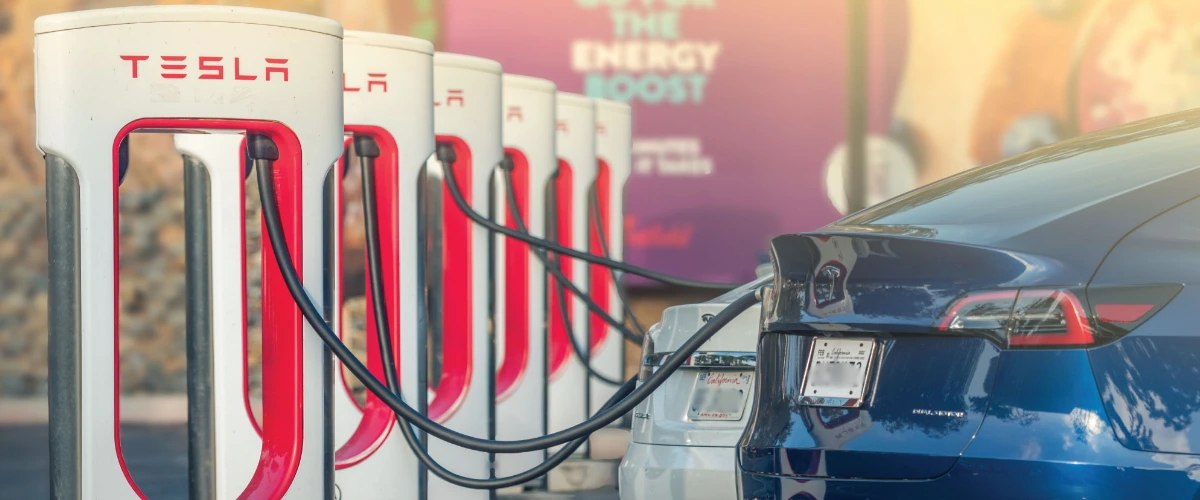
Supercharging and On-the-Road Charging
Tesla Superchargers are ideal for road trips or when you need a fast top-up:
- Superchargers can deliver up to 250 kW, charging your Model 3 much faster than at home.
- With 400 kWh free credits, you can get about 5 full charges or several partial top-ups — a perfect bonus when traveling long distances.
- After credits, Supercharging costs about 12–20¢/kWh in California, slightly higher than home electricity but still cheaper than gasoline.
Example: Driving 250 miles may cost you ~US$10–12 at a Supercharger, versus $40–60 for a gas car traveling the same distance.
Learn more in our California EV charging costs guide.
Additional Homeowner Advice: Installation, Panel Upgrades & Smart Charging
Installation Tips for Southern California Homes
When installing a Level 2 charger, homeowners can choose between a Tesla-Certified Electrician or Tesla’s own installation service.
Most cities in Southern California require a simple electrical permit for installing a wall connector. Licensed electricians usually handle the permitting for you.
Upgrading Your Electrical Panel
Older homes (especially pre-1980 builds) may need an electrical panel upgrade to support a 240V Level 2 charger.
Typical upgrade cost: $1,500–$3,500, depending on wiring, panel type, and distance from the garage.
Smart Level 2 Chargers
Modern Level 2 chargers can connect to your home Wi-Fi, allowing homeowners to:
- Schedule charging during off-peak TOU hours
- Track monthly EV charging costs
- View real-time energy usage
- Maximize solar usage when paired with rooftop panels
These features help optimize charging and improve long-term savings.
Pairing Tesla with Solar Power at Home
Here’s where Southern California homeowners can really save. Installing QCells solar panels with battery storage allows you to:
- Charge your Tesla using solar electricity, reducing or even eliminating your home charging bill.
- Store excess energy in a home battery for overnight charging.
- Maintain energy independence and reduce your carbon footprint.
How much can solar cover?
A typical 7–10 kW rooftop solar system can generate enough energy to fully charge a Model 3 daily, depending on sunlight and home consumption.
Battery storage (like a 13–20 kWh system) ensures your car charges even after the sun goes down.
This combination of Tesla + home solar + battery storage is a win-win: lower electricity costs, cleaner energy, and more predictable expenses.
Explore how to size solar panels and batteries for EV owners to find the best fit for your home.
Realistic Home Charging Costs in Southern California (2025)
Here’s a snapshot of what typical homeowners pay when charging at home:
Tips to lower costs:
- Charge at night using TOU rates.
- Combine home solar panels and battery storage.
- Avoid unnecessary Supercharging; reserve it for trips.
Learn more about US Power home solar battery systems.
Tesla Charging & Solar ROI for Homeowners
- Calculate return on investment when combining Tesla + solar.
- Show how homeowners could potentially save $500–$1,000/year on fuel/electricity with solar + EV.
- Mention the environmental impact: reduced CO₂ emissions per year by switching from gas to EV + solar.
Tesla + Home Solar = Smart Choice for SoCal Homeowners
Charging a Tesla in Southern California doesn’t have to be complicated. With home charging, Supercharging for road trips, and the power of solar energy, you can enjoy the freedom of electric driving while keeping costs predictable and low.
US Power homeowners benefit from:
- Exclusive QCells solar panels, American-made and factory-direct pricing.
- Seamless integration with Tesla home charging.
- Expert consultation for sizing systems that cover both home energy needs and EV charging.
Benefits of Expanding:
- Provides more SEO keywords naturally (Tesla charging, Tesla Model 3, EV charger, SoCal solar, battery storage, TOU rates).
- Gives actionable advice for homeowners considering Tesla + solar.
- Makes the guide more authoritative and shareable, increasing dwell time and backlinks.
Ready to power your Tesla with clean, affordable energy? Schedule your US Power consultation today and start driving smart in Southern California.
Frequently Asked Questions for California Tesla Owners
Do I need to contact my electricity provider?
Usually not required. Just plug in and charge.But you can enroll in EV-specific or TOU plans to save money.
Can I charge using my standard garage outlet?
Yes, but it’s slow. Level 2 charging is recommended for full overnight charges.
How many miles does 1 kWh give me?
Roughly 3–4 miles per kWh for a Model 3.
Is it worth installing solar for EV charging?
Absolutely. Home solar + battery can cover most or all of your daily Tesla charging, reducing costs and emissions.
Does charging a tesla use a lot of electricity?
Charging a Tesla does use electricity, but it’s generally much cheaper than filling a gas car. A full charge for a standard Tesla Model 3 (about 65–70 kWh) typically costs $15–$20 at home in Southern California, depending on your utility rates. That’s roughly 3–4 miles of range per kWh, so even daily driving doesn’t use an excessive amount of electricity.
Pairing your Tesla with home solar panels and battery storage can cover most or all of your charging needs, making it nearly cost-free and environmentally friendly.
Frequently Asked Questions


The 2025 Guide to Qcells Home Core and Qcells Battery Storage
Power your home smarter with Qcells Home Core solar + battery storage with US Power!
Tesla Powerwall 3: Backup Switch vs Gateway 3 Explained
Learn why most Tesla Powerwall 3 installers overcomplicate battery backup designs.
California SGIP Rebates for Home Batteries
Up to $1,100 per kWh in rebates for eligible SoCal homeowners installing batteries.








Copyright © 2025 US Power - Axia by QCells. All Rights Reserved.

Get an instant solar estimate using satellite!