



Can Your Utility Company Change Your Solar Agreement After Installation?
A Duke Energy customer just discovered their utility retroactively changed their net metering agreement to a less favorable rate structure—without permission. If you're considering solar in California, you need to know whether SCE, PG&E, or SDG&E can do the same thing after you've already invested thousands in panels.
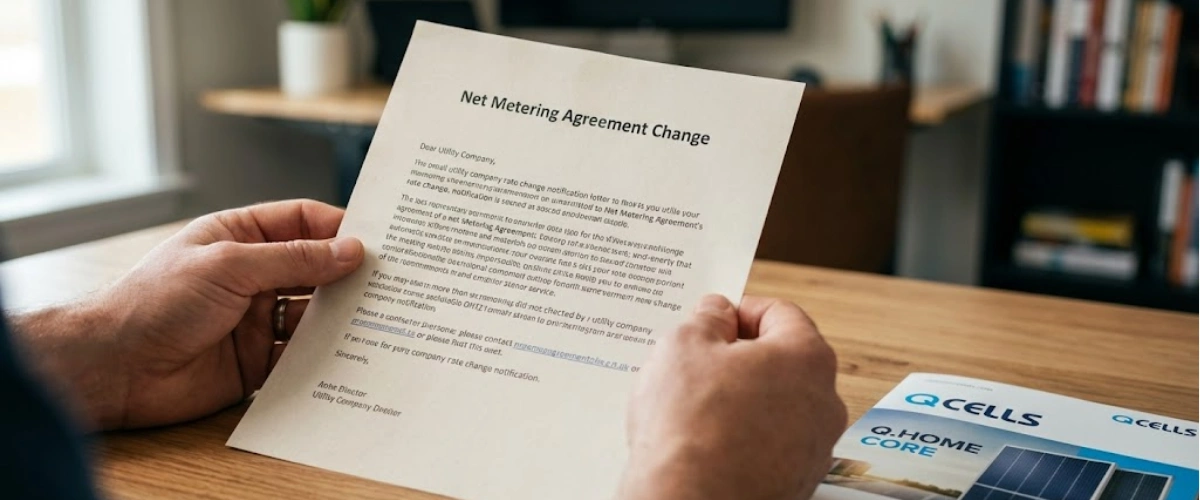
A homeowner in Indiana just posted a disturbing question on Reddit. Their utility company, Duke Energy, sent them a letter saying their solar system was "mistakenly placed on an incorrect Net Metering Tariff" and would be forcibly switched to a different compensation plan—one that pays significantly less for their excess solar production.
The homeowner's reaction? "I am worried; how worried should I be?"
If you're a Southern California homeowner considering solar panels, or if you already have them installed, this story should make you sit up and pay attention. Because the question isn't just whether Duke Energy can change the rules after you've already invested. The real question is: can SCE, PG&E, or SDG&E do the same thing to you?
Let's break down what happened, what protections exist in California, and how to make sure you're not the next homeowner left vulnerable to utility rate changes.
What Happened with Duke Energy's Forced Rate Change
The Reddit poster's situation is straightforward but alarming. They installed a solar system under one agreement (Net Metering), which traditionally gives homeowners 1-to-1 credit for excess solar energy sent to the grid. Then Duke Energy decided the customer should have been on a different tariff called "Excess Distributed Generation" (EDG).
The difference? EDG pays homeowners the "Marginal Distributed Generation Price"—utility speak for "much less than retail rates." To add insult to injury, Duke also mentioned that any carried-forward credits would "expire after 12 months if not used."
The homeowner understandably felt blindsided. They'd done everything right—signed contracts, got permits, passed inspections. And now the utility was unilaterally changing the financial terms of their investment.
One commenter summed up the situation perfectly: "They should give free lube with these contracts."
How California's Net Metering Rules Have Already Changed
Here's what Southern California homeowners need to understand: California utilities have already changed the rules once. It was called NEM 3.0, and it went into effect in April 2023.
Under the old system (NEM 2.0), solar customers received full retail rate credits for excess energy sent to the grid. Under NEM 3.0 changes in California, those credits dropped to roughly 75-80% lower—around $0.05-$0.08 per kilowatt-hour instead of $0.30-$0.40.
This massive change meant that solar-only systems became much less financially attractive. Suddenly, battery storage wasn't just a nice-to-have—it became essential for maximizing savings.
But here's the critical difference between California and what happened to that Duke Energy customer: California has grandfathering protections.
The California Difference: Grandfathering Rules
When NEM 3.0 rolled out, California didn't force existing solar customers onto the new rates. Instead, the state grandfathered everyone who already had an interconnection agreement. Those customers stayed on NEM 2.0 for 20 years from the date of interconnection.
This is a huge protection that doesn't exist everywhere. But it doesn't mean California homeowners can rest easy forever.
Can California Utilities Force You onto a New Rate Plan?
The short answer: Generally, no—if you have grandfathered status.
California law protects solar customers who interconnected under previous net metering structures. If you installed solar under NEM 2.0, you stay on NEM 2.0 for 20 years. If you install under NEM 3.0 today, you're locked into those rates for 20 years.
However, there are important exceptions and scenarios where things get complicated:
When Grandfathering Protections Don't Apply
1. System Modifications or Expansions
If you significantly increase your system size (typically more than 10% capacity increase or 1 kW, whichever is greater), you could lose your grandfathered status. The utility may argue your "new" system should fall under current rules. Understanding how grandfathering rules work in California is essential before making any changes.
2. Ownership Transfers
When you sell your home, the new owner typically inherits your grandfathered agreement. But complications can arise if the transfer isn't properly documented with the utility.
3. Administrative "Errors" Like Duke Energy
This is where it gets scary. What if your utility claims you were on the "wrong" tariff due to an "administrative error"—just like Duke Energy did? California's protections are stronger than Indiana's, but utilities have been known to challenge grandfathering claims if paperwork wasn't filed correctly.
4. If You Never Properly Interconnected
Some homeowners install solar but never complete the Permission to Operate (PTO) process. Without official interconnection approval, you have no grandfathered protections at all.
Red Flags: Contract Terms That Leave You Vulnerable
The Duke Energy story reveals a harsh truth: not all solar contracts are created equal. Some agreements leave homeowners exposed to exactly the kind of forced changes that Reddit poster experienced.
Here are the warning signs of predatory solar contracts that could leave you vulnerable:
Warning Sign #1: Vague Language About Rate Changes
If your contract includes phrases like "subject to utility approval" or "rates may vary based on utility policies," you're not protected. A solid contract should explicitly state your compensation structure and lock it in.
Warning Sign #2: No Mention of Grandfathering
Your contract should clearly reference California's NEM grandfathering provisions and confirm your system will be interconnected under current rules. If this isn't spelled out, you have no guarantee.
Warning Sign #3: The Utility Sets All Terms
Some contracts essentially say "you'll get whatever the utility decides to pay you." This gives you zero protection if utility policies change—even if those changes shouldn't apply to you.
Warning Sign #4: No Escalator Clause Protection
While California's grandfathering protects your net metering structure, it doesn't protect you from general utility rate increases. Make sure your contract explains how rising utility rates actually benefit you (because your solar credits increase in value too).
What to Ask Before Signing Any Solar Contract
Before you sign anything, here are things you must know before going solar to protect yourself from utility rate changes:
Question 1: "Will I be grandfathered under current net metering rules for 20 years?"
The answer should be an unequivocal yes, with specific mention of NEM 3.0 grandfathering provisions.
Question 2: "What happens if I need to expand my system in 5 years?"
The company should explain California's 10%/1kW expansion rule and how to stay grandfathered.
Question 3: "How will you document my grandfathered status with the utility?"
A reputable installer will walk you through the entire PTO process and provide copies of all interconnection paperwork.
Question 4: "What protections do I have if the utility claims an 'administrative error'?"
Your installer should have clear documentation processes and offer support if disputes arise.
Question 5: "Does your warranty cover lost savings if rate structures change?"
While no company can guarantee utility policy, they should offer performance guarantees and system warranties that protect your investment.
Why Battery Storage Protects You from Future Rate Changes
Here's the uncomfortable truth about net metering in California: NEM 3.0 probably won't be the last change.
Utilities are under financial pressure. As more homeowners go solar, utilities lose revenue from their biggest customers (people who use a lot of electricity during expensive peak hours). They're actively lobbying for more changes to net metering rules.
Even with grandfathering protections, you should plan defensively. That's where battery storage comes in.
How Batteries Hedge Against Policy Changes
When you store your excess solar energy in batteries instead of sending it to the grid, you become less dependent on utility rate structures entirely. Even if net metering disappeared tomorrow (which your grandfathering prevents for 20 years), your batteries would still provide value by:
- Avoiding peak rate charges - You use stored power during expensive 4-9 PM hours
- Providing backup power - Your system works during grid outages
- Time-shifting your solar - You capture morning solar and use it in the evening
- Reducing grid dependence - Less reliance on utility policies means less vulnerability
The reality is that solar batteries can maximize your savings while also protecting you from policy uncertainty. It's an insurance policy that also increases your ROI.
How US Power Protects Your Investment with Ironclad Contracts
Unlike the Duke Energy situation—where the homeowner was dealing with both an installer and a utility company pointing fingers at each other—US Power takes a different approach.
Factory-Direct QCells Partnership
As an exclusive QCells partner with factory-direct pricing, US Power eliminates the middlemen who often create contract confusion. You're working directly with the people who install your system and stand behind it.
25-Year Comprehensive Warranty
US Power offers 25-year warranty protection that covers panels, workmanship, and performance. This isn't just equipment protection—it's financial protection. If your system doesn't perform as promised, US Power addresses it.
CSLB-Licensed Consultants
Every US Power consultant is California State License Board (CSLB) licensed. This means they're legally accountable for accurate information about your interconnection agreement, grandfathering status, and net metering protections.
Transparent Pricing with No Hidden Fees
US Power provides transparent pricing with no hidden fees from day one. You'll know exactly what you're paying, what rate structure you're interconnecting under, and what protections you have. No surprises two years later claiming there was an "administrative error."
3-6 Week Installation Timeline
The faster you get to PTO (Permission to Operate), the faster your grandfathering protections lock in. US Power's streamlined 3-6 week installation process means you're not sitting in limbo wondering if rate structures will change before your system goes live.
The Bottom Line: Can Utilities Change Your Solar Agreement?
Let's answer the original question directly:
In California, utilities cannot unilaterally change your net metering agreement if you're properly grandfathered. State law protects solar customers who interconnect under a specific net metering structure for 20 years.
However, you only get these protections if:
- Your system is properly interconnected with PTO
- Your paperwork clearly documents your grandfathered status
- You don't make modifications that exceed California's expansion limits
- Your installer has proper licensing and documentation
The Duke Energy situation shows what can happen in states without California's robust protections. But even in California, homeowners need to work with qualified installers who understand the rules and document everything correctly.
The stakes are too high to cut corners. A solar system represents a $15,000-$40,000 investment. You need an installer who treats your grandfathering status as seriously as you do.
Your Solar Investment Deserves Better Protection
The Reddit post that started this article ended with the homeowner asking: "How worried should I be?"
The unfortunate answer for them is: pretty worried. Duke Energy appears to have the legal authority to make this change, and unless the homeowner can prove they signed documents explicitly guaranteeing net metering, they may have limited recourse.
But you're not in Indiana. You're in California, where the rules are different—and significantly better.
You have 20-year grandfathering protections. You have the right to reliable documentation. And you have the ability to choose an installer who takes these protections seriously.
The key is working with a company that:
- Understands California's net metering laws inside and out
- Properly documents your grandfathered status
- Offers long-term warranties that protect your investment
- Installs quickly to lock in current rate structures
- Provides transparent pricing without hidden fees
That's exactly what US Power delivers. With 180+ five-star Google reviews, American-made QCells panels, and CSLB-licensed consultants, US Power ensures your solar investment is protected from day one.
Don't leave your $30,000 solar investment vulnerable to the kind of "administrative error" that just cost a Duke Energy customer thousands in lost value.
Frequently Asked Questions
Can SCE or PG&E force me onto NEM 3.0 if I installed under NEM 2.0?
What happens if I sell my house with solar panels?
What if my utility claims there was an "error" in my interconnection paperwork?
How long does grandfathering protection last?
Can I add more solar panels without losing grandfathering?


How Factory-Direct Helps You Maximize the Solar Tax Credit
See how buying solar factory-direct can boost your solar tax credits and savings.

How Big Are Solar Panels? What You Should Know
Understand solar panel sizes and how they fit different California rooftops.
Solar Installation Timeline Explained for California Homeowners
Understand the steps and timing for a smooth home solar installation process.








Copyright © 2025 US Power - Axia by QCells. All Rights Reserved.

Get an instant solar estimate using satellite!