




Can Solar Panels Work During a Power Outage? (The Answer Might Surprise You)

From understanding grid-tied systems to exploring battery backup solutions, here's what Southern California homeowners need to know in 2025.
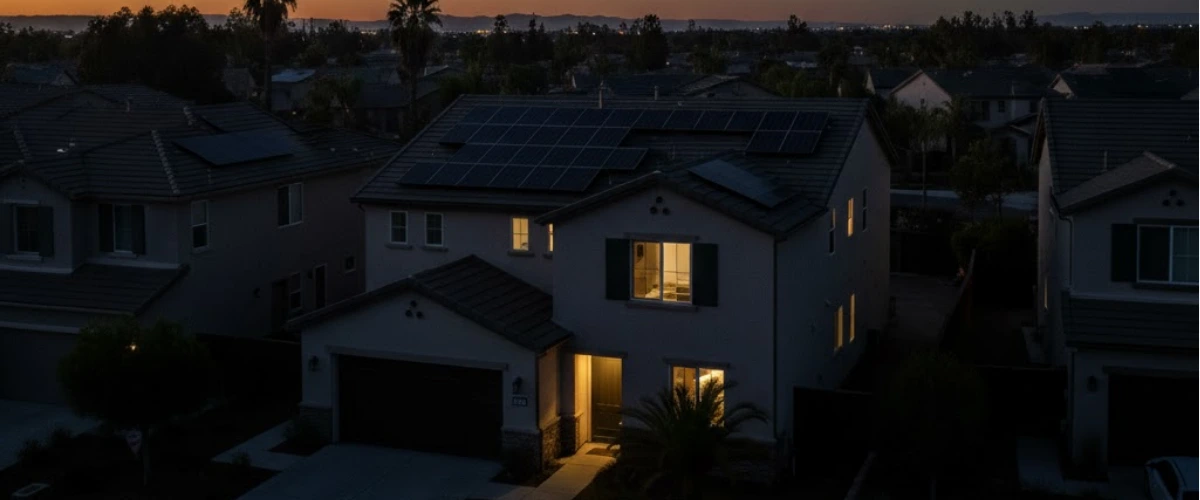
You just spent $30,000 on a solar system to cut your electric bills and gain energy independence. Then the power goes out on a scorching August afternoon, and you realize your solar panels have stopped working entirely. Your expensive system is useless precisely when you need it most.
This frustrating reality catches thousands of Southern California homeowners off guard every year. But here's what most solar companies won't tell you upfront: your panels don't actually stop producing electricity during an outage. The problem is much more specific—and understanding it is the first step toward real backup power.
Why Grid-Tied Solar Goes Dark During Outages
Your solar panels don't know the grid went down. They're still catching sunlight and generating DC electricity. The issue is your inverter system—whether you have microinverters on each panel or a central string inverter—which needs an active grid signal to operate safely.
The Anti-Islanding Safety Requirement
Federal electrical code requires all grid-tied solar systems to shut down immediately when they detect a power outage. This feature, called anti-islanding protection, prevents your solar system from sending electricity back to the grid during an outage.
Why does this matter? When utility workers are repairing downed power lines, they assume those lines are dead. If your solar system kept feeding power into the grid, it could electrocute a line worker. So every inverter on the market includes rapid shutdown technology that detects grid failure within milliseconds.
Why a Transfer Switch Alone Won't Fix It
Many homeowners assume they just need a transfer switch—a device that isolates your home from the grid during an outage. It's a logical assumption, but it misses a critical piece of the puzzle.
Your microinverters or string inverter need two things to operate: sunlight (which you have) and a stable AC voltage and frequency reference (which the grid normally provides). When the grid goes down, your inverters lose that reference signal and shut off, even if you isolate your home with a transfer switch.
A transfer switch keeps power from backfeeding to the grid, but it doesn't create the grid-like signal your inverters need to turn back on. This is why solar panels alone aren't enough in 2025.
Understanding Your Backup Power Options
So what can you actually do if you want solar backup during outages? You have three main paths, each with different costs and capabilities.
Option 1: Portable Battery Stations
Portable batteries like the Renogy Lycan 5000 or Goal Zero models can power essential appliances during short outages. These units typically offer 3,500-7,000 watts of output and can run a refrigerator, freezer, or furnace for several hours.
The limitation? They can't charge from your existing grid-tied solar panels during an outage. You'd need separate portable solar panels connected directly to the battery's DC input. This creates a janky setup where you're essentially running two separate solar systems—your roof panels for normal times and portable panels for emergencies.
Option 2: Grid-Forming Battery Systems
Modern battery systems like Tesla Powerwall, Enphase IQ Battery 5P, or QCells Q.HOME CORE do something your portable battery can't: they create a stable grid signal that allows your solar panels to keep producing during an outage.
These systems act as a "microgrid" when the main grid goes down. Your inverters detect the battery's grid signal and continue operating, charging the battery when the sun is shining and drawing from it when you need power. Here's Everything You Need to Know About Solar and Battery Storage.
This is the only way to use your existing rooftop solar panels during a power outage without rewiring your entire system.
Option 3: Hybrid Inverter Systems
Some newer systems use hybrid inverters that combine solar conversion and battery management in one unit. These can be installed during initial solar setup or, in some cases, retrofitted to existing systems. Learn more about Which Backup Power Option Is Right for You.
The catch? Most existing microinverter systems (Enphase IQ7, IQ8, or third-party brands like your LG microinverters) can't easily be converted to this setup. You'd essentially need to replace your inverters or add a complex battery system designed for AC coupling.
Is a Battery Backup System Worth the Investment?
This is where the conversation gets interesting. A few years ago, battery systems were a luxury for the paranoid or off-grid enthusiasts. In 2025 Southern California, they're becoming essential infrastructure.
The NEM 3.0 Factor Changes Everything
California's Net Energy Metering 3.0 policy, which took effect in April 2023, dramatically reduced the credits you receive for excess solar sent to the grid. Instead of getting retail rate credits (around $0.40 per kWh), you now get wholesale rates—sometimes as low as $0.05 per kWh during peak solar production hours.
This makes batteries financially attractive even without considering backup power. Instead of selling your midday solar production for pennies, you store it in a battery and use it during expensive evening hours when SCE charges $0.50-0.60 per kWh.
The backup capability during outages is almost a bonus feature at this point. Discover more about whether solar batteries are worth the cost.
Real-World Backup Scenarios
Let's be realistic about what a battery can and can't do during an extended outage.
A typical 13.5 kWh battery (like the QCells Q.HOME CORE) can power essential loads for 8-12 hours overnight. If the sun comes out the next morning, your solar panels recharge the battery, extending your backup indefinitely as long as you manage your usage carefully.
Running your entire home—including AC, electric dryer, and range—will drain the battery in 2-3 hours. But running a refrigerator, freezer, Wi-Fi, a few lights, and your gas furnace blower? You can go days or weeks.
Here's more on How Long a Solar Battery Can Power a House.
The Cost-Benefit Analysis
As of December 2025, a fully installed battery system runs $12,000-18,000 for a single 13.5 kWh unit. That includes equipment, installation, permitting, and the 25-year warranty.
Here's what changes the math:
- Federal tax credit: 30% of the total cost comes back as a tax credit (expires December 31, 2025)
- NEM 3.0 arbitrage: Store cheap midday solar, use it during expensive evening rates
- Backup peace of mind: No generator maintenance, no fuel storage, no noise
- SCE rate increases: As rates climb, the value of stored energy grows
Many US Power customers see battery systems pay for themselves in 8-10 years through rate arbitrage alone, with backup power as pure upside. Learn how solar batteries can maximize your savings.
What US Power's Battery Solutions Actually Provide
Let's get specific about what you're actually buying when you add a battery to your solar system through US Power.
QCells Q.HOME CORE Battery System
US Power exclusively installs QCells batteries, manufactured at their Dalton, Georgia facility. These are the same batteries we pair with QCells solar panels for integrated whole-home energy systems.
Key specifications:
- 12.9 kWh usable capacity per unit
- 7.6 kW continuous power output (11.4 kW peak)
- Modular design (add up to 3 batteries for 38.7 kWh)
- 25-year comprehensive warranty
- Seamless integration with existing Enphase or SolarEdge systems through AC coupling
Installation Timeline and Process
Unlike the 6-12 month waits some solar companies quote, US Power typically completes battery additions in 3-6 weeks after your approval. Here's why we're faster:
Our CSLB-licensed installers work directly for US Power—no subcontractors creating scheduling delays. We handle permitting, utility interconnection, and final inspection as a coordinated process, not separate steps with gaps in between.
What It Actually Powers During an Outage
A single 12.9 kWh battery can typically run:
- Refrigerator and freezer (continuous)
- Gas furnace blower (as needed)
- 6-8 LED lights (evening use)
- Wi-Fi router and modem (continuous)
- Phone/laptop charging (as needed)
- Microwave (intermittent use)
This load profile would give you 12-16 hours of backup overnight, with full recharge from solar the next day. If you add a second battery, you can power more loads or extend runtime significantly.
The Cost of Waiting vs. Acting Now
Here's the uncomfortable truth about timing a battery purchase in late 2025.
The December 31, 2025 Tax Credit Deadline
The federal investment tax credit drops from 30% to 26% on January 1, 2026. For a $15,000 battery system, that's a difference of $600 in your pocket. But the real impact comes in 2033 when the credit drops to 0%.
To claim the 30% credit, your system must be installed and operational before December 31, 2025. Given typical 3-6 week installation timelines, you're running out of runway if you want to lock in maximum savings.
Read more about the 30% federal solar tax credit.
Rising Battery Costs in 2026
Battery prices dropped steadily from 2020-2024 as manufacturing scaled up. That trend is reversing. Lithium prices are rising again, and new tariffs on imported battery components take effect in 2026.
Industry analysts project 8-12% price increases for battery systems in early 2026, erasing much of the progress made in recent years.
What to Look for in a Solar + Battery Provider
Not all solar companies are equally qualified to add batteries to existing systems. Here's what matters when vetting providers.
Licensing and Insurance Matter More with Batteries
Battery installations involve more complex electrical work than solar-only systems. Your installer should hold a valid CSLB C-10 electrical contractor license, not just C-46 solar contractor licensing.
US Power's installation teams hold both licenses and carry $2 million in general liability insurance specifically covering battery storage work.
Warranty Coverage You Can Actually Use
A 25-year warranty sounds impressive until you read the fine print. Many battery warranties only cover the equipment, not labor to diagnose and fix issues. US Power's comprehensive warranty includes parts, labor, and workmanship for 25 years on both QCells solar panels and battery systems.
Post-Installation Support
When the power goes out at 2 AM, you need to know how to switch your system to backup mode (if it doesn't happen automatically) and monitor your battery level. Here's a guide on how to choose a solar company in Los Angeles that provides the support you need.
US Power provides system monitoring training during installation and maintains 24/7 technical support for emergency situations. We also handle all utility paperwork for permission to operate (PTO) your battery system.
These Next Steps Will Help You Decide
If you already have solar panels that go dark during outages, you're not stuck with that limitation forever. Battery technology has evolved to the point where adding backup capability to existing systems is straightforward and, under NEM 3.0, financially sensible.
The decision comes down to three factors: your budget, your backup power needs, and your timeline for the tax credit. US Power's solar consultants can walk you through exact costs, savings projections, and realistic expectations for your specific home and energy usage patterns.
With the 30% federal tax credit expiring December 31, 2025, and battery prices expected to rise in early 2026, the window for optimal timing is closing fast. Schedule a free consultation to explore whether adding battery backup makes sense for your existing solar system.
Frequently Asked Questions
Can I add a battery to my existing solar system years later?
Will my solar panels charge the battery during an outage?
How long does a battery actually last during an outage?
Do I need to replace my inverters to add a battery?
What happens if the outage lasts multiple days?


%20Thumbnail.png)
What Does It Take to Get Permission to Operate (PTO)?
Follow our 2025 PTO guide to activate your solar system in Southern California.
Can You Charge a 12V Battery with a Solar Panel?
Your solar system's voltage could be costing you 75% of your power. Start saving now!

3 Things to Do Before Your Solar Consultation
Prepare effectively for your solar consultation with these essential steps.








Derechos de autor © 2025 US POWER | Energía solar y techosUS Power - Axia by QCells. All Rights Reserved.

¡Obtenga una estimación solar instantánea usando el satélite!