




Hidden Frustration Homeowners Face After Solar Installs

Even approved solar installs can hide hazards. Discover Qcells + US Power's proper grounding practices to ensure safety, compliance, and peace of mind.

You’ve just had solar panels installed — but something’s off. A bare copper wire snakes down the side of your house, disappearing into a patch of dirt. Two grounding rods sit in the yard; the installer says it's “done.” The inspector gave it a pass after some dirt was thrown on the wires. But you’re seeing a tripping hazard in the grass, exposed wiring down the wall, and you wonder: “Is this really safe? Is this really up to code? And what happens if someone trips — or if something goes wrong in a storm?”
Many homeowners have been in this exact position. They accept the “bare wire + rods + dirt” solution just to get past inspection — often because they’re rushing against a deadline (like a tax-credit cut-off or permit window). What feels like “good enough” may actually be risky: code-wise, visually unsightly, and prone to physical damage — especially given SoCal’s landscaping tools, yard work, and weather conditions.
If you care about safety, home value, and long-term performance — you deserve better than a half-finished grounding job. And that’s where a quality installer with top-tier equipment like QCells panels, plus real workmanship discipline, makes all the difference.
Why Proper Grounding Matters (Beyond Just “Inspector Approved”)
Safety First: Preventing Electric Shock, Fire, and Fault Hazards
- A ground system gives electricity a safe path to earth in case of faults — preventing energized metal parts from causing shock or fire.
- With rooftop solar (metal rails, panel frames, conduit), ensuring all metal components are at the same safe potential is critical. A bare wire barely hidden in the dirt isn’t enough protection.
Compliance & Inspections: It’s About More Than Passing Once
- The governing rules come from versions of the National Electrical Code (NEC) — specifically sections around grounding (e.g. 250.52, 250.53, 250.64, 250.66).
- A grounding electrode conductor (GEC) needs to run continuous (no improper splices) from the panel to the rods.
- If the wire is exposed and subject to “physical damage,” it must be protected by conduit or other approved cover. Bare copper wires running along walls or across yards usually don’t meet that standard.
Longevity & Peace of Mind: Aesthetic + Durable Installation
- A proper install buries or conduits grounding wires — so they’re not exposed to lawn mowers, weed-whackers, foot traffic, or accidental damage.
- For homeowners, that means the system remains neat, safe, and less likely to create liability — even years down the line.
What the Code Actually Says: Grounding Rules You Should Know
Here’s a homeowner-level breakdown of what the NEC and related guidelines require when grounding a residential solar (or electrical) system:
- Ground rods must be properly driven into soil (typically ~8 ft) or buried if rock or other obstacles prevent vertical drive.
- The wire (grounding electrode conductor) must run continuously from the panel to the rods; splices are allowed only via irreversible compression connectors or exothermic welding — not via solder or loose twisting.
- If the wire is exposed and subject to possible physical damage (yard tools, lawn traffic, public access), it must be protected — e.g. rigid metal conduit, Schedule-80 PVC conduit, electrical metallic tubing (EMT), or cable armor.
- A 6 AWG copper wire is often the minimum size for a bare grounding conductor not subject to damage. If smaller than 6 AWG — or exposed — conduit or raceway protection is mandatory.
Taken together: a bare GEC running visibly down a wall or across the grass — especially one covered by only a thin layer of soil — often fails the “physical-damage protection” requirement.
What Many Solar Installs (Sadly) Get Wrong — and Why
From the homeowners’ forum thread you provided, common mistakes include:
- Burying wires superficially (just shoveling dirt over them) rather than in a trench or conduit.
- Leaving the grounding wire exposed along exterior walls with minimal protection or aesthetic consideration.
- Adding rods and wires only after the main install — often as a quick “inspection fix,” not as part of a clean, code-compliant design.
- Using improper wiring methods (wrong wire gauge, exposed to the elements, unprotected from possible damage).
In short: many installs treat grounding as an afterthought — not as a critical system safety requirement.
How US Power + QCells Do It Differently: The Full, Code-Compliant Solar Package
At US Power, our installations follow best practices — not shortcuts. Here’s how we avoid the common grounding pitfalls:
- We pre-plan the grounding electrode system — deciding rod placement, conduit routing, and conduit type before installation begins.
- We use top-quality, factory-direct QCells panels — known for durability, high efficiency, and long-term performance. That means the rest of the system deserves the same level of attention.
- Grounding electrode conductors are installed in continuous runs, secured with approved hardware. If exposed, they’re protected with conduit or raceway before wall finishing or landscaping.
- Ground rods are driven, buried, or otherwise protected — never rudimentary “cover-with-dirt and hope for the best.”
- We handle permitting, ensure code acceptance, and build for inspection — so homeowners don’t receive frustrating red tags or have to chase contractors for fixes.
In short: a solar + storage system from US Power with QCells isn’t just about panels — it’s about doing the entire job right.
Why It Matters in Southern California in 2025
Incentives, Net Billing, and Value for Money
- Homeowners in California remain eligible for the 30% federal clean energy tax credit (ITC) on full system cost (panels, installation, batteries) — but 2025 might be the last year at full credit before proposed changes.
- While traditional net-metering has phased out under NEM 3.0, pairing your solar system with battery storage (e.g. with SGIP rebates) can restore strong savings and reliability.
- With proper grounding and workmanship, your solar + storage install increases home value without creating eyesores or potential liabilities.
Long-Term Reliability — Protection Against SoCal’s Environment
- California’s climate — sun exposure, yard equipment, occasional storms — demands durable, protected installations. Exposed wire + shallow burial = recipe for future problems.
- Investing now in quality installation (with QCells panels + solid grounding) avoids future repair costs, inspection failures, or safety hazards.
What You Should Do If Your Solar Installer Left Exposed Ground Wires
If your home’s solar install looks like the Reddit thread — bare copper wires, rods in the yard, wire running down the wall — it’s not too late. Here’s a homeowner checklist:
- Request a professional inspection — ask a licensed electrician or a trusted installer (like US Power) to evaluate the grounding setup.
- Ask for conduit / raceway protection — if wires are exposed, have them protected in rigid metal conduit, PVC Schedule 80, EMT, or similar.
- Ensure continuous grounding path — no improper splices; connectors must be code-approved (compression connectors or exothermic welds if spliced).
- Bury rods properly or protect them — ground rods should be driven into soil or buried/trenched if necessary; above-ground connections must be protected.
- Document everything for inspection & resale — take photos, keep receipts and permit docs; a clean professional install adds real value.
If the installer balks — or if you don’t want to deal with the hassle — consider a full re-install from a reputable company.
Solar Isn’t Just Panels — It’s a System
Solar is more than just sticking panels on a roof. A rooftop solar + storage system is a complete electrical system — and like any electrical system, it demands respect for safety, code, and craftsmanship.
That’s why homeowners who choose US Power + QCells get more than just high-efficiency panels — they get a solar system built right, grounded safely, vetted for inspection compliance, and ready to deliver decades of clean power with peace of mind.
If you suspect your solar grounding is sloppy, or if you just want to future-proof your investment — schedule your FREE Solar Consultation with US Power. Let’s ensure your solar setup isn’t just “good enough,” but done the right way.
Frequently Asked Questions


How Big Are Solar Panels? What You Should Know
Understand solar panel sizes and how they fit different California rooftops.
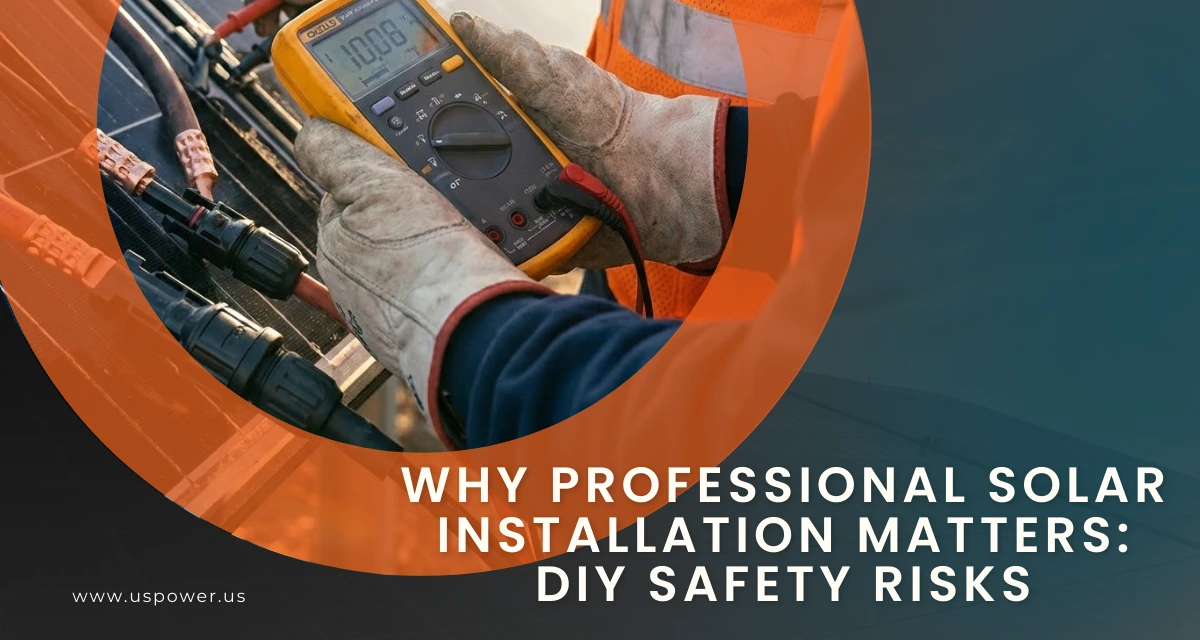
Why Professional Solar Installation Matters: Safety Lessons from DIY Mistakes
Six dangerous mistakes. Thousands of dollars at risk. US Power can help you.

Complete Guide to Solar Panel Size
Get clarity on solar panel sizes, wattage, and roof space requirements for your home.








Derechos de autor © 2025 US POWER | Energía solar y techosUS Power - Axia by QCells. All Rights Reserved.

¡Obtenga una estimación solar instantánea usando el satélite!