




Can You Actually Go Off-Grid with Solar in California?

Most Southern California homeowners dream of cutting the cord with SCE completely. But is pure off-grid solar realistic? We break down the real costs, technical challenges, and reveal the practical alternative that saves thousands while delivering energy independence.
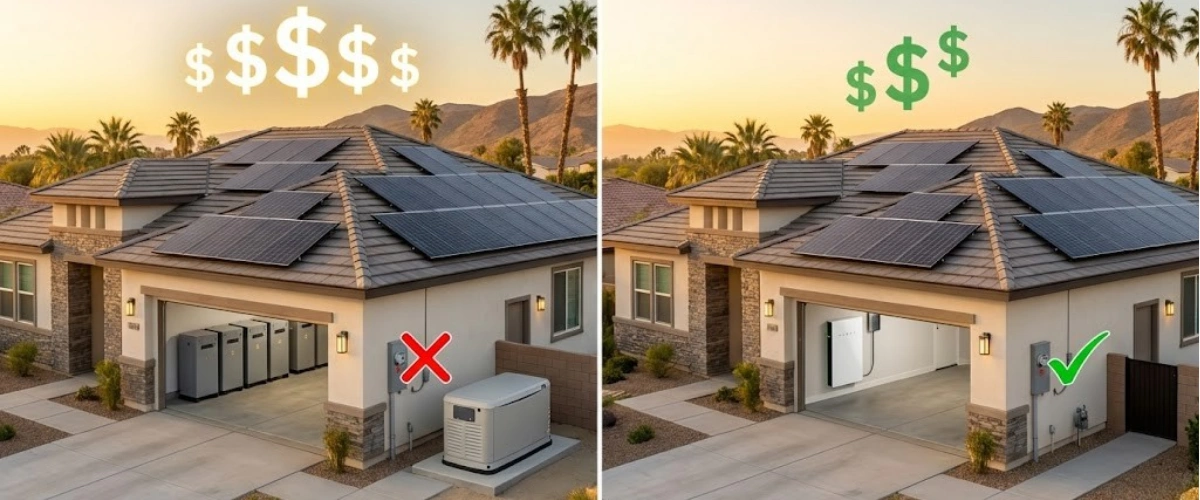
You've seen your SCE bill climb month after month. The peak rates hit $0.60+ per kWh, and you're tired of feeling helpless every time the utility company announces another rate hike. The dream is simple: install enough solar panels and batteries to tell SCE goodbye forever.
But here's what most solar companies won't tell you upfront—true off-grid solar in Southern California isn't just expensive. For most homeowners, it's financially impractical and technically unnecessary. The good news? There's a smarter solution that gives you energy independence without the six-figure price tag.
Why Southern California Homeowners Are Exploring Off-Grid Solar
The frustration is real. Southern California electricity rates have surged 32% higher since 2014, with no signs of slowing down. Rising SCE electricity rates continue pushing homeowners to explore alternatives that reduce or eliminate their dependence on utility companies.
Reddit forums and social media are filled with homeowners asking the same question: "Can I just disconnect from the grid entirely?" The appeal is obvious—no more utility bills, no more rate hikes, complete energy independence. It sounds perfect.
The Off-Grid Solar Fantasy vs. Reality
The off-grid dream usually looks like this: a massive solar array on your roof, a huge battery bank in your garage, and zero connection to SCE or any utility company. You produce all your own power, store what you don't use, and never pay another electric bill.
The reality? True off-grid systems in Southern California typically require $100,000 to $150,000+ in upfront costs, and that's before considering the lifestyle compromises most families aren't willing to make.
The Real Technical Challenges of Going Completely Off-Grid
After analyzing hundreds of real-world off-grid systems, the pattern is clear: pure off-grid solar works best for remote cabins, vacation homes, or properties where grid connection isn't available. For everyday suburban Southern California living, the challenges stack up quickly.
Winter Production Creates the Biggest Obstacle
Southern California enjoys year-round sunshine compared to northern states, but even here, winter production drops significantly. Real homeowners report December solar production at just 25-40% of summer output on cloudy days.
One Michigan homeowner with a 20kW system shared: "Even on a sunny winter day, I'm producing maybe 20kWh—which about matches our use. But on cloudy days? I get 1/20th of my daily needs." If this happens in Michigan with massive systems, Southern California homeowners face similar winter challenges, just less severe.
The Battery Bank Math Doesn't Add Up for Most Homes
To survive even 3-5 days of cloudy weather without grid backup, you'd need 60-100+ kWh of battery storage. At current prices, that's $30,000-$50,000 just for batteries—and they'll need replacement every 10-15 years.
How much battery storage you actually need for backup power versus true off-grid living reveals the massive gap. Most homes need 13-20 kWh for overnight backup. True off-grid? You're looking at 5-8 times that capacity.
Load Management Becomes a Daily Hassle
Off-grid living means constant awareness of your energy budget. One Alabama homeowner who lives 100% off-grid explained: "No AC and dryer at night. We have mini splits, heat pump water heater, and careful timing of everything. It works, but it's not plug-and-play."
Southern California families with kids, home offices, EVs, and modern appliances aren't typically willing to shift to this level of energy consciousness. You shouldn't have to schedule laundry around cloud cover.
What Most Solar Companies Don't Tell You About NEM 3.0
Here's the twist that changes everything: California's NEM 3.0 policy actually makes grid-tied solar with batteries MORE valuable than going completely off-grid for most homeowners.
NEM 3.0 makes batteries essential because the new billing structure reduced solar export credits by 75%. But it created a silver lining—batteries became financially justified in ways they weren't under NEM 2.0.
The Grid-Tied + Battery Hybrid Approach
Instead of spending $100,000+ to cut the cord entirely, smart Southern California homeowners are installing right-sized solar and battery backup systems that deliver the best of both worlds:
What you get:
- 95%+ energy independence during normal operation
- Automatic backup power during outages
- Grid connection as insurance for extended cloudy periods
- $25,000-$45,000 total system cost (vs. $100,000+ for true off-grid)
- Normal lifestyle with zero load management stress
One Los Angeles homeowner recently shared: "We went from $350/month SCE bills to $12/month grid connection fees. Our 12kW solar + 26kWh battery setup cost $38,000 after tax credits. We're essentially off-grid 11 months a year, but the grid connection gives us peace of mind."
Why US Power's Grid-Tied Approach Beats Pure Off-Grid
After helping 1,000+ Southern California families transition to solar, we've learned that the grid-tied + battery approach consistently delivers better outcomes than pursuing complete off-grid independence.
Factory-Direct QCells Pricing Makes Batteries Affordable
As the exclusive QCells partner in Southern California, US Power delivers factory-direct pricing that's typically 15-20% below market rates. This pricing advantage means you can afford properly sized battery backup without the financial strain of massive off-grid systems.
QCells panels and battery systems integrate seamlessly, providing American-made quality with comprehensive 25-year warranties covering panels, workmanship, and performance.
Right-Sized Systems That Match Your Actual Needs
Most families don't need to survive 7-10 days without any grid power. What you actually need is protection from:
- Peak rate periods (4-9 PM daily)
- Occasional grid outages
- Gradual utility rate increases
A properly designed 10-15kW solar array with 20-30kWh of battery storage accomplishes all three goals at a fraction of off-grid costs. How solar batteries maximize your savings by storing cheap daytime solar production for expensive evening use.
3-6 Week Installation vs. Months of Off-Grid Complexity
True off-grid systems require extensive engineering, oversized equipment, backup generators, and complex permitting. US Power's streamlined grid-tied installations typically reach permission to operate (PTO) within 6-8 weeks of approval.
You'll have 180+ five-star Google reviews backing our installation quality. Our CSLB-licensed consultants ensure every system meets California code requirements without the hassle of over-engineering for complete off-grid operation.
The Financial Reality: Grid-Tied Wins Every Time
Let's compare real numbers for a typical 2,000 sq ft Southern California home using 30 kWh daily:
Pure Off-Grid System:
- 25-30kW solar array: $60,000-$75,000
- 80-100kWh battery bank: $40,000-$50,000
- Backup generator + transfer switch: $8,000-$12,000
- Advanced monitoring/management: $3,000-$5,000
- Total: $111,000-$142,000
- Lifestyle compromises: Significant
Grid-Tied + Battery (US Power Approach):
- 12-15kW QCells solar array: $24,000-$30,000
- 20-26kWh battery backup: $12,000-$16,000
- Standard installation + monitoring: Included
- Total: $36,000-$46,000
- After 30% federal tax credit: $25,200-$32,200
- Lifestyle compromises: Zero
The grid-tied approach costs 60-70% less while delivering 95%+ of the independence benefits most families actually want.
When Does True Off-Grid Actually Make Sense?
We're not saying off-grid solar is always wrong. There are specific situations where it's the only practical option:
Remote Properties Without Grid Access
If connecting to the utility grid would cost $50,000+ in infrastructure fees and trenching, off-grid solar suddenly becomes cost-competitive. Mountain properties, rural land, and remote cabins fall into this category.
Vacation Homes with Minimal Usage
A vacation home used a few weeks per year doesn't need the same reliability as your primary residence. A smaller off-grid system with lifestyle adjustments during visits can work perfectly.
Properties in High-Outage Areas
Some rural areas experience frequent, extended outages due to wildfire prevention measures or aging infrastructure. In these cases, choosing the right backup power solution might justify a larger battery bank or hybrid off-grid/grid-tied approach.
Homeowners Committed to Minimalist Living
If you're genuinely excited about load management, seasonal adjustments, and treating electricity as a precious resource, off-grid living can be rewarding. But this describes less than 5% of suburban homeowners.
What About Generators as Off-Grid Backup?
Here's what most "100% off-grid" homeowners won't admit: they rely heavily on backup generators during winter months. One Florida solar professional shared: "Even with 20kWh battery bank and 12kW solar, we still need the generator on very cold nights and mornings."
If you're going to have a generator anyway, why not just maintain a grid connection? The monthly connection fee ($12-$25 typically) is cheaper than generator fuel costs, requires zero maintenance, and provides cleaner backup power.
Grid-tied solar with battery backup gives you the generator-free backup most families want while avoiding the fuel costs, noise, and emissions of combustion engines.
Making the Smart Choice for Energy Independence in Southern California
The homeowners winning with solar in 2026 aren't the ones trying to cut every wire to the utility company. They're the ones who recognize that strategic grid-connection combined with robust solar and battery systems delivers the real benefits—energy independence, backup power, and dramatic cost savings—without the lifestyle compromises and extreme expense of pure off-grid systems.
US Power's approach is simple: right-size your system based on your actual energy needs, install American-made QCells equipment with 25-year warranties, and maintain that thin grid connection as inexpensive insurance. You'll save thousands upfront, eliminate 95%+ of your electricity bills, and sleep better knowing you have backup power when you need it.
The best part? With the 30% federal tax credit still available through the end of 2026 and grid-tied solar with battery backup becoming more affordable than ever, there's never been a better time to take control of your energy costs without pursuing the off-grid fantasy that works better in theory than reality.
Frequently Asked Questions
How much battery storage do you need to go off-grid in Southern California?
Can you disconnect from the grid after installing solar?
Is off-grid solar worth it in California under NEM 3.0?
How long does a solar battery last during a power outage?
What happens if you go solar and still have a power bill?


US Power + Qcells: Setting the Standard for Solar in California
Explore how US Power and QCells lead California in high-quality solar solutions.
5 Smart Rules for Powering Your Home and EV with Qcells Solar
Qcells solar systems make home charging cleaner, faster, and more affordable.

The #1 Qcells Installer in California: What That Means for You
Trust California’s top QCells installer for superior solar performance and support.








Derechos de autor © 2025 US POWER | Energía solar y techosUS Power - Axia by QCells. All Rights Reserved.

¡Obtenga una estimación solar instantánea usando el satélite!