




Can Solar Power My Whole House in California? 2025 Guide

Most California homeowners don't need a massive solar system to power their homes—they need the right-sized system. Here's how to calculate what you actually need and avoid costly mistakes.

Recently, a homeowner asked online about powering 20,000 watts of appliances continuously, 24 hours a day. The responses were immediate: "That's crypto mining levels!" and "You'd need 240 solar panels and a $100,000+ system."
Here's the thing: if you're a typical Southern California homeowner worried about rising SCE bills, you don't need anywhere near that much power. But the question reveals something important—many homeowners have no idea how much solar they actually need, and that uncertainty keeps them from making a decision that could save them thousands.
Let's clear up the confusion and help you figure out if solar can power your whole house (spoiler: it probably can, and for a lot less than you think).
How Much Power Does the Average California Home Really Use?
Before we talk about solar system sizing, let's establish realistic numbers. The Quora thread mentioned a continuous 20kW load, which translates to 480 kWh per day. That's roughly 16 times more than the average California home uses.
Here's what typical residential usage actually looks like:
Average California home: 20-30 kWh per day (600-900 kWh per month)
Larger home with AC/pool: 35-45 kWh per day (1,050-1,350 kWh per month)
High-usage home with EV: 50-60 kWh per day (1,500-1,800 kWh per month)
Even the highest-usage residential homes rarely exceed 2,000 kWh per month. For context, understanding your home's energy consumption is the first step to getting an accurate solar quote.
The extreme example of 480 kWh daily would require industrial-scale equipment—multiple inverters, massive battery banks, and hundreds of panels. That's not a residential project; it's a commercial solar farm.
How to Calculate the Right Solar System Size for Your Home
Here's the straightforward formula for right-sizing your solar system:
Step 1: Find your daily usage
Look at your SCE or PG&E bill. Take your monthly kWh and divide by 30. That's your daily average.
Step 2: Account for California's peak sun hours
Southern California averages 5-6 peak sun hours daily. This is the "effective" production time.
Step 3: Calculate system size
Daily usage ÷ peak sun hours × 1.25 (efficiency factor) = required system size in kW
Example:
- Monthly usage: 900 kWh
- Daily usage: 30 kWh
- Calculation: 30 ÷ 5.5 × 1.25 = 6.8 kW system
For most Southern California homes, a 6-10 kW system is ideal. That typically means 15-25 solar panels, not 240 like the industrial example.
Why Oversizing Costs You Money
One comment in the thread recommended "doubling your numbers" for safety. While redundancy matters for mission-critical industrial operations, residential solar is different. Here's why:
You're grid-tied: If your panels underperform one day, the grid supplements your power automatically. You're not running a hospital.
NEM 3.0 changed the math: Under California's current billing system, excess solar production has minimal value. Oversizing means you're generating power you won't get paid fairly for.
Batteries are expensive: A correctly sized battery (10-15 kWh) costs $8,000-$12,000. Oversizing to support a too-large solar array wastes money.
The goal isn't maximum production—it's optimized production that matches your actual consumption patterns.
Why Southern California Homeowners Are Worried About Power Costs
Let's address why you're even considering solar. It's probably not because you want to power a cryptocurrency operation. It's because your electricity bill keeps climbing.
Southern California's rising electricity rates have hit historic highs in 2025:
SCE rates: $0.32-$0.52 per kWh (depending on time of use)
Annual increases: 6-8% consistently
Projected 2026 rates: $0.35-$0.58 per kWh
A family using 900 kWh monthly now pays $300-$400 on average. Without solar, that same family will pay $400-$550 by 2027.
Do the math: solar panels last 25+ years. Even if rates only increase 5% annually (conservative estimate), you're looking at cumulative utility costs exceeding $150,000 over the next 25 years without solar.
A properly sized 7 kW solar system costs roughly $17,000-$21,000 after the federal tax credit. The payback period is typically 6-8 years in Southern California, meaning you'll save over $100,000 long-term.
Why High-Usage Homes Need Solar + Battery Storage in 2025
If you're in the higher usage category (1,500+ kWh monthly), here's where batteries become critical.
Under NEM 3.0, California changed how solar credits work. The old system (NEM 2.0) credited you nearly 1:1 for excess solar sent to the grid. Now, excess power sent back during peak production (midday) is worth 75-80% less than power drawn during peak pricing (4-9 PM).
Translation: NEM 3.0 makes batteries essential for maximizing savings.
How Battery Storage Works for High-Usage Homes
Morning (6 AM - 12 PM): Panels begin producing. Battery charges while powering your home.
Midday (12 PM - 4 PM): Peak production. Battery fully charged. Minimal grid usage.
Evening (4 PM - 9 PM): Expensive peak rates kick in. Battery discharges to power your home instead of buying expensive grid power.
Night (9 PM - 6 AM): Battery supplements solar as needed. Grid use minimized.
For a home using 1,500 kWh monthly, pairing a 10 kW solar system with a 13.5 kWh battery typically reduces grid reliance by 85-95%. That's the difference between a $150 monthly bill and a $15-$30 monthly bill.
Learn more about how solar batteries maximize savings for California homeowners under current billing structures.
US Power's Approach to High-Performance Solar Systems
Unlike the industrial-scale systems discussed in the Quora thread, residential solar doesn't require excessive redundancy or massive component counts. It requires precision engineering and quality components.
Here's how US Power ensures your system performs optimally:
American-Made QCells Panels
Manufactured in Dalton, Georgia, QCells panels and battery systems consistently rank among the industry's most reliable. Unlike budget panels that degrade quickly, QCells maintains 92%+ efficiency after 25 years.
Factory-Direct Pricing
As an exclusive QCells partner, we eliminate distributor markups. Most competitors charge $2.80-$3.50 per watt. US Power averages $2.20-$2.60 per watt—a 15-20% savings on identical quality.
CSLB-Licensed Installation
The Quora thread mentioned professional companies for complex installations. Every US Power installer holds California Contractor's State License Board (CSLB) credentials. We're not a national franchise with rotating subcontractors—we're local experts.
25-Year Comprehensive Warranty
Unlike most installers who offer separate warranties for panels, workmanship, and performance, US Power covers everything under one 25-year warranty. If anything goes wrong, we handle it—no finger-pointing between manufacturers and installers.
3-6 Week Installation Timeline
The thread mentioned 6-month lead times for equipment failures. US Power maintains inventory and completes most installations within 3-6 weeks from approval. We don't make you wait.
The Quora discussion touched on off-grid setups. One Norwegian farmer described using the grid like a "virtual battery"—selling excess summer production and drawing power in winter. That's essentially how California's NEM 3.0 works, though less generously than before.
Grid-Tied Solar (Recommended for 95% of Homeowners)
Pros:
- Lower upfront cost (no massive battery bank needed)
- Automatic backup from grid during low production
- Simpler permitting and installation
- Net metering still provides some credit for excess production
Cons:
- Monthly utility connection fees ($10-$20)
- Subject to utility rate changes
- Power goes out if grid goes down (unless you add batteries)
Off-Grid Solar (Rare in Southern California)
Pros:
- Complete energy independence
- No utility bills ever
- Protected from rate increases
Cons:
- Requires 2-3x more batteries for multi-day autonomy
- Total system cost: $40,000-$80,000+
- Must size for worst-case (winter) production
- No backup if system fails
For Southern California, where grid access exists and solar production is consistent year-round, grid-tied solar with battery backup offers the best balance of independence, reliability, and cost-effectiveness.
Act Now: Tax Credit Deadline Approaching
One thing the extreme solar example got right: timing matters. But instead of worrying about 6-month equipment lead times, you need to worry about the 30% federal tax credit expires December 31, 2025.
Here's what that means in real dollars:
7 kW system cost: $24,000 (before incentives)
30% tax credit (2025): -$7,200
Final cost: $16,800
Same system in 2026:
26% tax credit: -$6,240
Final cost: $17,760
You lose: $960
For larger systems (10-12 kW with batteries), you're looking at $2,000-$3,000 in lost savings if you wait until 2026. That's money you'll never get back.
The installation timeline is 6-8 weeks from contract to Permission to Operate (PTO). To lock in the 30% credit, you need to start the process now.
Your Next Steps to Powering Your Whole House
The extreme 20kW example taught us something valuable: don't let confusion or fear of undersizing paralyze you into inaction. Most California homeowners need 6-10 kW systems, not 150 kW industrial installations.
Here's your action plan:
This week:
- Gather your last 12 months of utility bills
- Calculate your average monthly kWh usage
- Schedule a free assessment with US Power
Within 30 days:
- Review your custom proposal
- Understand your system size, costs, and projected savings
- Make an informed decision
Before December 31, 2025:
- Lock in the 30% federal tax credit
- Complete installation
- Start saving on every utility bill
The homeowner asking about 20,000 watts was planning for the extreme. You just need to plan for your life. And with 165+ five-star Google reviews, transparent factory-direct pricing, and CSLB-licensed installers, US Power makes that planning process straightforward.
Frequently Asked Questions
How do I know what size system I need?
Can solar really eliminate my entire electric bill?
What happens if my panels don't produce enough power?
Do I need batteries if I'm grid-tied?
How long do solar panels and batteries last?


How Solar and Battery Systems Protect CA Homes During Grid Failures
Discover how solar plus batteries keep California homes safe during outages.

4 Ways Californians Can Lower Demand Charges
Cut peak power costs in California with four smart ways to reduce demand charges.
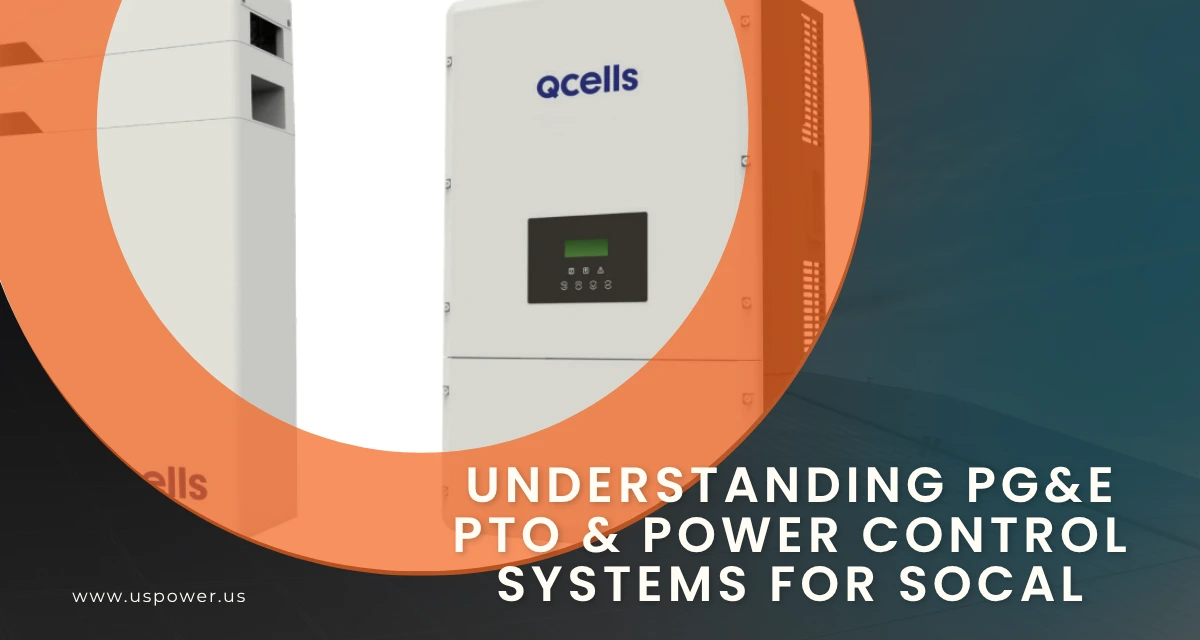
Understanding PG&E PTO & Power Control Systems for SoCal
Get PTO approval faster and save with a PCS-certified system through US Power.








Derechos de autor © 2025 US POWER | Energía solar y techosUS Power - Axia by QCells. All Rights Reserved.

¡Obtenga una estimación solar instantánea usando el satélite!