




Why Is Solar So Expensive in California? Avoid Overpaying in 2026

California homeowners pay 4-5x more for solar than they should. Factory-direct pricing cuts out dealer markups—saving you 15-20% below market rates.
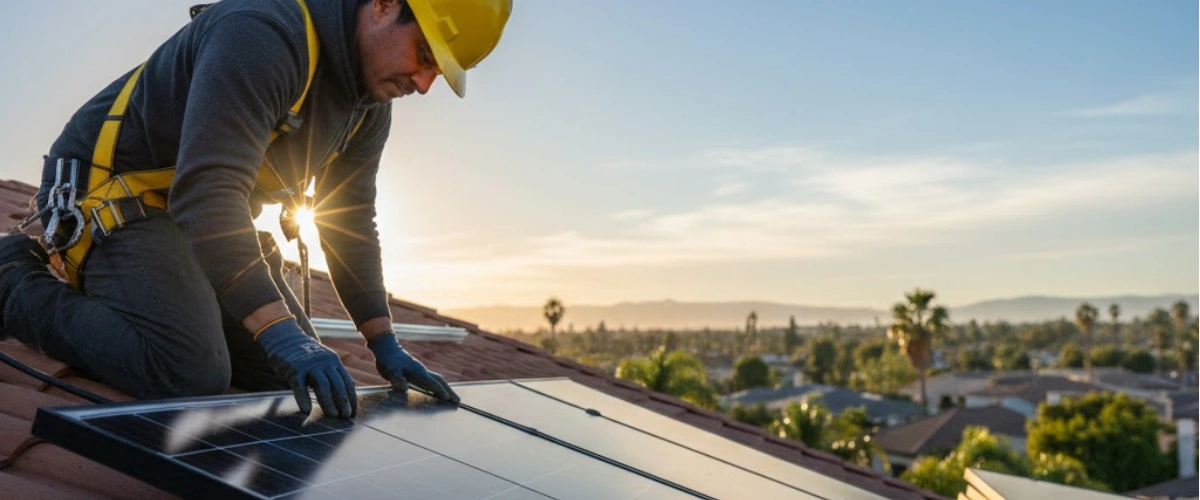
You've probably seen the Reddit posts. California homeowners paying $35,000-$40,000 for a 10kW solar system with one battery. Others paying $76,000 for a 15kW setup. Meanwhile, comparable systems in other markets cost half as much. What's going on?
The truth is uncomfortable: most California solar quotes include massive markups that have nothing to do with installation quality or equipment costs. You're paying for dealer networks, commission-heavy sales models, and corporate overhead that inflates prices by 50-100% above actual costs.
Here's what's really driving up your solar quotes—and how to avoid overpaying in 2026.
Why Southern California Electric Bills Keep Breaking Records
Before we dive into solar pricing, let's talk about why you're considering solar in the first place: your SCE or PG&E bill keeps climbing.
California electricity rates have increased 32% since 2014, with SCE customers now paying some of the highest rates in the nation. The average Southern California household now spends $200-$300 per month on electricity—and that's before summer air conditioning kicks in.
The NEM 3.0 Reality Check
In April 2023, California implemented Net Energy Metering 3.0, which dramatically reduced the credit you receive for excess solar production sent back to the grid. Export rates dropped by 75% compared to NEM 2.0.
What this means: solar panels alone won't zero out your bill anymore. You need battery storage to capture and use your solar energy when rates are highest (4-9 PM).
Rising Rates Aren't Slowing Down
SCE has filed for multiple rate increases through 2026. Every year you wait, your utility bills increase while solar costs remain relatively stable. The financial case for solar gets stronger every month as rising SCE electricity rates continue accelerating.
The Hidden Markup Game: Why California Solar Quotes Are So High
Here's what most homeowners don't realize: the actual cost of solar equipment and installation is far lower than what you're being quoted.
The Dealer Network Tax
Most national solar companies operate through dealer networks. Here's how it works:
- Manufacturer sells panels to distributor ($0.40-0.60/watt)
- Distributor marks up 20-30% and sells to dealer ($0.50-0.80/watt)
- Dealer marks up another 30-50% ($0.75-1.20/watt)
- Sales team adds commission (15-25% of total project)
- Corporate overhead adds marketing, office costs, profit margins
By the time it reaches you, a system that costs $15,000 in equipment and labor is quoted at $35,000-$40,000.
The Commission Problem
Many solar companies pay their salespeople 15-25% commission on every sale. That's $5,000-$10,000 of your quote going directly to sales commissions—not equipment, not installation, just sales overhead.
These commission structures incentivize aggressive sales tactics and inflated quotes. The salesperson isn't motivated to give you the best price; they're motivated to close the highest-value deal.
Hidden Fees and Add-Ons
Read the fine print on solar quotes. Many companies include:
- "Project management fees" (5-10% of total)
- "Design fees" ($500-$1,500)
- "Permit expediting fees" ($300-$800)
- "Monitoring setup fees" ($200-$500)
These aren't legitimate costs—they're profit padding disguised as service fees. A transparent solar pricing approach should break down actual costs without buried fees.
What You Should Actually Pay for Solar in 2026
Let's talk real numbers based on actual equipment and labor costs.
Fair Market Pricing Breakdown
For a typical Southern California home (10kW system + 13.5kWh battery):
Equipment costs:
- Solar panels (10kW): $4,000-$6,000
- Inverter/battery: $8,000-$10,000
- Racking, wiring, electrical: $2,000-$3,000
- Total equipment: $14,000-$19,000
Labor costs:
- Installation crew (2-3 days): $3,000-$5,000
- Electrical work: $1,500-$2,500
- Permits and inspections: $500-$1,000
- Total labor: $5,000-$8,500
Fair total price: $19,000-$27,500
Yet most California homeowners are quoted $35,000-$45,000 for this exact system. That's a 40-80% markup over actual costs.
How to Spot Overpriced Quotes
Red flags that indicate excessive markup:
- Price per watt over $3.50 (fair range: $2.50-$3.20)
- Vague line items like "system design" or "project coordination"
- Pressure to sign same-day for "special pricing"
- No itemized equipment list
- Financing rates over 7% APR
Smart homeowners compare solar quotes in California from multiple installers and ask for detailed cost breakdowns.
Red Flags to Watch For When Getting Solar Quotes
Not all solar companies operate with the same integrity. Here are warning signs that should make you walk away.
Pressure Tactics and "Today Only" Pricing
Legitimate solar companies don't need high-pressure sales tactics. If someone is pushing you to sign that day with threats of "this price expires tonight," that's a red flag.
Solar pricing doesn't change overnight. Equipment costs are stable. Any company creating artificial urgency is prioritizing their sales quota over your best interests.
Refusing to Provide Detailed Cost Breakdowns
If a company won't show you exactly what you're paying for—specific panel models, inverter brands, warranty terms, labor costs—walk away.
Transparency is essential. You're making a 25-year investment. You deserve to know exactly where every dollar is going.
Lowball Cash Prices with Terrible Financing
Watch out for companies that quote one price for cash but push financing with 8-10% APR. The cash price might look competitive, but they're making their profit on financing fees and kickbacks from lenders.
Fair financing rates for solar in 2026 should be 4-6% APR for qualified buyers.
Vague Warranty Terms
"25-year warranty" sounds great until you read the fine print. Some companies offer:
- Panel warranty (manufacturer covers panels)
- But NO workmanship warranty (installation defects not covered)
- And NO performance guarantee (no recourse if system underperforms)
You need comprehensive coverage: panels, installation workmanship, and performance guarantees all included.
Knowing how to choose a solar company protects you from predatory contracts and poor workmanship.
Installation Quality Concerns: Cheap vs. Professional
The Reddit thread that inspired this article raised a legitimate concern: "I just want to know my house won't burn down."
Price matters, but so does quality. Here's how to ensure you're getting both.
The Real Cost of Cutting Corners
Cheap solar installations can cause:
- Roof leaks from improper flashing installation
- Electrical fires from undersized wiring or poor connections
- System failures from inadequate grounding or surge protection
- Voided warranties from non-compliant installations
Professional installation includes:
- CSLB-licensed electricians (required in California)
- Engineered racking systems (not generic hardware)
- Proper wire sizing for voltage and amperage
- Code-compliant electrical work with inspections
- Comprehensive workmanship warranty
Quality Doesn't Have to Cost 50% More
Here's the myth: you have to choose between affordable pricing OR quality installation.
The truth: factory-direct models deliver professional installation at fair prices by eliminating dealer markups and sales commissions—not by cutting installation quality.
Common California solar installation quality mistakes cost homeowners thousands in repairs. Professional installation protects your investment.
How US Power Cuts Out the Middleman
So how does US Power offer 15-20% below market pricing while maintaining professional installation standards?
Exclusive QCells Factory Partnership
US Power is an exclusive QCells partner, meaning we buy directly from the manufacturer with no distributor or dealer markup. This alone saves 25-35% on equipment costs.
QCells is a tier-1 manufacturer with American-made panels from their Georgia facility. You're getting premium equipment at factory-direct prices.
No Commission Sales Model
Our solar consultants are CSLB-licensed professionals on salary—not commission-based salespeople. They're motivated to design the right system for your needs, not maximize deal size.
This eliminates $5,000-$10,000 in sales overhead from every quote.
Streamlined Operations
We focus exclusively on Southern California (Los Angeles, Orange County, Ventura, San Bernardino, Riverside). This allows us to:
- Maintain in-house installation crews (no subcontractors)
- Bulk purchase permits and materials
- Optimize routes and scheduling
- Build relationships with local inspectors
Regional focus means lower overhead and faster installation timelines.
Our factory-direct QCells pricing model passes savings directly to homeowners—not shareholders or dealer networks.
Why Battery Storage Is Essential Under NEM 3.0
We mentioned NEM 3.0 earlier, but this deserves deeper explanation because it fundamentally changes solar economics in California.
How NEM 3.0 Changed Everything
Under the old NEM 2.0 rules, excess solar production sent to the grid was credited at full retail rates (around $0.30-$0.40/kWh). This meant your solar system could effectively run your meter backward.
NEM 3.0 dropped export credits to $0.05-$0.10/kWh—a 75% reduction. Suddenly, sending solar power to the grid during the day and buying it back at night became a losing proposition.
The Battery Solution
Battery storage solves this by capturing your excess daytime solar production and releasing it during peak evening hours when electricity rates are highest.
Instead of selling solar power to SCE for $0.08/kWh and buying it back for $0.55/kWh, you store it and use it yourself—effectively saving $0.55/kWh.
For most Southern California homes, adding battery storage increases solar savings by 40-60% compared to panels alone. Learn more about how solar batteries can maximize your savings under current rate structures.
Sizing Batteries Correctly
Most installers recommend 13.5-15kWh of battery capacity for average homes (1,500-2,500 sq ft). This provides:
- Coverage for evening peak hours (4-9 PM)
- Backup power during grid outages
- Ability to avoid peak rate periods entirely
Larger homes or those with electric vehicles may need 20-30kWh of storage.
Your Next Steps: Getting Started with Solar That Makes Financial Sense
You've learned why California solar costs are inflated and how to identify fair pricing. Here's your action plan for 2026.
Step 1: Calculate Your Baseline
Pull your last 12 months of electric bills. Calculate your average monthly usage (kWh) and average monthly cost. This is your baseline for evaluating solar proposals.
Step 2: Get 3-5 Quotes
Contact at least three different installers. Request itemized quotes showing:
- Equipment specifications (panel model, inverter brand, battery capacity)
- Warranty terms (panels, workmanship, performance)
- Installation timeline
- Total cost with and without financing
- Price per watt
Step 3: Compare Apples to Apples
Use the same system size across quotes to compare fairly. If one company proposes 8kW and another proposes 12kW, you can't directly compare total prices.
Ask each company to match a standard size (like 10kW + 13.5kWh battery) so you can see true price differences.
Step 4: Verify Credentials
Every installer should have:
- Active CSLB license (check at cslb.ca.gov)
- Liability insurance ($1M+ general liability)
- Workers compensation coverage
- Manufacturer certifications for equipment they install
Don't work with unlicensed contractors, even if pricing seems attractive.
Step 5: Read the Contract Carefully
Before signing, understand:
- What happens if system underperforms?
- Who handles warranty claims—installer or manufacturer?
- What's the payment schedule? (Never pay full amount upfront)
- Are permits and inspections included?
- What's the timeline from contract to activation?
Take time to review. Any company pressuring you to sign without reading is showing red flags.
Learning how to avoid overpaying for solar protects your investment and ensures you get fair value for your money.
Take Control of Your Energy Costs Today
California solar doesn't have to cost $35,000-$40,000. You can get premium American-made equipment, professional installation, and comprehensive warranties at fair pricing—if you know where to look.
The key is working with companies that prioritize transparency over commissions, quality over sales quotas, and long-term customer relationships over short-term profits.
US Power was built on this principle: eliminate unnecessary middlemen, maintain professional standards, and pass savings directly to Southern California homeowners.
Frequently Asked Questions
Why does solar cost so much more in California than other states?
Can I negotiate solar pricing?
Should I wait for prices to drop?
Is financing or paying cash better?
What's included in a comprehensive solar warranty?


How Rising Electricity Rates Are Slashing Solar Payback Periods
Solar Payback Period CA: Break even on solar 33% faster as SCE rates surge 12.9%.
2026 California Energy Rate Hikes Will Drain Your Wallet
Save on energy bills before rates rise in 2026. Go solar now with US Power!
Arizona Faces Rising Electric Rates—Why Now Is the Time
Act now as Arizona electric rates rise fast—why solar is the smarter choice.








Copyright © 2025 US Power - Axia by QCells. All Rights Reserved.

Get an instant solar estimate using satellite!