



SCE Solar PTO Delays? Here's What to Do While Waiting (2026)
Waiting months for SCE solar approval? Learn the safe way to operate before PTO.
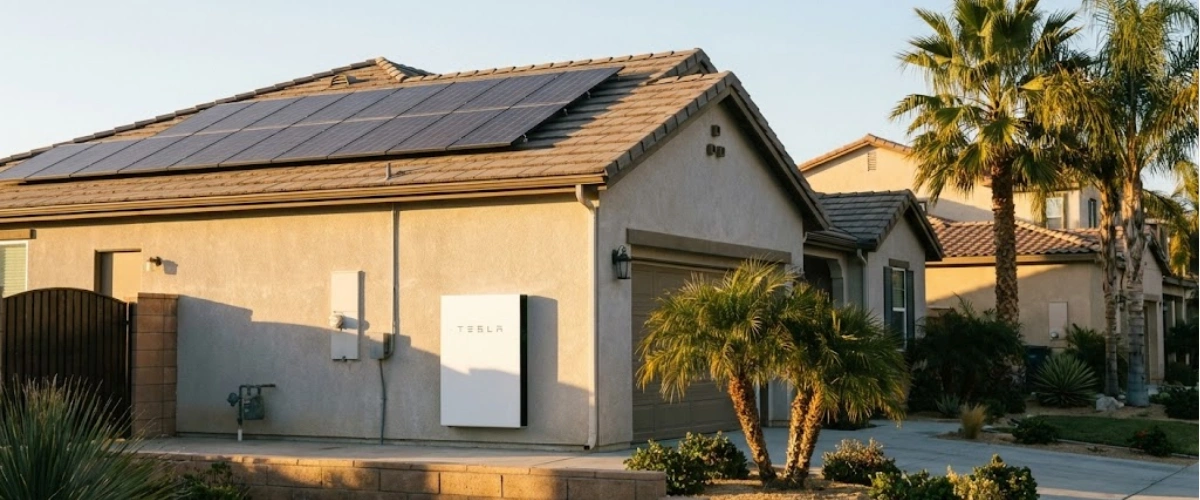
Your solar panels are installed. Your battery is sitting there, ready to store energy. The city inspector signed off weeks ago. But Southern California Edison keeps rejecting your interconnection application for the third time this month—wrong model numbers, incorrect line diagrams, panel quantities don't match.
Sound familiar? You're not alone. SCE solar PTO delays have become one of the biggest frustrations for Southern California homeowners in 2026, with approval timelines stretching from the promised 10 business days to 8-12 weeks or longer for battery systems.
The question keeping you up at night: Should you turn on your system before Permission to Operate arrives, or are you risking fines, billing disasters, or worse?
Understanding SCE's PTO Approval Process
Permission to Operate (PTO) is the official green light from your utility company—in this case, Southern California Edison—that allows your solar system to legally operate and export power to the grid. Without it, your shiny new solar investment sits idle while you continue paying full retail rates for electricity.
The Permission to Operate (PTO) approval typically involves several stages: your installer submits interconnection paperwork to SCE, the utility reviews technical specifications, they schedule a meter upgrade if needed, and finally grant approval. Simple solar-only systems may receive PTO within 10 business days, but complex paired storage systems require additional technical and engineering review, which is where the delays begin.
Here's what's actually happening in 2026: SCE's interconnection department is overwhelmed. Battery systems with Tesla Powerwalls, Enphase batteries, or other storage solutions face far longer review times than solar-only installations. The utility is being extraordinarily nitpicky about documentation—rejecting applications for minor discrepancies like model number formatting, panel brand variations between quote and final installation, or line diagram details that were acceptable just months ago.
Why SCE Keeps Rejecting Applications
The documentation rejections aren't random. SCE is responding to increased regulatory scrutiny and grid safety concerns following California's massive solar adoption. Every battery system that connects to their grid represents a potential bidirectional power flow that must be carefully managed.
Common rejection reasons include mismatched equipment model numbers between your original application and what was actually installed, incorrect or outdated single-line electrical diagrams, panel quantities or wattages that don't align with approved plans, inverter specifications that need clarification, and battery system details that require additional engineering review.
Each rejection adds 1-2 weeks to your timeline as your installer resubmits corrected paperwork, which then goes back into SCE's review queue. Some homeowners are experiencing 4-5 rejection cycles, pushing their PTO approval past the three-month mark.
The Pre-PTO Operation Dilemma
This is where things get complicated. Your installer may have told you to leave the system on, warning that your Tesla Powerwall could drain to 0% if turned off. Other installers insist you must shut everything down until PTO arrives or risk utility penalties. Who's right?
The truth is nuanced. Tesla's official installation documentation states "Leave the Powerwall 3 Breaker CLOSED and Enable Switch OFF" while awaiting PTO. This keeps the AC breaker energized to prevent deep battery discharge, but the system itself isn't operating.
What Happens If You Operate Before PTO
Operating your solar system before receiving official approval puts you in a gray area with three main risks. First, any power you export to the grid receives zero credit under NEM 3.0. You're literally giving SCE free electricity. Second, you're technically violating your interconnection agreement by operating without permission, though enforcement is rare. Third, if your meter hasn't been upgraded to bidirectional yet, you could actually be charged for the solar power you export because the old meter can't distinguish between imported and exported electricity.
The most common approach homeowners take is turning on the system but disabling export in the app. This allows your panels to generate power for immediate home use and charge your battery, but prevents any excess from flowing to the grid. For Tesla Powerwall owners, this means setting "Permission to Export" to NO in the Tesla app.
The Battery Drain Concern Explained
Your installer's warning about battery drain to 0% is partially valid but often overstated. Modern batteries like the Tesla Powerwall 3 have built-in protection systems that prevent critical discharge. The concern stems from this scenario: if the physical enable switch is turned off and the AC breaker is also open, the battery management system can't draw the small amount of standby power it needs to maintain itself, potentially leading to deep discharge over several weeks.
Tesla's recommended approach keeps the AC breaker closed (energized) while the enable switch remains off. This allows the battery to draw minimal standby power without actually operating the system. Your battery won't drain to 0% following Tesla's guidelines.
That said, if you're already experiencing month-long PTO delays, completely shutting down the system via the hardware enable switch is the safest approach to avoid any questions from SCE. The battery protection systems will prevent damage, and you'll have peace of mind that you're following all utility requirements to the letter.
Current SCE PTO Timelines in 2026
Let's talk real numbers. In early 2026, SCE's interconnection backlog has gotten worse, not better. Solar-only systems without batteries are seeing 4-6 week approval times. Systems with battery storage are averaging 8-12 weeks, with some complex installations hitting 16 weeks.
The utility delays are becoming more common stems from several factors: increased solar adoption across their service territory, stricter technical review requirements for battery systems, understaffed interconnection departments, and new safety protocols following California's grid modernization push.
What makes this particularly frustrating is the lack of transparency. SCE rarely provides status updates, and when they do reject applications, the rejection notices are often vague. Your installer becomes the middleman, trying to decipher what SCE actually wants and resubmitting paperwork that may get rejected again for entirely different reasons.
How to Speed Up Your PTO Approval
While you can't control SCE's review timeline, you can minimize delays caused by documentation errors. Make sure your installer submits complete, accurate paperwork the first time. This means double-checking that equipment model numbers match exactly between your contract, installation photos, and interconnection application.
The California solar permitting process requires precision. Line diagrams must be current and reflect the actual installation, including all safety disconnects, meter locations, and equipment specifications. Panel counts and total system wattage must be exact. Battery system details need complete technical specifications.
Consider having your installer pre-review the application before submission. Many PTO delays could be avoided if installers treated the first submission like their only chance. Some homeowners have found success by having their installer contact SCE's interconnection department directly to clarify requirements before submitting, though SCE's availability for these consultations is limited.
What to Do While Waiting: Practical Steps
If you're stuck in PTO limbo, here's your action plan based on what successful homeowners have done.
Week 1-3: The Waiting Phase
Leave your system off entirely if you want absolute certainty you're complying with utility rules. Follow Tesla's standby mode instructions if you have a Powerwall: AC breaker closed, enable switch off. Contact your installer weekly for status updates, and ask them to confirm SCE received the application and what stage of review it's in.
If your installer is unresponsive, you have the right to contact SCE directly. Have your interconnection application number ready. SCE's interconnection hotline can at least confirm whether your application is in review, rejected, or approved.
Week 4-8: The Follow-Up Phase
By week four, if you haven't received PTO, something is likely wrong. Your installer should be proactively contacting SCE to investigate. Request copies of all rejection notices if applications have been denied. Review them yourself—sometimes installers miss details or don't fully understand what SCE is requesting.
This is when many homeowners start considering the no-export operation option. If you're comfortable with the small risk, you can operate your system with export disabled in the app. You won't get credit for excess generation, but you'll start seeing some benefit from your investment. Make absolutely sure your system is configured for zero export—check your monitoring app daily to confirm no power is flowing to the grid.
Week 9+: The Escalation Phase
Past two months without PTO is unacceptable. Demand a timeline from your installer and consider filing a complaint with the California Public Utilities Commission if SCE is truly dragging their feet without cause. Document everything: submission dates, rejection notices, communication attempts, and timeline commitments broken.
Some homeowners have had success requesting supervisor escalation within SCE's interconnection department, though this requires persistence. Your installer should be doing this on your behalf, but if they're not, you can attempt it directly.
Understanding NEM 3.0 and Post-PTO Strategy
Once PTO finally arrives, understanding managing your system under NEM 3.0 becomes critical to maximizing your savings. Under NEM 3.0, which took full effect after the April 14, 2026 NEM 2.0 deadline, export credits are worth roughly $0.08 per kWh compared to the $0.31-$0.74 per kWh you pay for grid power during peak hours.
This 4-9x price difference is why battery storage is now essential under NEM 3.0. Your strategy should be charging your battery with excess solar generation during the day, then discharging that stored power during SCE's peak rate periods, which are typically 4-9 PM on weekdays depending on your rate plan.
Optimizing Your SCE Rate Plan
Not all SCE rate plans are created equal for solar owners. The optimizing your SCE rate plan can make a significant difference in your annual savings. Most solar homeowners benefit from time-of-use plans that concentrate expensive peak hours into a shorter window, allowing your battery to cover the entire peak period.
SCE's TOU-D-4-9PM plan features peak rates from 4-9 PM weekdays, with rates ranging from 24 to 74 cents per kWh in 2026. If your battery can cover these five critical hours, you're avoiding the most expensive electricity of the day while using your solar generation during cheaper off-peak and super-off-peak periods.
The Financial Impact of PTO Delays
Every week you wait for PTO is another week of full retail electricity bills. For the average Southern California household using 30 kWh per day, that's roughly $270-$360 per month you're paying that your solar system could be offsetting. A three-month PTO delay costs you $800-$1,000 in savings you should already be enjoying.
Beyond immediate costs, there's the psychological toll. You've made a major investment in energy independence and environmental responsibility, only to be stuck in bureaucratic limbo. The frustration is real and completely understandable.
This is where working with an experienced installer makes all the difference. Companies that specialize in Southern California installations, understand the typical solar installation timeline, and have established relationships with utility interconnection departments can navigate this process far more smoothly than installers learning as they go.
Battery Storage Incentives You Can't Ignore
While you're waiting for PTO, now is the perfect time to explore battery storage incentives. California's Self-Generation Incentive Program (SGIP) offers substantial rebates for battery storage systems, potentially putting thousands of dollars back in your pocket.
SGIP rebates vary by category, but general market participants can receive around $200-$250 per kWh of battery capacity. For a Tesla Powerwall 3 with 13.5 kWh of storage, that's $2,700-$3,375 in rebates. Equity and equity-resiliency categories offer even higher incentives for qualifying homeowners.
The catch? SGIP funds are limited and allocated on a first-come, first-served basis. Many homeowners don't realize they can apply for SGIP during the installation phase—you don't need PTO to submit your application. In fact, applying early ensures you lock in current incentive levels before they decrease as funding depletes.
What Your Installer Should Be Doing
A quality solar installer doesn't just install panels and disappear. They should be your advocate throughout the entire PTO process, proactively communicating with SCE, immediately addressing any rejection notices, keeping you updated at least weekly, and explaining your options for pre-PTO operation.
If your installer is telling you "just wait" without providing specific timelines or taking action on rejections, that's a red flag. The how solar and battery systems work together requires active project management, not passive waiting. Your installer should know exactly what stage your application is in at any given time.
Some installers try to shift responsibility by saying "the utility is backed up, nothing we can do." While utility delays are real, experienced installers know how to escalate, who to contact, and what documentation gets faster review. They've built relationships with interconnection staff and understand the process deeply.
Is Operating Before PTO Worth the Risk?
Here's the bottom line: Operating your system before PTO with export disabled is a calculated risk that many homeowners successfully take. The chances of SCE penalizing you are low, especially if you're genuinely preventing export. The risk of being incorrectly billed exists if your meter hasn't been upgraded, but it's typically correctable after PTO when billing is properly reconciled.
However, if you're already dealing with application rejections and friction with SCE, playing it completely safe by leaving the system off might be the wiser choice. You don't want to give the utility any additional reason to slow-walk your approval or complicate your interconnection.
For most homeowners, the sweet spot is operating in no-export mode using their app controls. You get some immediate benefit from your solar investment—reduced daytime grid usage and battery charging capability—without the risk of violating interconnection terms. Just monitor your system daily to absolutely confirm zero export is happening.
Your Next Steps to Solar Success
SCE solar PTO delays are frustrating, but they're temporary. Focus on what you can control: ensuring your installer submitted accurate paperwork, understanding your options for pre-PTO operation, staying informed about your application status, and preparing to optimize your system once approval arrives.
The wait will end. When it does, you'll join thousands of Southern California homeowners enjoying energy independence, dramatically lower electricity bills, and the satisfaction of powering your home with clean solar energy. The bureaucratic headache will fade, but the benefits of your solar investment will compound for decades.
In the meantime, document everything, stay in regular contact with your installer, and don't hesitate to escalate if timelines become unreasonable. Your solar system represents a significant investment in your home's future—you have every right to expect professional support throughout the approval process.
PTO approval will come. When it does, make sure you're ready to maximize every kilowatt-hour your system produces.
Frequently Asked Questions
How long does SCE PTO actually take in 2026?
Can I legally turn on my solar system before getting PTO approval?
What happens if SCE keeps rejecting my application?
Will my Tesla Powerwall battery really drain to 0% if I turn it off?
How much money am I losing while waiting for PTO approval?



The Complete 2025 Guide to Home Energy Integration
Southern California’s guide to solar-powered EV home charging from QCells + US Power.

Solar Power: The New Standard in Energy Solutions
Solar power leads the clean energy shift, reducing costs and protecting the planet.

Innovative Solar Energy Technologies and the Environment
New solar technologies boost efficiency, cut emissions, and protect the environment.








Copyright © 2025 US Power - Axia by QCells. All Rights Reserved.

Get an instant solar estimate using satellite!