




How Does Solar Billing Work? A Clear Guide for California Homeowners

Confused about charges on your solar bill? You're not alone. This guide breaks down how solar billing actually works in California, from meter readings to NEM 3.0 credits—so you know exactly what you're paying for.

You installed solar panels expecting $0 electric bills. Instead, your latest statement shows charges for 178 kWh even though you produced more than you consumed last month. The meter readings don't make sense. Your utility company can't explain it clearly. You're frustrated, confused, and wondering if you made a mistake going solar.
You're not alone. Thousands of Southern California homeowners face the same billing confusion—not because solar doesn't work, but because nobody explained how the billing actually works under California's current net metering rules.
This guide breaks down exactly how solar billing works in 2026, what those confusing meter readings mean, and why some months show charges even when you think you've overproduced. By the end, you'll understand your bill completely and know how to maximize your $0 payment months.
Why Your Solar Bill Shows Charges (When You Expected $0)
The most common source of confusion? Homeowners expect 1:1 net metering—where every kilowatt-hour (kWh) you send to the grid cancels out one kWh you pull from the grid. That's how it used to work under NEM 2.0.
But California changed the rules in April 2023 with NEM 3.0.
What Changed with NEM 3.0
Under the new system, the credit you receive for sending power to the grid is worth only about 25-30% of what you pay to pull power from the grid. This means you need to export roughly 3-4 kWh to offset every 1 kWh you import during peak hours.
Here's a real example: If SCE charges you $0.60/kWh during peak evening hours (5-8 PM), you might only receive $0.08-$0.15/kWh credit for power you export during midday. The math doesn't balance out the way it used to.
This is why understanding NEM 3.0 billing changes became so important for California homeowners in 2023.
The Monthly Billing Reset Problem
Your utility company resets your billing cycle every month. Any excess credits from overproduction don't always roll over the way you'd expect. Some utilities (like National Grid in other states) reset meter readings monthly, which means you start fresh each billing period.
In Southern California, SCE and PG&E handle this differently, but the core issue remains: why your solar bill is higher than expected often comes down to misunderstanding how credits are calculated and applied month-to-month.
How to Read Your Solar Electric Bill
Let's decode what you're actually looking at when you open that confusing statement.
Understanding Meter Readings
Your net meter tracks two separate channels:
- Import (delivered): Power you pulled from the grid
- Export (received): Power you sent to the grid
Many homeowners only look at the single "net" number and assume that's what they'll be charged for. But utilities actually bill you based on import charges minus export credits—and those rates are very different under NEM 3.0.
The detailed breakdown of how to read your SCE electric bill shows you exactly where to find these numbers on your SCE statement and what each line item means.
Decoding the Charges
Even if you produce more than you consume over the month, you'll still see charges for:
- Customer charge: $10-12/month minimum connection fee (unavoidable)
- Non-bypassable charges: Grid maintenance fees (about $0.02-0.03/kWh on all usage)
- Time-of-use rate differences: If you import during expensive peak hours but export during cheap off-peak hours
This is why a homeowner in the Reddit example saw charges for 178 kWh even though their meter showed net production. The import happened during expensive hours; the export credits didn't fully offset it.
What a $0 Bill Actually Means
A true $0 bill means your export credits fully covered your import charges, after accounting for customer fees and non-bypassable charges. Under NEM 3.0, this requires either:
- Minimal grid usage (you're mostly self-consuming your solar production)
- Battery storage to shift when you use grid power
- A significantly oversized solar system
How Net Metering Credits Actually Work
Net metering sounds simple on paper: you get credit for excess power. But the details matter enormously in 2026.
The Credit Calculation Formula
Under NEM 3.0, your monthly bill calculation looks like this:
Total Bill = (Import kWh × Import Rate) - (Export kWh × Export Rate) + Customer Charges + Non-Bypassable Charges
The problem? Import Rate is 3-4x higher than Export Rate during most hours of the day.
Time-of-Use Makes It Complex
SCE and PG&E use time-of-use (TOU) rates, which means the value of your credits changes by the hour:
- Off-peak (9 AM - 4 PM): Lowest export credit value (~$0.08-0.10/kWh)
- Mid-peak (4 PM - 9 PM): Moderate rates
- Peak (5 PM - 8 PM): Highest import costs ($0.55-0.65/kWh) but low export credits
Your solar panels produce the most power during off-peak midday hours when export credits are worth the least. Your home uses the most power during peak evening hours when grid electricity costs the most.
This timing mismatch is the fundamental billing problem under NEM 3.0, and it's exactly why how net metering credits work in California has become essential reading for anyone considering solar in California.
Why Credits Don't Roll Over the Way You Think
Some utilities bank credits annually (you settle up once per year in a "true-up" bill). Others reset monthly. SCE typically uses annual true-up billing, but PG&E's system works differently depending on your rate plan.
The key point: excess credits from summer overproduction might offset winter bills, but only if you understand your utility's specific crediting timeline.
Why Battery Storage Changes Everything Under NEM 3.0
Here's the uncomfortable truth: solar-only systems in California often don't eliminate your bill anymore. The economics shifted dramatically with NEM 3.0.
How Batteries Solve the Timing Problem
A home battery lets you store excess midday solar production and use it during expensive peak evening hours. Instead of exporting power for $0.08/kWh and then importing at $0.60/kWh, you:
- Store midday solar in your battery
- Use battery power during peak hours (5-8 PM)
- Avoid expensive grid imports almost entirely
This is the difference between seeing $0 bills consistently versus still paying $50-150/month with solar panels alone.
Real-World Battery Economics
A typical Southern California home with a 10 kW solar system and 13.5 kWh battery can achieve true $0 bills (except the minimum customer charge) by:
- Charging the battery from solar during midday
- Powering the home from battery during peak hours
- Only importing from grid during rare high-usage or low-production days
Without the battery, that same solar system might still leave you with $80-120/month bills due to the TOU rate timing mismatch.
The analysis at how solar batteries can maximize your savings breaks down the specific math for Southern California homeowners and shows when batteries pay for themselves.
Should You Add Battery Storage?
If you're seeing unexpected charges on your solar bill, a battery retrofit might make financial sense. Key factors to consider:
- Your current peak-hour usage patterns
- Whether you're on NEM 2.0 (grandfathered) or NEM 3.0
- Available incentives like SGIP rebates
- Your utility's specific rate structure
The decision framework at are batteries worth it for solar in California helps you calculate whether adding storage will eliminate those frustrating monthly charges.
What US Power Customers Know from Day One
The billing confusion you're experiencing? It's completely avoidable with the right guidance upfront.
Our Transparent Bill Education Process
Every US Power customer receives a detailed billing walkthrough before installation that covers:
- Exactly how your utility calculates credits under NEM 3.0
- Month-by-month bill projections based on your actual usage
- Clear explanations of customer charges and non-bypassable fees
- Battery recommendations if your usage pattern requires it
We don't want you surprised by your first bill. That's why our CSLB-licensed consultants spend extra time on billing education—it's included in every free consultation.
Why Factory-Direct Pricing Matters
At US Power, we're the exclusive QCells partner in Southern California, which means:
- 15-20% below market pricing on American-made panels
- 25-year comprehensive warranty (panels, workmanship, performance)
- 3-6 week installation timeline from approval to activation
- 175+ five-star Google reviews from homeowners who understood their bills from day one
Our factory-direct relationship means we can focus on education instead of high-pressure sales tactics. You'll know exactly what your bills will look like before you sign.
The US Power Difference
We've seen too many homeowners stuck with systems from companies that:
- Oversold unrealistic "$0 bill" expectations
- Failed to explain NEM 3.0's impact
- Didn't recommend batteries when clearly needed
- Disappeared when billing questions arose
That's not how we operate. When you work with US Power, you get:
- Honest projections based on your actual usage patterns
- Clear battery recommendations (even if it means a higher upfront cost)
- Ongoing support after installation
- Direct access to your dedicated solar consultant
The comprehensive checklist at things you must know before going solar shows you everything we cover in our initial consultation—before you commit to anything.
The Key Differences
NEM 2.0 (before April 2023):
- 1:1 net metering credit (mostly)
- Retail rate credit for exports
- Simple monthly netting
- Solar-only systems worked well
NEM 3.0 (April 2023 onward):
- Export credits worth 75% less than retail rates
- Complex TOU rate structures
- Strong incentive for battery pairing
- Solar-only systems leave money on the table
Why California Made the Change
The official reason: Utility companies argued solar customers weren't paying their fair share of grid maintenance costs. The "cost shift" to non-solar customers became politically unsustainable.
The practical result: Solar is still economically viable in California, but the payback calculation shifted dramatically. Batteries went from "nice to have" to "essential for maximum savings."
The complete policy breakdown at [INTERNAL LINK 6] covers the political and economic forces behind this change.
How US Power Explains Your Bill Before Installation
We've built our entire consultation process around preventing the billing confusion you're experiencing right now.
Our Bill Projection Tool
During your free consultation, we use actual utility data and solar production modeling to show you:
- Month-by-month bill projections for the first year
- How your bills will change with vs. without battery storage
- The exact impact of time-of-use rates on your savings
- Realistic payback timelines based on current incentives
You'll see the numbers before you commit to anything. No surprises on your first bill.
Transparent Quote Breakdown
Every US Power quote includes line-item breakdowns of:
- Panel costs (factory-direct QCells pricing)
- Installation labor and materials
- Permit and interconnection fees
- Warranty coverage details
- Projected monthly bill amounts
We follow the industry best practices outlined at transparent solar quotes with no hidden fees to ensure you understand every dollar you're spending and every dollar you'll save.
Ongoing Support After Installation
Billing questions after activation? Your dedicated solar consultant remains your point of contact. We don't hand you off to a generic call center. You have direct access to the person who designed your system and explained your bill projections.
This is part of our 25-year comprehensive warranty commitment—we're invested in your success for the long term, not just the initial sale.
Savings Means Paying Less
Solar billing in California isn't as simple as "panels on roof equals $0 bills." Under NEM 3.0, the timing of when you produce versus when you consume power matters enormously. Export credits are worth far less than grid import costs. Time-of-use rates create complex billing scenarios. And battery storage has shifted from optional to nearly essential for maximum savings.
But here's the good news: once you understand how the billing actually works, you can make informed decisions about system sizing, battery additions, and rate plan optimization. The confusion you're feeling right now is solvable—you just need the right information and honest guidance.
US Power has helped over a thousand Southern California homeowners navigate these exact billing questions. Our CSLB-licensed consultants explain everything upfront, provide realistic bill projections, and remain available for support long after installation.
Ready to get clear answers about solar billing? Schedule your free consultation today and see exactly what your bills will look like with solar—before you commit to anything.
Frequently Asked Questions
Why Am I Charged for Power I Didn't Use?
Can I Get a True $0 Bill with Solar Panels?
What Happens to Excess Credits at Year-End?
How Do I Know If My Bill Is Accurate?
Should I Switch Rate Plans After Installing Solar?


How Much Are California Homeowners Paying for Electricity
See current electricity costs and what California homeowners has to pay monthly.
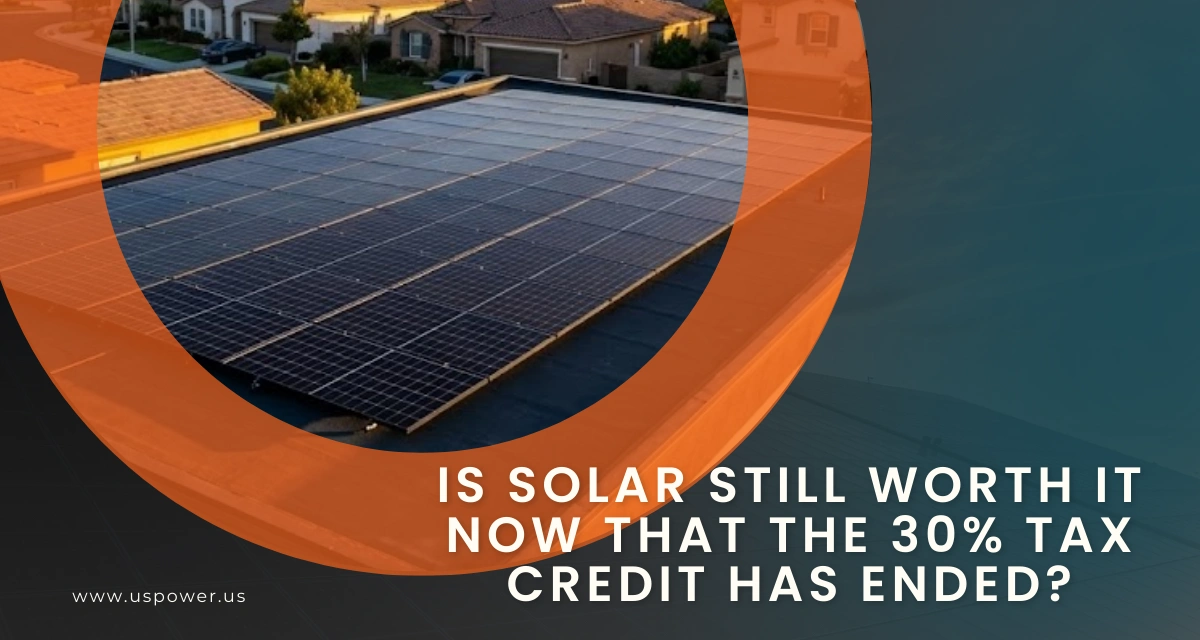
Is Solar Still Worth It Now That the 30% Tax Credit Has Ended?
Your neighbor installed solar last year and saved $9,000 with the tax credit.

How Much Did Your Solar System Actually Save You?
Calculate your real solar savings and reduce electricity bills through US Power.








Copyright © 2025 US Power - Axia by QCells. All Rights Reserved.

Get an instant solar estimate using satellite!