




Do Solar Panels Work in Hot Weather? Southern California Guide

Solar panels lose some efficiency in heat but still save you thousands in Southern California. Learn the real impact of hot weather on your solar investment.
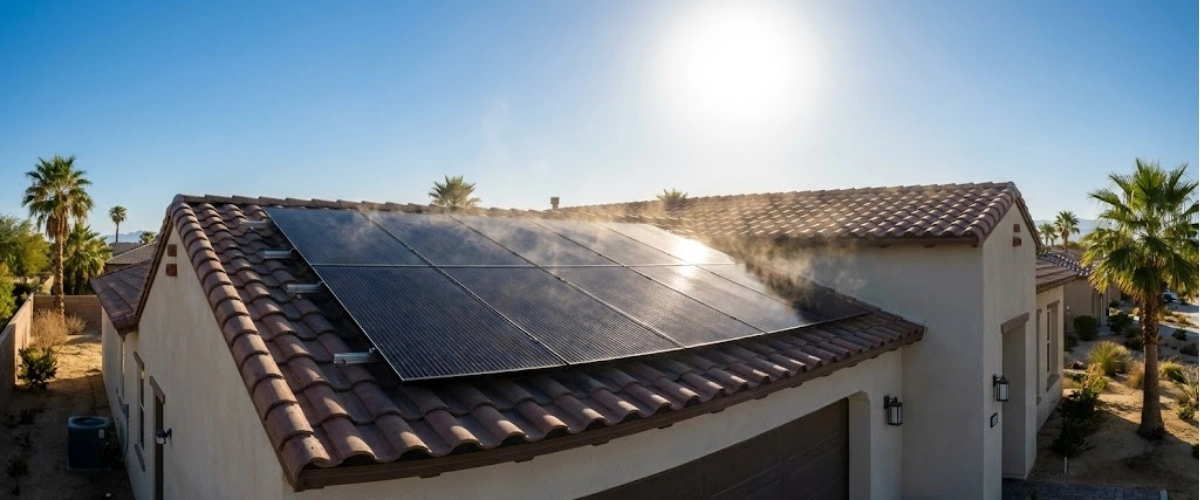
You've probably heard that solar panels love sunshine. And it's true—they need sunlight to generate electricity. But here's something that catches many Southern California homeowners off guard: extreme heat actually makes solar panels less efficient.
Wait, what? If solar panels need sun, shouldn't they work better when it's scorching hot outside?
Not quite. This is one of the biggest misconceptions about solar energy, and it's worth understanding before you make the switch. The good news? Even with some efficiency loss during our hottest days, solar panels still deliver massive savings in Southern California. Let's break down exactly what happens when temperatures climb and why you shouldn't let heat concerns stop you from going solar.
The Solar Panel Heat Paradox: More Sun Doesn't Always Mean More Power
Here's the counterintuitive truth about solar panels: they perform best on cool, sunny days—not scorching hot ones.
Solar panels are tested and rated at 77°F (25°C). That's the industry standard temperature where they produce their maximum rated output. But when temperatures climb above that sweet spot, something interesting happens inside the solar cells. The electrical resistance increases, which means voltage drops and overall power output decreases.
Think of it like running a marathon. You'll perform better on a cool 65°F morning than on a sweltering 95°F afternoon, even though both days are sunny. Solar panels work the same way.
What You Actually Lose: Real Numbers for Southern California
Let's get specific. Most solar panels have a temperature coefficient between -0.3% and -0.5% per degree Celsius above 77°F.
Here's what that means in real life for a typical summer day in inland Southern California:
Your solar panels are sitting on your roof in Riverside on a July afternoon. The air temperature is 100°F, but your panels are actually reaching 150°F because they're absorbing all that sunlight. That's 73°C above the standard testing temperature of 77°F.
With a typical temperature coefficient of -0.4% per degree Celsius, your panels are operating at about 10-12% below their rated efficiency during those peak heat hours.
So if you have a 400-watt panel, it might only produce 360 watts during the hottest part of the day. But here's the crucial part: that same panel will overperform on cool winter mornings, sometimes producing 5-7% more than its rating.
The Temperature Coefficient Matters
Not all solar panels handle heat the same way. This is where the temperature coefficient becomes important. QCells panels have superior temperature coefficients, typically around -0.37% per degree Celsius. That's better than many competitors at -0.45% or higher.
Over thousands of hours of operation, that difference adds up to real energy production and real savings.
Why Cooling Systems Don't Make Sense for Most Homes
You might be wondering: if heat reduces efficiency, why not cool the panels?
It's a logical question, and some homeowners have tried various approaches—water cooling systems, ground-source heat pump connections, even fans. The Reddit solar community occasionally debates these ideas.
Here's why these systems rarely make economic sense:
The efficiency gain is small (typically 3-5% at best). The cost of installing and maintaining a cooling system is significant. You're adding complexity to a system that's designed to be simple and reliable. The energy used to run cooling equipment often exceeds the energy gained from cooler panels.
One study found that active water cooling systems can cost 20-30% more than standard installations, with a payback period of 5-7 years just to break even on the cooling system itself. That doesn't include the additional maintenance costs.
What Actually Works: Proper Installation
The better approach? Install panels correctly from the start. Proper installation techniques make a bigger difference than any cooling system.
Here's what matters:
Mounting height. Panels should be installed several inches above your roof surface, allowing air to circulate underneath. This natural ventilation can reduce panel temperature by 10-15°F compared to flush mounting.
Roof type matters. Metal roofs reflect more heat than dark asphalt shingles. The right roof material helps keep panels cooler.
Strategic placement. Experienced installers know how to maximize airflow around your array.
The Cold Weather Advantage Nobody Talks About
Here's something that might surprise you: solar panels still work exceptionally well in cold weather—actually, they work even better.
On a clear winter day when temperatures are in the 50s or 60s, your solar panels will overperform their rated specifications. You might see 5-10% more power output than on a hot summer day with the same amount of sunlight.
This is fantastic news for Southern California homeowners. While we do have hot summers, we also have:
Mild winters with excellent sun exposure. Cool mornings year-round. Pleasant spring and fall temperatures.
When you average it out over the entire year, the temperature effect is much less significant than people think. Your annual production is what matters for your savings, not what happens during a few peak heat hours in August.
How US Power Optimizes for Southern California Heat
At US Power, we've installed hundreds of systems across Southern California. We know exactly how heat affects solar performance in different microclimates—from coastal areas to inland valleys.
Here's how we optimize every installation:
Panel Selection
We exclusively install QCells panels, which are engineered for reliable performance in varied temperatures. These American-made panels feature low temperature coefficients and are built to handle decades of California sun without significant degradation.
25-year comprehensive warranty backs this up—covering not just the panels themselves, but workmanship and performance guarantees.
Installation Excellence
Our team uses elevated mounting systems that ensure proper airflow. We never take shortcuts that could trap heat under your panels. Every installation is designed to minimize temperature-related losses.
System Sizing
Because we understand real-world performance factors like temperature, we can accurately size your system from the start. How much you'll actually save depends on getting the system size right—accounting for efficiency variations throughout the year.
Battery Storage: The Real Game-Changer for California Homeowners
Here's something more important than panel cooling: battery storage under NEM 3.0 has become essential for maximizing your solar investment in California.
Under the new NEM 3.0 rules, the value of solar electricity you export to the grid has dropped by about 75% compared to the old net metering system. This means storing your excess solar production for use during evening peak hours (when electricity is most expensive) delivers far better returns than exporting it.
Battery storage solves multiple problems at once:
You use your solar power when rates are highest (4-9 PM). You have backup power during outages. You can avoid expensive utility electricity entirely on most days.
The temperature efficiency question becomes almost irrelevant when you have battery storage. Even if your panels produce slightly less during the hottest hours, you're storing that energy for later use rather than relying on instantaneous production.
The Bottom Line: Heat Losses vs. Real Savings
Let's put this in perspective with actual numbers.
Yes, your solar panels might produce 10% less during peak summer heat compared to ideal conditions. But even with that efficiency loss, you're still:
Generating free electricity from the sun instead of buying it from SCE or PG&E. Avoiding rising SCE electricity rates that have increased by double digits in recent years. Building equity in your home with a system that lasts 25+ years.
A typical Southern California homeowner saves $40,000-$60,000 over the life of their solar system. That's after accounting for heat-related efficiency losses, cloudy days, and everything else.
The math is straightforward: even if your panels operate at 90% efficiency during summer peak hours instead of 100%, you're still saving tens of thousands of dollars compared to continuing to pay utility bills.
Your Next Steps: Getting Started with Solar in Southern California
Don't let concerns about heat efficiency keep you from the massive savings solar delivers. The reality is that even accounting for temperature effects, solar panels are one of the best investments you can make in Southern California.
Here's what we recommend:
Get a professional assessment. US Power offers free consultations where we analyze your roof, energy usage, and local conditions to give you accurate savings projections.
Compare real numbers. We'll show you exactly what your system will produce throughout the year, including the hottest and coolest months.
Understand your options. From solar-only systems to solar plus battery storage, we'll help you choose the right solution for your home and budget.
The bottom line? Solar works incredibly well in Southern California, hot weather and all. With a free consultation with US Power, you'll see exactly how much you'll save—with no pressure and no hidden fees.
Frequently Asked Questions
Do solar panels stop working in extreme heat?
Should I wait for cooler weather to install solar panels?
Will hot weather damage my solar panels over time?
Are there solar panels specifically designed for hot climates?
How does Southern California compare to other hot solar markets?


Why Qcells Panels Are the Best Choice for California’s Climate
QCells panels deliver reliable performance even in California’s harsh conditions.
California Homeowners' Guide to Home Solar Panels
Save more money and increase your value with SoCal solar panels through US Power.
Is Solar Right for Your Southern California Home?
Evaluate if solar panels are the smart choice for your California residence.








Copyright © 2025 US Power - Axia by QCells. All Rights Reserved.

Get an instant solar estimate using satellite!