




Can You Install a Battery System Before Solar Panels in California?

Wondering if you can install home batteries before solar panels? Learn about hybrid inverters, policies, tax credits, and whether battery-first makes sense.
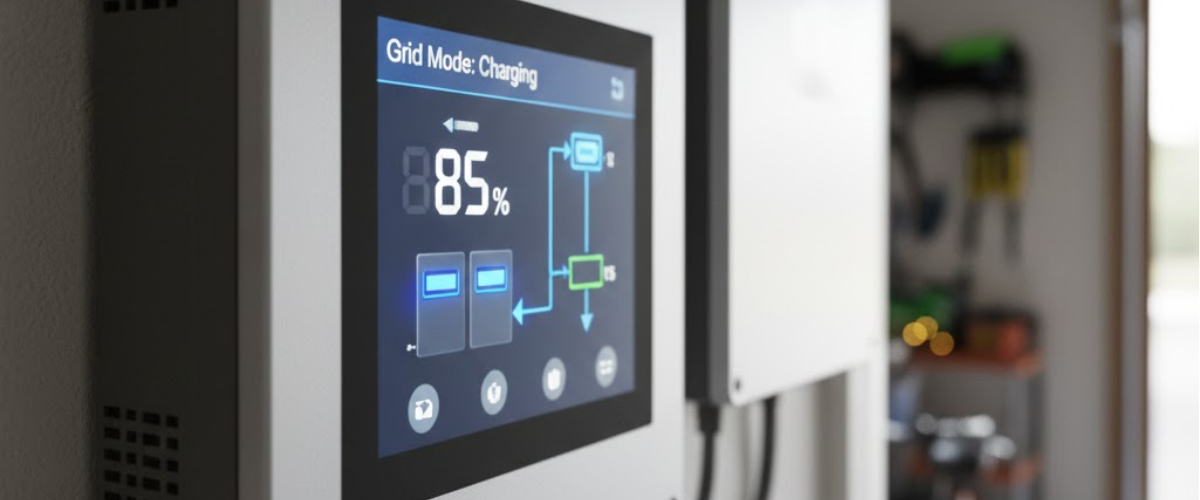
You're staring at another PSPS (Public Safety Power Shutoff) warning from SCE. High winds are coming, and your power will be out tomorrow—again. You've been researching portable power stations, but something doesn't sit right. Why drop money on a glorified generator when you know you'll eventually install a whole-home battery system with solar?
The question hits you: Can I just install the battery now and add solar panels later?
The short answer is yes—but whether you should depends on your timeline, your utility's policies, and your expectations about return on investment. Let's break down exactly how this works and whether battery-first makes financial sense for Southern California homeowners in 2025.
How Battery Storage Works Without Solar Panels
Here's the technical reality: you absolutely can install a home battery system before adding solar panels. The key is choosing the right equipment from the start.
Hybrid Inverters Make Battery-First Possible
Most battery-only installations use what's called a hybrid inverter. Unlike standard solar inverters that only convert DC power from panels to AC power for your home, hybrid inverters can do three things:
- Charge batteries from the grid (during off-peak hours)
- Discharge batteries to power your home (during outages or peak hours)
- Accept solar panel input when you're ready to add them
You'll program the inverter to charge your batteries overnight when electricity rates are lowest, then discharge during expensive peak hours (typically 4-9 PM in Southern California). This is called time-of-use (TOU) arbitrage.
When you eventually add solar panels, the same inverter accepts the DC power from your panels without requiring a complete system replacement. Understanding how solar batteries maximize your savings becomes crucial once you integrate both systems.
Zero Export Mode Protects You From Utility Penalties
One critical setting you'll need: zero export mode. This prevents your battery from sending power back to the grid, which most California utilities prohibit unless you're enrolled in specific programs.
Why does this matter? SCE and PG&E have strict rules about grid-tied battery systems. If you're charging from the grid and then discharging back to it, that's considered arbitrage—and most residential rate plans explicitly ban this practice.
Zero export mode keeps your battery power contained to your home, avoiding potential violations of your utility agreement.
The ROI Reality: Can Batteries Pay for Themselves Without Solar?
Let's address the elephant in the room: battery-only systems rarely make financial sense from a pure ROI perspective.
Here's why the math doesn't work in your favor.
The Cost-Benefit Breakdown
A typical 13.5 kWh battery system (like a Tesla Powerwall or similar) costs $12,000-$15,000 installed. Even with the 30% federal tax credit (which applies to standalone batteries in 2025), you're looking at $8,400-$10,500 out of pocket.
Now let's calculate your potential savings:
- Off-peak electricity rate: $0.18/kWh (midnight-3 PM)
- Peak electricity rate: $0.52/kWh (4-9 PM)
- Arbitrage profit per cycle: $0.34/kWh
- Daily savings (one full cycle): 13.5 kWh × $0.34 = $4.59
At $4.59 per day, you'd save about $1,675 annually. That's a 6-7 year payback period—if you cycle the battery every single day and rates don't change.
But here's the problem: battery cycling degrades capacity over time. Most lithium-ion batteries lose 20% capacity after 3,000-5,000 cycles. Your "savings" shrink each year. The question of whether batteries are worth it for solar in California becomes even more complex without panels generating free energy.
When Battery-First Actually Makes Sense
There are three scenarios where installing batteries before solar is strategically smart:
1. You're replacing your roof in 6-12 months and want backup power immediately. Installing batteries now gives you outage protection while you wait for roof work to finish.
2. The 30% federal tax credit expires December 31, 2025, and you want to lock in savings on the battery portion before adding solar in 2026.
3. You experience frequent PSPS events and the peace of mind is worth more than strict ROI calculations.
In these cases, battery-first isn't about maximizing returns—it's about timing incentives and managing risk.
What Equipment You'll Need for Battery-First Installation
If you decide to move forward, here's what a battery-only installation actually requires.
The Three Essential Components
1. Hybrid Inverter
This is your system's brain. It manages charging from the grid, discharging to your home, and will accept solar input later. Popular models include Sol-Ark, EG4, and SolarEdge hybrid inverters.
2. Battery Storage
You'll need at least 10-13.5 kWh for meaningful backup during outages. Popular options include Tesla Powerwall, Enphase IQ Batteries, and QCells Q.HOME CORE batteries.
3. Automatic Transfer Switch (ATS)
This device seamlessly switches your home to battery power during outages. It's required for whole-home backup and takes milliseconds to activate—your Wi-Fi won't even drop.
Choosing the right backup power option depends on your specific needs and whether you plan to add solar later.
Installation Timeline and Permitting
Battery-only installations are typically faster than full solar+battery projects:
- Permitting: 2-4 weeks
- Installation: 1-2 days
- Utility approval: 1-2 weeks
- Total timeline: 4-7 weeks
Compare this to full solar installations, which often take 8-12 weeks from contract signing to activation.
Using Batteries for PSPS Events and Grid Outages
Let's get practical. You're installing this battery to keep the lights on when SCE cuts power. What can you actually run, and for how long?
Realistic Backup Power Expectations
A 13.5 kWh battery can power:
- Essential loads only (fridge, Wi-Fi, lights, phone chargers): 24-36 hours
- Partial home (add TV, microwave, fans): 12-18 hours
- Whole home (HVAC running): 4-8 hours
The key is prioritizing loads. During PSPS events, you probably don't need your pool pump or electric dryer running. Focus on refrigeration, communication, and comfort.
Most hybrid inverters let you configure "critical load panels" that automatically activate during outages. You decide which circuits get battery power and which don't. Understanding how long a solar battery can power a house helps you set realistic expectations for outage duration.
Recharging Without Solar
Here's where battery-only systems hit a limitation: when the grid is down, you have no way to recharge. Once your 13.5 kWh is depleted, you're done until power returns.
With solar panels, your system recharges automatically every morning. Your battery becomes truly independent—you can ride out multi-day outages without rationing power.
This is why most homeowners view battery-first as a temporary solution, not a permanent strategy.
Why Some Homeowners Install Batteries First
Despite the ROI challenges, there are legitimate reasons to go battery-first.
The Roof Replacement Dilemma
You need a new roof, but you also want solar. Do you:
- Install solar on an aging roof and risk tearing it all off in 3-5 years?
- Wait for the roof replacement and lose months of solar production?
- Install batteries now for immediate backup, then add solar after the roof is done?
Option three gives you outage protection immediately while avoiding the costly mistake of installing solar on a roof that won't last. Learn more about whether you should replace your roof before going solar to make the right timing decision.
The 2026 Policy Uncertainty Factor
Many homeowners are watching federal solar policy nervously. If incentives change dramatically in 2026, locking in the 30% tax credit on batteries in 2025 hedges your bet.
You get:
- Backup power now
- Tax credit secured at 30% (not the reduced 26% or 22% in future years)
- Flexibility to add solar when policies stabilize
It's a conservative approach that prioritizes certainty over maximum optimization.
Time-of-Use Arbitrage: Does It Make Financial Sense?
We touched on this earlier, but let's dive deeper into whether TOU arbitrage justifies battery-only installations.
The Real Numbers on Rising Electricity Rates
Understanding why electricity bills are so high in Southern California is essential context for evaluating battery investments.
SCE's TOU-D-4-9PM rate plan has dramatic price swings:
- Super off-peak (8 AM-4 PM): $0.18/kWh
- Peak (4-9 PM): $0.52/kWh
- Off-peak (9 PM-8 AM): $0.27/kWh
If you charge at super off-peak and discharge at peak, you save $0.34/kWh. That's the best-case scenario we calculated earlier: $4.59/day or $1,675/year.
But most homeowners won't achieve perfect arbitrage. You'll occasionally discharge during off-peak hours, miss charging cycles, or experience efficiency losses (inverters aren't 100% efficient).
Realistically, expect annual savings of $1,200-$1,400—stretching your payback period beyond 7 years.
The Solar Difference
Now add solar panels to the equation. Suddenly you're:
- Charging batteries with free solar energy (not grid power)
- Offsetting 80-100% of your electricity costs
- Protecting yourself from future rate increases
- Increasing home resale value by $15,000-$25,000
This is why solar+battery systems have 5-7 year payback periods while battery-only systems struggle to break even. Learn more about everything you need to know about solar and battery storage to understand the full picture.
Planning Your Future Solar Addition
If you're committed to battery-first, plan for solar integration from day one.
Choose Solar-Ready Equipment
Not all battery systems play nice with solar panels later. Make sure your hybrid inverter has:
- Sufficient DC input capacity for the solar array you plan to install
- MPPT charge controllers built-in (most hybrids have these)
- Expandable battery capacity so you can add more storage when solar arrives
Ask your installer: "If I add 8 kW of solar panels in 12 months, will this inverter handle it without upgrades?" Get the answer in writing.
Understand Your Utility's Interconnection Rules
When you add solar later, you'll need to go through utility interconnection approval again. This means:
- Submitting updated plans to SCE/PG&E
- Potentially upgrading your electrical panel
- Waiting 2-4 weeks for Permission to Operate (PTO)
It's not complicated, but it's not automatic either. Factor this timeline into your solar addition plans.
The 3-6 Week US Power Installation Advantage
At US Power, we install battery systems in 3-6 weeks from contract signing to activation. When you're ready to add solar, our exclusive partnership with QCells means:
- No compatibility issues (we spec systems correctly from the start)
- Factory-direct pricing 15-20% below market rates
- American-made panels from Dalton, Georgia
- Same CSLB-licensed installers who know your property
You're not starting from scratch—you're expanding a system we designed with solar in mind.
The 2025 Tax Credit Deadline That Affects Battery Systems
This is critical: the 30% federal Investment Tax Credit (ITC) applies to standalone batteries in 2025, but it's dropping fast.
What the Tax Credit Covers
If you install a battery system in 2025, you can claim:
- 30% of equipment costs
- 30% of installation labor
- 30% of electrical upgrades
On a $13,000 battery system, that's a $3,900 tax credit—real money that reduces your net cost to $9,100.
Understanding the federal solar tax credits updated for 2025 helps you maximize your savings on both battery and eventual solar installations.
The Deadline That Changes Everything
After December 31, 2025:
- 2026: Credit drops to 26% (you lose $520 on that $13,000 system)
- 2027: Credit drops to 22% (you lose $1,040)
- 2028+: Credit may disappear entirely
If you're planning battery-first anyway, installing before year-end locks in maximum savings. Even if you add solar in 2026, you've already captured the full 30% on your battery investment.
Getting Started with Battery Storage
Battery-first installations make sense for specific situations: roof replacements, PSPS protection, or tax credit timing. They don't make sense if your primary goal is maximizing ROI.
If you're in the "I need backup power now, solar later" camp, here's your action plan:
- Get a professional assessment of your electrical panel and backup power needs
- Confirm your utility's policies on grid charging and zero export requirements
- Choose solar-ready equipment that won't require replacement when panels arrive
- Lock in the 30% tax credit before December 31, 2025
- Plan your solar addition for within 12-24 months to complete the system
At US Power, we spec battery-only systems with future solar expansion in mind. We use QCells equipment exclusively—American-made panels and batteries designed to work seamlessly together.
You're not just buying a battery. You're buying a platform that evolves with your energy needs.
Frequently Asked Questions
Can I charge my battery from the grid and use it during peak hours in California?
Will installing a battery now prevent me from getting solar rebates later?
How much does a battery-only installation cost in Southern California?
What happens if my battery dies before I add solar panels?
Can I expand my battery capacity when I add solar?


Why 60% of Your Solar Power Goes to Waste Without Batteries
Your solar panels are generating power you'll never benefit from. Work with us!
Why Your Solar Battery Isn't Fully Charging (And How to Fix It)
One battery at 100% by noon. The other stuck at 30% all day. Same panels, same home.
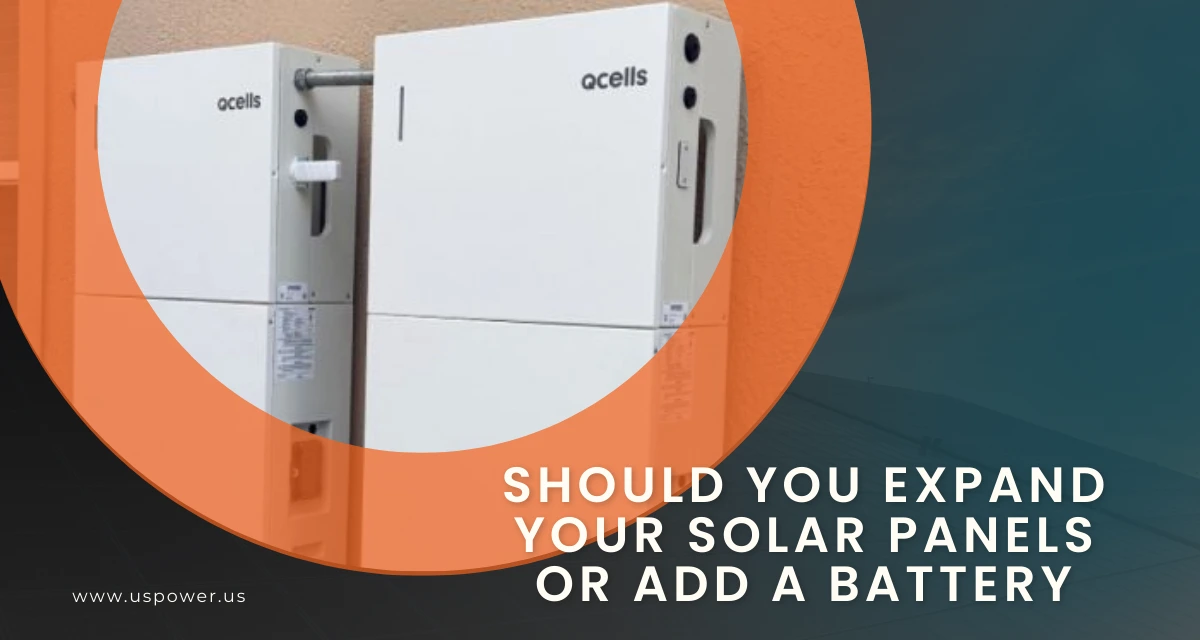
Should You Expand Your Solar Panels or Add a Battery
Solar panels or battery? Learn which saves you the most money with the right setup.








Copyright © 2025 US Power - Axia by QCells. All Rights Reserved.

Get an instant solar estimate using satellite!