



Why Is My Solar Inspection Taking So Long? CA Homeowner Guide
Your solar panels are installed, but you're stuck waiting weeks—or months—for the final inspection. Here's why California solar inspections get delayed and what you can actually do about it.
You paid for your solar system. The panels are on your roof. Everything looks done.
But you still can't use it.
You're stuck waiting for the final inspection, and your installer keeps giving you dates that never happen. You check in, they promise "next week," and then nothing. Meanwhile, you're still paying full price to SCE or PG&E every month.
If this sounds familiar, you're not alone. Thousands of California homeowners face the same frustrating limbo between installation and Permission to Operate (PTO). The question is: why does this keep happening, and what can you actually do about it?
Why Solar Inspections Get Delayed in California
The inspection process should be straightforward. Your installer schedules an appointment with your local building department, an inspector shows up, checks the work, and signs off. Then your utility company grants Permission to Operate.
In reality, it rarely goes that smoothly.
The End-of-Year Installation Rush Creates Backlogs
Many installers push hard to complete installations before December 31st. Why? Because homeowners want to claim the federal solar tax credit before it potentially changes or expires. This creates a massive bottleneck.
Everyone installs in November and December, then hundreds of systems need inspections in January. Building departments get overwhelmed. Inspectors get booked solid for weeks. Your installer joins the back of a very long line.
The homeowner in the Reddit thread we analyzed installed in mid-November and was still waiting in January—a textbook example of this exact problem.
Installers Don't Actually Schedule the Inspection
Here's what many homeowners don't realize: some installers submit the permit paperwork but never actually schedule the inspection appointment. They assume the building department will reach out, or they're juggling so many projects they lose track.
You're told "it's scheduled for next Tuesday," but nobody actually called the city. When Tuesday comes and goes with no inspector, the installer blames the building department for "running behind." Meanwhile, nothing was ever scheduled in the first place.
Missing or Incomplete Paperwork Stalls the Process
Inspections fail for technical reasons all the time. Common issues include missing safety labels, incorrect equipment documentation, or permits filed with incomplete information. Understanding how to get a solar permit in California helps you know what paperwork should be completed before installation even begins.
When paperwork is incomplete, the building department won't schedule an inspection until it's corrected. But if your installer is disorganized or unresponsive, those corrections can take weeks—or longer.
Understanding the Inspection and PTO Process
Let's break down what actually needs to happen between "installation complete" and "solar system turned on."
The Four-Step Journey to Permission to Operate
First, your installer completes the physical installation. Panels go on the roof, inverter gets connected, battery storage (if you have it) gets wired in.
Second, the installer submits final permit documents to your local building department. This includes electrical diagrams, equipment specifications, and proof that everything meets code.
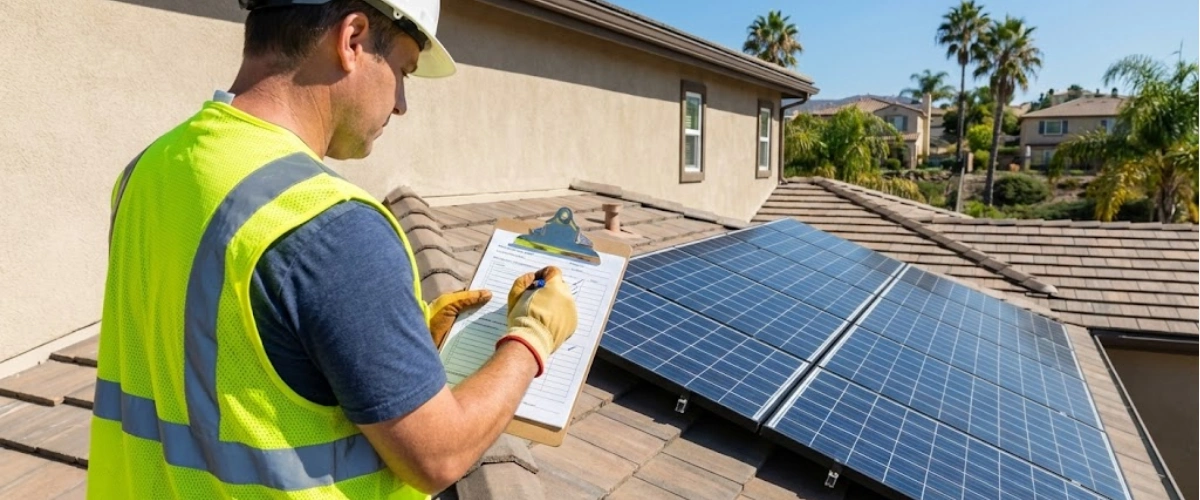
Third, a building inspector visits your property to verify the installation matches the approved plans. They check electrical connections, proper grounding, safety labels, and structural integrity. Knowing what happens after solar installation prepares you for this critical phase.
Fourth—and only after inspection passes—your utility company reviews the paperwork and grants Permission to Operate (PTO). This is when your system officially turns on and you start saving money.
Why You Can't Just Skip the Inspection
Some frustrated homeowners ask:
"Can I just turn it on myself?"
Absolutely not. Operating a solar system without PTO is illegal in California and violates your utility agreement. You could face fines, loss of net metering benefits, or even forced system removal. More importantly, if your system wasn't installed correctly, you're risking electrical fires or other safety hazards.
The inspection exists for good reason. You just need an installer who actually gets it done.
Warning Signs Your Solar Company Might Leave You Waiting
How do you know if you're working with an installer who'll actually follow through? Here are the red flags from real homeowner experiences.
They Give You Dates That Never Happen
This is the biggest warning sign. If your installer keeps saying "it's scheduled for next week" but inspectors never show up, something's wrong. Either they're not actually scheduling appointments, or they're lying to keep you from complaining.
One Reddit commenter put it perfectly: "I don't care if it's three months out, just give me a proper date." Honest communication matters more than optimistic timelines. Watch out for these red flags when choosing a solar installer before you commit.
Communication Drops Off After Installation
Responsive before you sign the contract, ghosting you after installation—this pattern appears constantly in homeowner complaints. If your installer takes days to return calls or gives vague non-answers, they're probably overwhelmed with too many projects.
Companies that overextend themselves during installation season often lack the bandwidth to handle post-installation paperwork and inspections properly.
They Blame Everyone Else
"The city is behind." "The inspector canceled." "The utility is taking forever." Sometimes these are legitimate. But if every delay is always someone else's fault and your installer never takes ownership, that's a problem.
Professional installers know how to navigate building departments and utility companies. They build extra time into their schedules for delays. They don't make promises they can't keep.
How to Avoid Inspection Delays Before You Sign
The best time to avoid inspection problems is before you choose an installer. Here's what to look for.
Choose CSLB-Licensed Contractors Only
In California, solar installations require a C-46 (Solar) or C-10 (Electrical) contractor license from the Contractors State License Board (CSLB). This isn't optional.
Licensed contractors follow proper procedures because they risk losing their license if they don't. They carry proper insurance. They understand building codes. They know how to work with local jurisdictions. Research tips on choosing a reliable solar company to protect your investment.
US Power works exclusively with CSLB-licensed consultants—not salespeople who disappear after the contract is signed. This means accountability from day one through PTO and beyond.
Ask About Their Actual Installation Timeline
Don't accept "we'll get it done fast" as an answer. Ask for specifics: How long from contract to installation? How long from installation to inspection? How long from inspection to PTO?
A realistic solar installation timeline for California is 3-6 weeks total if everything goes smoothly, possibly 6-8 weeks if there are minor delays. Anyone promising faster is either cutting corners or hasn't accounted for permit processing time.
Verify They Handle Inspections In-House
Some installers subcontract inspection scheduling to third parties. This adds another layer of potential communication breakdown. Ask directly: "Who schedules my inspection, and who will be there when the inspector comes?"
The answer should be simple and direct. The company you hired should handle everything.
What You Can Do If You're Already Stuck Waiting
Already in inspection limbo? You have more options than you think.
Call Your Building Department Directly
You have every right to contact your local building department and ask about your permit status. They can tell you whether an inspection is actually scheduled, whether paperwork is missing, and what's holding things up.
Be polite but direct: "I'm the homeowner at [address]. My solar was installed [date]. I'm trying to understand the inspection timeline." Building departments often sympathize with frustrated homeowners and may even contact your installer on your behalf.
Document Everything in Writing
Start sending emails to your installer documenting every conversation. "Per our call on [date], you said inspection is scheduled for [date]. Please confirm in writing." This creates a paper trail if you need to escalate the situation.
Many installers suddenly become more responsive when they realize you're documenting everything. They know written records matter if complaints go to the CSLB or if legal issues arise.
Consider Hiring Someone to Finish the Job
In extreme cases, you may need to cut ties with your original installer and pay someone else to complete the inspection and PTO process. Yes, this costs extra money—but if you've been waiting three or four months with no progress, it may be your best option.
US Power has helped homeowners in exactly this situation. We've taken over stalled projects, completed inspections, and gotten systems to PTO when original installers failed to follow through.
What US Power Does Differently
US Power built our entire process around one principle: homeowners shouldn't have to chase us for updates. Here's how we eliminate the inspection waiting game.
Dedicated Project Management from Day One
Every US Power customer gets a dedicated project manager who coordinates every step—from permits through final inspection and PTO. You have one point of contact who knows your project inside and out. Our CSLB-licensed solar consultants ensure professional service at every stage.
No passing you between departments. No wondering who to call. Just one person making sure everything stays on track.
We Schedule Inspections Before Installation
This might sound backwards, but we coordinate with building departments early. We know which jurisdictions are backlogged and which move quickly. We build realistic timelines based on actual availability—not wishful thinking.
By the time your installation is complete, we already know when your inspection is happening. No surprises, no delays, no fake dates.
American-Made QCells Quality You Can Trust
We exclusively install QCells solar panels—American-made, factory-direct, and backed by a 25-year comprehensive warranty covering panels, workmanship, and performance. When the inspector shows up, they're seeing top-tier equipment installed to the highest standards.
That means inspections pass the first time. No callbacks for corrections, no rescheduling, no additional delays.
Stop Waiting and Start Saving
Solar inspection delays aren't inevitable. They're the result of disorganized installers, poor communication, and companies that prioritize sales over service.
You shouldn't have to call your building department yourself. You shouldn't have to chase your installer for updates. And you definitely shouldn't be stuck in limbo for months after paying thousands of dollars.
US Power handles every detail—permits, installation, inspection, and PTO—with the professionalism and urgency your investment deserves. Our CSLB-licensed team knows California's requirements inside and out. Our exclusive QCells partnership means premium equipment and factory-direct pricing 15-20% below market rates.
Most importantly, we communicate clearly and honestly from day one. No fake dates, no excuses, no surprises.
Southern California utility rates are rising every year. The federal solar tax credit is stepping down after 2025. And every month you wait is another month of missed savings.
Let's get your solar system working—the right way, the first time.
Frequently Asked Questions
How long should a solar inspection take in California?
Can I schedule my own solar inspection without the installer?
What happens if my solar system fails inspection?
Will my utility company turn on my solar immediately after inspection?
What if my installer goes out of business before completing inspection?


Get Solar Approval Fast in California Before Tax Credit Ends
Go solar the easy way. Connect now and claim your 30% federal solar credit.
Can You Actually Go Off-Grid with Solar in California?
Cut the cord with SCE forever? Or is that just an expensive fantasy? The real truth!

How Solar and Battery Systems Protect CA Homes During Grid Failures
Discover how solar plus batteries keep California homes safe during outages.








Copyright © 2025 US Power - Axia by QCells. All Rights Reserved.

Get an instant solar estimate using satellite!