




Your Solar Company Missed the Tax Credit Deadline—Now What?

Solar installer delays cost you thousands? Learn your rights when companies miss the 2025 tax credit deadline and how to switch to a reliable installer fast.

You signed your solar contract months ago. Your installer promised—in writing—that your system would be up and running before December 31, 2025. You paid thousands in deposits. You cleared your schedule for installation. You planned your finances around that 30% federal tax credit.
Now it's December, and your installer just dropped the bomb:
"We can't make the deadline." They're offering partial refunds, suggesting sketchy lease options, or worse—going radio silent. That $9,000-$15,000 tax credit you were counting on? Gone. And somehow, they think a $1,500 refund makes it right.
If this sounds familiar, you're not alone. Across California, homeowners are discovering that their solar companies over-promised and under-delivered. The question isn't just "why did this happen?"—it's "what can I do about it, and can I still save my tax credit?"
Let's break down your options, your rights, and whether switching installers at the last minute can still save your savings.
Why Solar Companies Are Missing the 2025 Deadline
The solar industry is facing a perfect storm as 2025 comes to a close. Here's what's really happening behind the scenes:
Permitting Backlogs Have Exploded
California cities are drowning in solar permit applications. What used to take 2-3 weeks now takes 6-8 weeks—or longer. Companies that didn't submit permits by September are scrambling, and homeowners are paying the price. If your installer waited until October or November to file permits, you were already behind schedule.
Installer Capacity Is Maxed Out
Every homeowner in California wants solar done before December 31. Companies that took on more contracts than they could handle are now rationing installation crews. The result? They're prioritizing their largest commercial projects while residential customers get pushed to January.
Supply Chain Issues Still Linger
While not as severe as 2021-2022, equipment delays still happen. Companies relying on overseas panel manufacturers or specialized battery systems (like some Schneider models) are facing weeks-long shipping delays. By the time they tell you about the problem, it's too late to pivot.
Some Companies Are Financially Struggling
Let's be honest: not every solar company will survive into 2026. The tax credit cliff means a massive revenue drop next year. Some installers are cutting corners, delaying projects, or worse—taking deposits knowing they can't deliver. They're banking on partial refunds being cheaper than full performance.
The pattern is clear: companies that over-promised, under-planned, and over-extended themselves are now leaving homeowners holding the bag.
What Happens If Your Solar Company Misses the Deadline?
Let's talk dollars and cents. The federal solar Investment Tax Credit (ITC) drops from 30% to 0% on January 1, 2026. For the average Southern California system ($35,000-$45,000), that's a loss of $10,500-$13,500 in tax savings.
The Technical Requirements Matter
To claim the 2025 tax credit, your system must meet specific IRS criteria. According to IRS guidelines, your solar installation must be "placed in service" during the tax year—meaning your system must be operational and generating power before December 31, 2025. Just having permits filed or panels sitting on your roof isn't enough.
For California homeowners, "operational" means you've received Permission to Operate (PTO) from your utility (SCE, PG&E, or SDG&E). Without PTO, your system isn't legally allowed to operate, and the IRS won't recognize it for 2025.
Read our complete guide on how the federal solar tax credit works to understand all eligibility requirements.
What Your Installer Owes You
If your company promised completion before year-end in writing, they created a contractual obligation. Under California Contractors State License Board (CSLB) regulations, contractors must:
- Return all deposits for work not performed
- Provide itemized accounting of any funds spent
- Refund money within 30 days of contract cancellation
Here's the critical part: California law prohibits contractors from collecting more than 10% of the contract price or $1,000 (whichever is less) as a down payment, with some exceptions for materials. If your installer charged $4,700 for "permitting," they likely violated CSLB rules—unless they can prove actual expenses with receipts.
Your Rights Under California Law
You can cancel your solar contract for any reason and receive a refund of unspent deposits. The installer must provide documentation of actual expenses—permit fees (typically $200-$800), engineering stamps ($300-$500), and interconnection applications ($75-$150). Anything beyond that should be refunded.
If they refuse? You can file a complaint with the CSLB, which has the power to investigate, sanction, and even suspend contractor licenses.
Can You Still Get the 30% Tax Credit in 2025?
Here's the question everyone's asking: "Is there enough time to switch companies and still hit the deadline?"
The Brutally Honest Timeline
As of mid-December 2025, the math is tight but not impossible:
- Week 1: New consultation, system design, contract signing (3-5 days)
- Week 2-3: Permit submission and approval (10-15 days for expedited)
- Week 4: Installation (1-2 days for typical residential system)
- Week 5: Utility inspection and PTO (7-10 days minimum)
That's 5 weeks minimum—and we're already in mid-December. For most homeowners reading this, the 2025 tax credit is unfortunately out of reach unless your previous installer already secured permits and you're switching installers mid-project.
When Switching Still Makes Sense
If your previous installer:
- Already obtained building permits
- Has interconnection agreement filed with utility
- Completed engineering and plan sets
- Just needs installation and inspection
Then switching to a faster installer might work. US Power has completed rush installations in as little as 10 days from contract to PTO when permits were already in place. But this is the exception, not the rule.
The 2026 Reality Check
If you can't hit the deadline, here's what changes on January 1, 2026:
The federal tax credit drops to 0% for residential solar. However, California state incentives and utility savings don't disappear. Under NEM 3.0, solar combined with battery storage still makes financial sense—you're just losing that upfront 30% discount.
For a $40,000 system, you're looking at:
- With 2025 tax credit: $28,000 net cost (after $12,000 credit)
- Without tax credit: $40,000 net cost
That's a painful difference, but solar still pays for itself through utility savings—it just takes 8-9 years instead of 6-7 years.
How to Protect Yourself When Switching Solar Companies
If you're walking away from your current installer, here's how to do it strategically:
1. Document Everything Immediately
Before you do anything else, create a paper trail:
- Screenshot or print all email promises about deadlines
- Save text messages from sales reps and installers
- Download contracts and payment receipts
- Note dates of all communications and missed deadlines
- Take photos of any work completed (if installation started)
These documents are your ammunition for getting full refunds and filing complaints if needed.
2. Send a Formal Cancellation Notice
California law requires written cancellation. Send an email (and certified mail if possible) stating:
- "I am canceling our solar contract effective [date]"
- Reference contract number and signing date
- Request full refund of unspent deposits within 30 days
- Ask for itemized accounting of any expenses claimed
- Include copies of promises about year-end completion
Keep it factual, not emotional. You're creating a legal record.
3. Demand Itemized Expense Documentation
Don't accept vague claims about "non-refundable permitting costs." Request receipts for:
- Building permit fees paid to city/county
- Utility interconnection application fees
- Engineering stamp costs
- Design software expenses
- Plan check fees
If they can't provide receipts, they can't keep your money. Most legitimate expenses total $1,000-$2,000 maximum for a residential system.
4. File Complaints with Regulatory Bodies
If your installer refuses to refund deposits or goes silent, escalate:
- CSLB Complaint: File at cslb.ca.gov within 30 days
- Better Business Bureau: Damages company reputation
- Solar Energy Industries Association (SEIA): If installer is a member
- Attorney General's Office: For suspected fraud
These complaints have teeth. Contractors risk losing their license over CSLB violations.
5. Consider Small Claims Court
For disputes under $12,500 in California, small claims court is fast and doesn't require a lawyer. Filing fee is $30-$75, and hearings typically happen within 3-4 months. If you have written promises and proof of payment, judges tend to side with homeowners.
Many installers will settle once they receive a small claims filing—they don't want the public record or time investment.
6. Vet Your New Installer Ruthlessly
Before signing with a new company, verify:
- Active CSLB license (check cslb.ca.gov)
- Actual installation timeline based on current permit backlogs
- Financial stability (how long in business, reviews, BBB rating)
- Warranty and post-installation support
- No upfront deposits over legal limits
Ask explicitly: "What happens if you miss your promised deadline?" Their answer tells you everything. For a complete vetting checklist, read our guide on how to choose a solar company in Los Angeles.
Why Installation Speed Matters in Solar (and How US Power Delivers)
Let's talk about something most solar companies won't admit: speed and quality aren't mutually exclusive. In fact, fast installations often indicate better systems and processes.
The Speed-Quality Connection
Companies that install quickly do so because they've mastered the process. They have:
- In-house crews (not subcontractors bouncing between jobs)
- Established relationships with local permit offices
- Streamlined design software that reduces engineering time
- Bulk equipment inventory (no waiting for shipping)
- Dedicated post-installation inspectors
US Power completes installations in 2-3 weeks post-permit because we control every step of the process. We're not juggling 50 subcontractors or waiting for overseas panels. Our crews install American-made QCells panels from our Dalton, Georgia partnership, and our CSLB-licensed electricians work exclusively for us.
Read about how US Power delivers solar faster than competitors.
What "Fast Installation" Actually Means
When we say 2-3 weeks, here's the breakdown:
- Day 1-2: Final site inspection and equipment delivery
- Day 3-4: Installation (panels, inverters, battery if applicable)
- Day 5-7: Electrical inspection and corrections
- Day 8-14: Utility inspection and PTO processing
We don't rush the work—we eliminate the waiting. No crews shared between five projects. No "we'll get to you next week" promises. When your installation day arrives, our team shows up and completes the job.
The QCells Advantage
Here's something most homeowners don't know: panel origin affects installation speed. Chinese and Southeast Asian panels face longer shipping times and customs delays. QCells panels are manufactured in Dalton, Georgia—a 5-hour drive from Long Beach port or 32-hour drive straight to Southern California.
When other companies are waiting 6-8 weeks for container ships, we're receiving QCells shipments in 3-5 days. That's a massive timeline advantage, especially when you're racing against tax credit deadlines. Discover why QCells is the smartest solar choice for California homeowners.
NEM 3.0 and Why Battery Storage Became Non-Negotiable
If your previous installer sold you a solar-only system in 2024-2025, they did you a disservice. California's NEM 3.0 rules changed the economics entirely.
What NEM 3.0 Actually Changed
Under the old NEM 2.0 rules (pre-April 2023), utilities credited you retail rates for excess solar sent to the grid. If you paid $0.40/kWh, you earned $0.40/kWh for exports. Solar-only systems made financial sense.
NEM 3.0 slashed export credits by 75-80%. Now you earn $0.05-$0.10/kWh for sending power to the grid during the day, but you still pay $0.35-$0.50/kWh when you draw from the grid at night. The math no longer works without battery storage.
Why Batteries Change Everything
A properly sized battery system (13.5 kWh minimum for most homes) lets you:
- Store daytime solar production for evening use
- Avoid peak-rate electricity charges (4pm-9pm)
- Power your home during grid outages
- Maximize solar ROI under NEM 3.0
For the average Southern California home using 30 kWh/day, adding battery storage cuts payback period from 15+ years (solar-only) to 6-8 years (solar + battery). Learn how solar batteries maximize your savings under California's new rules.
The Battery Bait-and-Switch Problem
Here's what happened to the homeowner in our opening story: his installer promised a Schneider battery, couldn't deliver, then tried switching him to a Tesla Powerwall at an additional $4,000 cost. This is industry-wide right now.
Many installers over-sold battery systems they couldn't source. Schneider, Enphase, and certain LG batteries have limited availability. When delivery delays hit, companies push Tesla Powerwalls (more available but more expensive) or cheap Chinese brands (available but questionable quality).
US Power's Battery Strategy
We offer multiple battery options based on actual availability:
- Tesla Powerwall 3: Industry standard, 13.5 kWh, $13,000-$15,000
- Enphase IQ Battery 5P: Modular design, scalable, $12,000-$14,000
- QCells Q.HOME+ CORE: High performance, 12.6 kWh, $11,500-$13,500
We don't quote batteries we can't deliver. If supply is limited, we tell you upfront and offer alternatives at comparable pricing—not surprise $4,000 upcharges.
What to Look for in Your Next Solar Company
You've been burned once. Here's how to make sure it doesn't happen again:
1. Check Their CSLB License (Seriously, Do This)
Go to cslb.ca.gov and search the company name. Verify:
- Active C-10 or C-46 license (electrical contractor)
- No pending complaints or legal actions
- License isn't suspended or probationary
- Bond is current and sufficient
If a company refuses to provide their license number or says "we're getting it soon," walk away immediately.
2. Verify They Use In-House Installation Crews
Ask directly: "Do you use in-house installers or subcontractors?" Most large companies subcontract installation to local electricians who juggle multiple solar companies. This creates delays, quality issues, and finger-pointing when things go wrong.
US Power employs our installers directly. They work for us, not multiple companies. If there's a problem, we own it—no blame games with subcontractors.
3. Demand Realistic Timeline Estimates
In December 2025, no legitimate company should promise a 2-week permit approval. Ask them:
- What's your current permit approval time in my city?
- How many installations are in queue before mine?
- What happens if you miss your estimated timeline?
If they guarantee completion dates without caveats, they're either lying or inexperienced.
4. Get Everything in Writing (Especially Timelines)
Request a written timeline with key milestones:
- Permit submission date
- Estimated approval date
- Installation start date
- PTO target date
- Consequences if deadlines are missed
Verbal promises mean nothing. If they won't put it in writing, find another company.
5. Research Their Financial Stability
Solar companies go bankrupt regularly, especially post-tax-credit. Check:
- How long they've been in business (2+ years minimum)
- BBB rating and complaint resolution
- Google reviews from past 3-6 months (recent feedback matters most)
- Whether they're backed by manufacturers (like our QCells partnership)
A company that's been around since 2020 survived COVID, supply chain chaos, and policy changes. They're not fly-by-night operators.
6. Understand Their Warranty Coverage
Ask explicitly what's covered:
- Panel performance warranty (typically 25 years)
- Inverter warranty (typically 10-12 years)
- Workmanship warranty (varies wildly—5-25 years)
- Battery warranty (typically 10 years)
US Power offers a 25-year comprehensive warranty covering panels, workmanship, and performance. If your system underperforms or develops installation-related issues, we fix it—no arguing over whose problem it is.
The December 2025 Reality: Should You Still Go Solar?
Let's address the elephant in the room: is solar still worth it without the 30% tax credit?
The Math Still Works (Barely)
Southern California electricity rates haven't stopped climbing:
- SCE rates: $0.35-$0.52/kWh (depending on tier and time-of-use)
- Average SoCal home uses 30-35 kWh/day
- Monthly electric bills: $350-$550 (and rising annually)
A typical 8 kW solar system with 13.5 kWh battery costs $40,000-$45,000 before incentives. Without the 30% tax credit, you're paying full price. But over 25 years, you're still saving $70,000-$90,000 in avoided utility costs. See exactly why electricity bills are so high in Southern California.
Payback Period Comparison:
- With 30% tax credit (2025): 6-7 years payback
- Without tax credit (2026+): 9-10 years payback
Solar is still a good investment—just not as amazing as it was with the credit.
When to Wait vs. When to Act
Wait if:
- Your electric bills are under $150/month (solar won't pay off quickly)
- Your roof needs replacement within 5 years (do that first)
- You're planning to move within 7 years (won't recoup costs)
- Financial markets offer better 8-10% returns right now
Act now if:
- Electric bills exceed $250/month
- You plan to stay in your home 10+ years
- You want backup power for outages
- You're philosophically committed to clean energy
- SCE/PG&E rates keep increasing (they will)
What Makes US Power Different from NRG, SunPower, and Others
We've covered a lot of ground, but let's get specific about why homeowners switch to US Power after bad experiences with competitors:
vs. NRG Clean Power
NRG's model relies on volume—high-pressure sales, subcontracted installations, and overpromising timelines. When they overbook (like in Q4 2025), homeowners get dropped or delayed.
US Power takes the opposite approach: controlled growth, in-house crews, and conservative timeline estimates. We'd rather under-promise and over-deliver than leave you scrambling in December.
vs. SunPower
SunPower panels are excellent—and expensive. You're paying $0.30-$0.40 more per watt for the SunPower brand. QCells panels offer comparable efficiency (22.3% vs SunPower's 22.8%) at 15-20% lower cost.
Both are American-made. Both have 25-year warranties. The difference? You save $6,000-$9,000 going with QCells through US Power's factory-direct pricing.
vs. Generic Local Contractors
Small solar installers offer competitive pricing but often lack post-installation support. When your inverter fails in year 3 or you need system monitoring help, they're unreachable or out of business.
US Power's 25-year warranty isn't just a piece of paper—we've been operating since 2020 and have the backing of QCells, one of the world's largest panel manufacturers. We're not going anywhere.
Our Differentiators (Backed by 165+ Five-Star Reviews):
- Factory-direct QCells pricing (no middleman markups)
- CSLB-licensed
- 3-6 week installation timeline (not 2-3 months)
- Pre and post-installation support (real humans answer phones)
- Transparent pricing (no hidden fees or surprise charges)
- Free consultations (virtual or on-site, no pressure)
We're not the biggest solar company in California. We're the most reliable.
Don't Let One Bad Experience Kill Your Solar Dreams
Getting burned by a solar company is frustrating—we hear these stories weekly. But the reality is this: solar still makes financial sense for most Southern California homeowners, tax credit or not.
The companies that failed you aren't representative of the entire industry. They're the ones that overextended, over-promised, and prioritized growth over customer service. They're also the ones that likely won't survive into 2026.
If you're reading this in December 2025 and your deadline has passed, take a breath. Yes, you lost $10,000+ in tax credits. Yes, it's infuriating. But solar is a 25-year investment, and that upfront credit represents just one year of utility savings. You'll still save tens of thousands over your system's lifetime.
The question isn't "should I still go solar?" It's "who should I trust to do it right?"
We've built US Power on a simple principle: do what we say we'll do, when we say we'll do it. Our 165+ five-star Google reviews reflect that commitment. Our 2-3 week installation timeline isn't marketing fluff—it's what happens when you control your supply chain, employ your installers, and treat customers like humans instead of commission checks.
Whether you're trying to salvage a 2025 tax credit or planning a 2026 installation, we're here to help. No pressure. No gimmicks. Just honest advice and reliable execution.
Your next step: Schedule a free solar consultation.
We'll review your situation, give you honest timeline estimates, and show you exactly what solar with QCells panels would cost. If we can't meet your needs, we'll tell you upfront—no wasted time. Because that's what a real solar company does.
Frequently Asked Questions
Can I still claim the 30% tax credit if my installer missed the December 31, 2025 deadline?
What should I do if my solar company missed the installation deadline they promised?
How much of my deposit am I entitled to get back?
Can I switch solar companies mid-project and still get solar installed?
Is solar still worth it without the 30% tax credit?


Understanding Residential Solar System Sizes
Find the right solar system size for your California home to save energy efficiently.
How to Size Your Solar System Correctly in California (2026 Guide)
Stop paying for solar panels you don't need. Learn how to size your solar system.
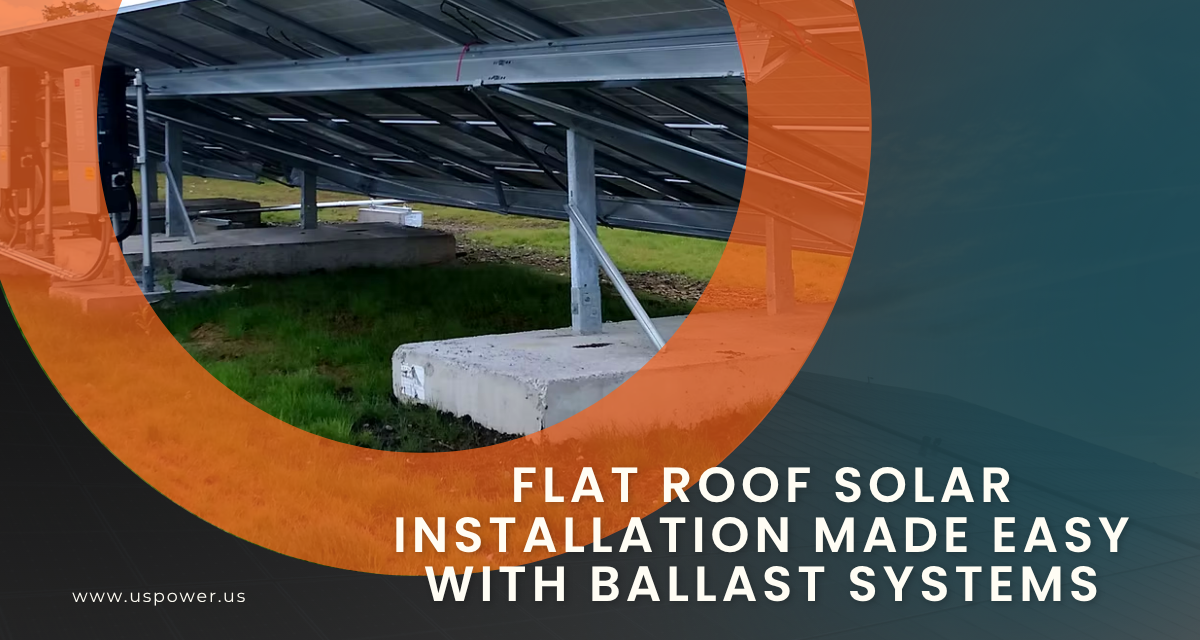
Flat Roof Solar Installation Made Easy with Ballast Systems
The 2025 guide to solar ballast systems for California flat roofs. Talk to an expert!








Copyright © 2025 US Power - Axia by QCells. All Rights Reserved.

Get an instant solar estimate using satellite!