




Maximize Solar Savings California: Self-Consumption Guide 2026

California utilities pay homeowners 50-70% less for solar power than they charge for grid electricity. Discover how self-consumption strategies help you keep more money in your pocket.
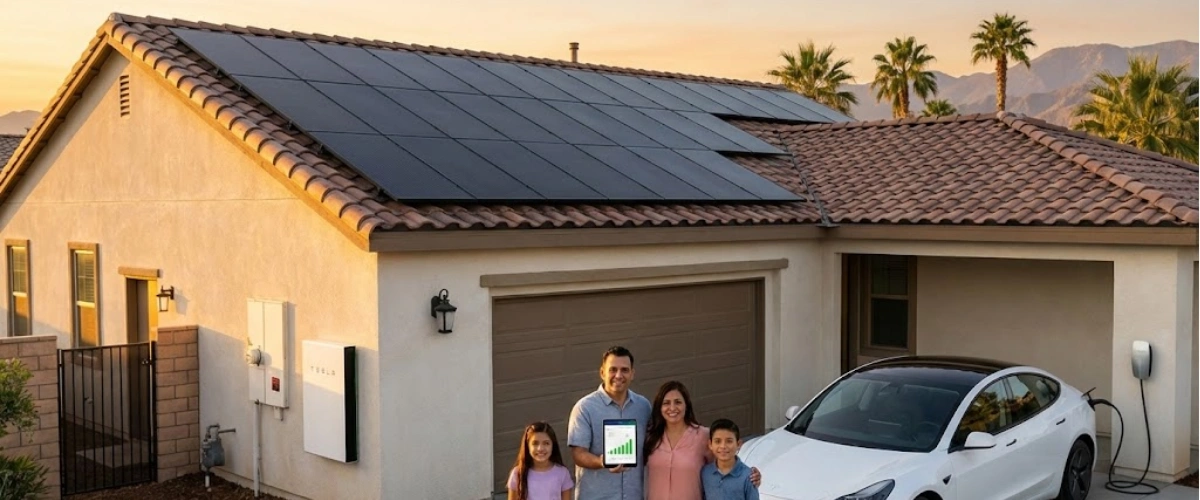
You installed solar panels to save money on electricity. But here's what most California homeowners don't realize: the power you produce is worth more to you than it is to your utility company.
SCE and PG&E pay you roughly 50-75% less for exported solar power than what they charge when you buy that same electricity back from the grid. Under NEM 3.0, some homeowners see buyback rates as low as $0.05 per kilowatt-hour while paying $0.35-$0.45 during peak hours. That's an 8x difference.
This means every kilowatt-hour you use directly from your solar panels saves you more money than selling it back to the grid ever could. The strategy isn't about producing more solar power. It's about consuming what you produce when you produce it. This shift in thinking is how smart California homeowners why are electricity bills so high in Southern California and actually keep their savings instead of handing them back to utilities.
How NEM 3.0 Changed the Solar Savings Game
California's NEM 3.0 billing changes fundamentally altered solar economics in 2023, and the effects are even more pronounced in 2026. If you're grandfathered into NEM 2.0, you still get decent buyback rates around $0.28-$0.35 per kWh. But new solar customers under NEM 3.0 face a harsh reality.
The NEM 3.0 Buyback Problem
NEM 3.0 introduced time-varying export rates that pay you based on when you send power to the grid, not how much you send. During peak solar production hours (10am-3pm), when your panels are cranking out the most power, the grid is flooded with solar energy. Supply and demand economics kick in hard.
Your buyback rate during these hours? Often $0.05-$0.08 per kWh. Meanwhile, when you need power most (5pm-9pm), you're buying it back at $0.45-$0.52 per kWh on time-of-use plans. The math is brutal, and utilities profit massively from this spread.
Why Self-Consumption Became Essential
This rate structure makes one thing crystal clear: keeping your solar power in your home is far more valuable than sending it to the grid. A kilowatt-hour that offsets a $0.45 grid purchase is worth 6-9 times more than selling that same kWh for $0.05-$0.08.
Smart homeowners recognized this shift immediately. The question became: how do you use solar power at night when panels aren't producing? The answer is battery storage, strategic appliance timing, or both.
Why Battery Storage Makes Self-Consumption Possible
Batteries changed everything for California solar economics. Instead of selling daytime solar production for pennies and buying evening power at premium rates, you store excess production and use it when rates spike.
The Reddit solar community put it perfectly: "It's cheaper to reduce than to recover." One homeowner shared their buyback rate was $0.057/kWh while grid delivery cost $0.11/kWh. That's a 2x difference. Their solution? Charge batteries during solar production hours, discharge during peak rate periods.
The Battery ROI Calculation
Here's the real math behind how solar batteries can maximize your savings. Let's say you produce 30 kWh daily but only use 15 kWh during daylight hours. Without batteries:
- You sell 15 kWh at $0.06 = $0.90 revenue
- You buy 15 kWh at $0.45 = $6.75 cost
- Net daily cost: $5.85
With a 15 kWh battery system:
- You store 15 kWh for evening use
- Zero grid purchases during peak hours
- Net daily cost: $0.00
- Daily savings: $5.85
That's $2,135 in annual savings just from strategic self-consumption. Battery systems typically cost $12,000-$18,000 installed, meaning payback periods of 6-8 years in high-rate areas like Los Angeles and Orange County.
For homeowners asking are batteries worth it for solar in California, the answer increasingly is yes, especially under NEM 3.0 rate structures.
Peak Hours Strategy: When to Use vs. Sell Solar Power
Understanding the best SCE rate plan for solar owners is critical for maximizing savings. SCE and PG&E structure rates to charge more when demand is highest. Your self-consumption strategy needs to align with these pricing windows.
Summer vs. Winter Peak Strategies
Summer peak hours typically run 4pm-9pm when air conditioning loads spike. Your solar panels produce heavily from 10am-4pm, right before peak pricing kicks in. The optimal strategy:
- Charge batteries during 10am-4pm solar production
- Run high-draw appliances (dishwasher, laundry, pool pump) during solar hours
- Discharge batteries 4pm-9pm to avoid $0.45+ grid rates
- Minimize grid usage during peak windows
Winter peak hours often shift to 4pm-9pm as well, but solar production drops significantly. California homeowners report using different tactics:
- Maximize battery charging on sunny winter days
- Run furnace blowers on battery power during peak evening hours
- Shift EV charging to midday when solar production is strongest
- Use programmable thermostats to pre-heat homes during solar production hours
One Reddit user in coal country shared charging batteries during the day and discharging at night to avoid peak delivery rates, saving substantially despite having lower overall electricity costs than California.
The Appliance Timing Game
Without batteries, self-consumption requires behavioral changes. Homeowners maximize savings by timing energy-intensive activities to solar production hours:
- Run dishwashers and washing machines between 11am-2pm
- Charge electric vehicles during peak solar hours (10am-3pm)
- Pre-cool homes to 68°F during solar production, letting temperatures drift to 74°F during peak rate hours
- Use delay functions on appliances to start at solar peak times
These strategies require more attention than batteries, but they're accessible to every solar homeowner regardless of budget.
5 Ways to Maximize Self-Consumption Without Batteries
Not every homeowner can afford a $15,000 battery system immediately. These tactics help you reduce your electricity bills quickly through better self-consumption practices:
1. Smart Thermostat Programming
Program your AC to aggressively cool during 10am-3pm when solar is abundant, then maintain (not cool further) during 4pm-9pm peak rates. This "thermal battery" approach can cut peak-hour grid usage by 40-60%.
2. EV Charging Schedule Optimization
If you drive an EV, charging during solar production hours is the single biggest self-consumption opportunity. A Tesla Model 3 Long Range uses about 50 kWh for a full charge. Charging from 11am-3pm using solar instead of overnight grid power saves $15-$22 per charge under NEM 3.0.
3. Pool Pump Timer Adjustment
Pool pumps draw 1.5-2.5 kW and often run 6-8 hours daily. Running them during 9am-3pm instead of overnight eliminates 12-20 kWh of peak-rate grid purchases monthly. Annual savings: $650-$900.
4. Water Heater Load Shifting
Electric water heaters can be set to heat during solar production hours using timer switches. Heat 50-80 gallons to maximum temperature during midday solar, then rely on insulation to maintain temperature through evening peak hours.
5. Appliance Delay Functions
Modern dishwashers and washing machines include delay-start features. Set them to run at 12pm-1pm (peak solar production) rather than evening hours. This captures 2-4 kWh daily of self-consumed solar.
These five strategies combined can boost self-consumption rates from 30-40% to 60-75% without battery investment.
US Power's Self-Consumption Solution: QCells + Battery
US Power designed solar-plus-storage systems specifically for California's NEM 3.0 reality. As the exclusive QCells partner in Southern California, we deliver American-made panels with factory-direct pricing that makes battery systems more accessible.
Why the QCells + Battery Combination Works
QCells panels consistently produce 15-20% above rated capacity in Southern California's climate. This overproduction is critical for battery-based self-consumption strategies. More daytime production means more stored energy for peak-hour usage.
Our 25-year comprehensive warranty covers panels, workmanship, and performance. Battery systems receive 10-15 year warranties depending on the model. This long-term protection ensures your self-consumption strategy delivers savings for decades.
Installation timelines run 3-6 weeks from approval to Permission to Operate (PTO). We handle all permitting, utility coordination, and system optimization. CSLB-licensed consultants design systems based on your actual usage patterns, not generic estimates.
Real Self-Consumption Results
A Pasadena homeowner with 8.5 kW QCells solar and 13.5 kWh battery storage reported their results: evening grid usage dropped from 25 kWh daily to 2-3 kWh. Monthly bills fell from $385 to $45-$65 (mostly grid connection fees). Annual savings exceeded $3,800.
An Orange County family optimized self-consumption without batteries initially, then added storage after one year. Self-consumption rate jumped from 65% to 94%. They now export almost nothing to the grid and buy minimal peak-rate power. Total energy costs: 75% lower than pre-solar.
For comprehensive guidance on system design and battery sizing, homeowners can explore everything you need to know about solar and battery storage to understand all available options.
Understanding Your Bill: Why Buyback Rates Are So Low
Many homeowners don't realize how much utilities profit from their solar exports until they learn how to read your SoCal electric bill for solar savings. The rate disparity isn't accidental. It's a deliberate pricing structure that benefits utilities at homeowner expense.
How Utilities Profit From Your Solar
When you export 1 kWh to the grid for $0.06, your utility immediately provides that power to your neighbor at $0.35-$0.45. They pay you 6-8 times less than retail rates despite using your infrastructure investment to generate the power.
A solar industry advocate on Reddit put it bluntly: "Power companies LOVE solar. They just don't love YOUR solar." Your excess production reduces their generation costs while they maintain full retail pricing to other customers. The profit margin on homeowner-exported solar is extraordinary.
This economic reality makes self-consumption the rational financial strategy. Every kWh you consume directly is worth 6-8 times more than selling it back.
Take Control of Your California Solar Investment
The utilities designed NEM 3.0 to reduce homeowner savings while increasing their own profits. But smart self-consumption strategies flip the script. By using the power you produce instead of selling it back at discounted rates, you keep the full value of your solar investment.
Battery storage makes this effortless, but even without batteries you can dramatically improve savings through strategic timing and load management. The key is understanding that your solar power is worth more to you than any utility will ever pay you for it.
US Power's 175+ five-star Google reviews consistently highlight our self-consumption system designs. CSLB-licensed consultants analyze your specific situation, rate plan, and usage patterns to maximize savings potential. Factory-direct QCells pricing and 25-year comprehensive warranties ensure long-term value.
Southern California electricity rates continue climbing. SCE and PG&E announced another rate increase for 2026. The gap between retail rates and buyback rates will only widen. Now is the time to optimize your solar strategy for self-consumption.
Frequently Asked Questions
Can I maximize savings without batteries under NEM 3.0?
How long does a battery system take to pay for itself?
What happens to my solar savings if I can't use all my production?
Do time-of-use rate plans actually save money with solar?
Is it better to export solar or run my AC harder during the day?


Top Benefits of Residential Solar Panel Installation
Solar panels cut energy bills, raise home value and support long-term sustainability.

Maximize Savings with the Best Angle for Solar Panels
Optimize your solar panel angle to capture maximum sunlight and solar savings.
Solar in Winter? Keep Saving This Winter with Solar Power
Save even in winter—Qcells and US Power make solar efficiency a year-round benefit.








Copyright © 2025 US Power - Axia by QCells. All Rights Reserved.

Get an instant solar estimate using satellite!