




Do Solar Panels Work During Power Outages? California Guide 2026

Most homeowners assume solar panels keep their lights on during outages. The reality is different and understanding why could save you thousands.
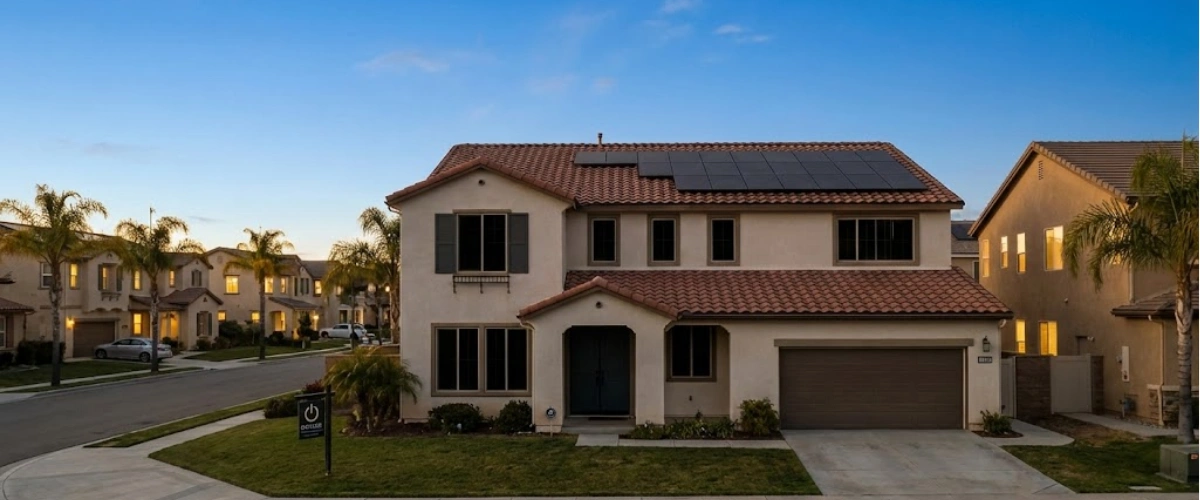
You've just invested in solar panels. The sun is shining, your system is humming, and then—the neighborhood loses power. You assume you're covered, right? Wrong. Your house goes dark just like everyone else's.
This scenario surprises thousands of California homeowners every year. It seems illogical that panels on your roof can't power your home during a sunny afternoon blackout. But there's a critical safety reason why standard grid-tied solar systems shut down during outages—and understanding this could change your entire solar strategy.
Why Most California Homeowners Misunderstand Solar Backup Power
The confusion is understandable. You see panels on your roof generating electricity, so naturally you think that power flows directly to your appliances. In reality, most residential solar systems are "grid-tied," which means they're designed to work in sync with your utility company's power grid.
The Grid-Tied System Reality
Grid-tied solar systems send excess electricity back to the utility grid when you're producing more than you're using. Under California's Net Energy Metering (NEM) policies, you receive credits for this exported power. During the day, your panels might generate 30 kWh while you only use 15 kWh—that extra 15 kWh goes to the grid, and you get credited on your bill.
This arrangement works perfectly when the grid is operational. But the moment SCE or PG&E loses power in your area, your solar system immediately shuts down. No exceptions.
The Safety Mechanism Behind the Shutdown
Your inverter—the device that converts DC power from your panels to AC power for your home—contains anti-islanding protection. This safety feature detects when the grid goes down and automatically disconnects your solar system within milliseconds.
Why? Because utility workers repairing downed power lines expect those lines to be dead. If your solar system kept feeding electricity back into the grid, it could electrocute someone working on the repairs. This isn't a design flaw—it's a critical safety requirement mandated by electrical codes.
How Grid-Tied Solar Systems Actually Work in 2026
Understanding how your system operates helps clarify why backup power requires additional equipment. California's solar landscape changed dramatically in April 2023 with NEM 3.0, making this knowledge even more critical.
Net Energy Metering 3.0 Changes Everything
Under the old NEM 2.0 rules, homeowners received full retail credit (around 30-35 cents per kWh) for excess solar energy sent to the grid. NEM 3.0 slashed those export rates by about 75%, dropping compensation to roughly 8-10 cents per kWh during most daylight hours.
This shift transformed battery storage from optional to essential. Instead of exporting cheap solar power for minimal credits, homeowners now store that energy in batteries and use it during evening peak hours when SCE charges 60-70 cents per kWh. This is where solar batteries can maximize your savings becomes crucial for maximizing your investment.
The Time-of-Use Rate Problem
SCE's TOU-D-4-9PM rate plan charges dramatically different prices based on when you use electricity:
- Off-peak (9 PM - 4 PM): 28-32 cents/kWh
- Peak (4 PM - 9 PM): 60-71 cents/kWh
Your panels generate most power between 10 AM and 3 PM when electricity is cheapest. Without storage, you're forced to export that power for pennies and buy it back at premium prices when you actually need it in the evening.
This is precisely why electricity bills are so high in Southern California have skyrocketed—and why solar-only systems no longer deliver the savings they once did.
Why Your Solar System Shuts Off During Blackouts (The Technical Explanation)
The anti-islanding protection in your inverter isn't just a suggestion—it's required by IEEE 1547 and UL 1741 standards. These regulations exist because "islanding" (when your solar system creates a standalone power grid) poses serious risks.
What Happens During Grid Failure
When the utility grid loses power, the voltage and frequency signals that your inverter uses to synchronize disappear. Within 2 seconds, your inverter detects this absence and triggers an immediate shutdown. Your panels are still generating DC electricity, but with the inverter offline, that power has nowhere to go.
Even on a beautiful sunny day, your home sits dark because the critical link between your panels and your appliances—the inverter—refuses to operate without the grid's signal.
The Misconception About "Direct Solar Power"
Some homeowners ask: "Why can't my panels just power my appliances directly during the day?" The answer involves both safety and practicality. Your solar panels produce DC electricity, but your home runs on AC. The inverter performs this conversion, but it needs a stable reference signal (the grid) to maintain proper voltage and frequency.
Without that reference, your voltage would fluctuate wildly every time a cloud passes or you turn on an appliance. Your refrigerator, HVAC system, and electronics aren't designed to handle these fluctuations—you'd likely damage expensive equipment within hours.
For comprehensive details on how solar and storage systems work together to solve this problem, check out everything you need to know about solar and battery storage.
What You Actually Need for Backup Power During Outages
If you want your solar panels to keep your home running during a blackout, you need additional equipment beyond a standard grid-tied system. The two main options are battery storage systems or portable generators.
Option 1: Solar + Battery Storage System
A battery backup system solves the outage problem by creating a controlled "island" that can operate independently from the grid. Here's what's required:
Battery Bank: One or more batteries (typically 10-15 kWh each) store excess solar energy during the day. Popular options include Tesla Powerwall, QCells Q.HOME CORE, and Enphase IQ batteries.
Hybrid or Battery-Ready Inverter: This specialized inverter can operate in grid-tied mode during normal conditions and automatically switch to backup mode during outages. It creates the stable voltage and frequency signals needed to power your home.
Automatic Transfer Switch: This device instantly disconnects your home from the grid when power fails and routes power from your battery instead. The switchover happens so fast (typically under 1 second) that you might not even notice the lights flickered.
Backup Loads Panel: Some systems use a separate sub-panel for critical loads you want powered during outages—like refrigerators, internet routers, and medical equipment. Others provide whole-home backup depending on battery capacity.
The real question most homeowners face is whether this investment makes financial sense. That's where are batteries worth it for solar in California comes into play, analyzing California-specific factors like SGIP rebates and NEM 3.0 economics.
Option 2: Portable or Standby Generator
Generators offer a lower upfront cost for occasional outage protection. A quality 7,500-watt portable generator costs $1,000-$2,500, while a professionally installed standby generator runs $5,000-$8,000.
Advantages:
- Significantly cheaper than battery systems
- Can run for days as long as you have fuel
- Independent of solar panel production
- Proven technology with minimal complexity
Disadvantages:
- Requires fuel storage and management
- Creates noise and emissions
- Manual setup for portable units
- Doesn't help with peak TOU rate arbitrage
- No integration with solar system for daily savings
For a detailed breakdown of which solution fits your situation, review which backup power option is right for you that compares costs, benefits, and use cases.
The Real Cost of Battery Backup in Southern California (2026 Numbers)
Let's address the elephant in the room: batteries are expensive. But California-specific incentives significantly reduce the actual cost.
Base System Costs
A typical solar + battery setup for a Southern California home includes:
- Solar panels (8-12 kW system): $18,000-$26,000
- Battery storage (2 units): $16,000-$22,000
- Installation and permitting: $3,000-$5,000
- Total before incentives: $37,000-$53,000
These numbers might seem high, but they don't tell the complete story.
California Incentives That Reduce Your Cost
SGIP Battery Rebates: California's Self-Generation Incentive Program offers $150-$1,100 per kWh of storage capacity depending on your income and location. A standard 26 kWh system (two batteries) could qualify for $3,900-$28,600 in rebates.
For specific details on qualifying and applying, see our guide to California SGIP rebates for home batteries.
2026 Tax Credit Update: The 30% federal residential tax credit expired December 31, 2025 for customer-owned systems. However, third-party owned systems (leases and PPAs) still qualify for business tax credits through 2027, with that savings passed to homeowners through lower monthly payments.
Utility Rate Savings: Under NEM 3.0, avoiding peak rates (60-70 cents/kWh) by using stored solar energy saves the average household $150-$220 monthly—around $1,800-$2,640 annually.
Realistic Payback Timeline
With SGIP rebates and utility savings factored in, most Southern California homeowners see payback periods of 7-10 years on solar + battery systems. Given that these systems last 25+ years with proper maintenance, that leaves 15-18 years of pure savings.
How US Power Solves the Backup Power Challenge
At US Power, we've installed hundreds of solar + battery systems across Los Angeles, Orange County, Ventura, San Bernardino, and Riverside. Our approach addresses the exact concerns raised by homeowners confused about backup power.
American-Made QCells Panels + Integrated Storage
We exclusively install QCells solar panels manufactured in Georgia with Q.HOME CORE battery integration. This single-manufacturer approach eliminates the compatibility issues that plague mixed-brand systems. Your panels, batteries, inverters, and monitoring all work seamlessly together with one comprehensive 25-year warranty.
Transparent Backup Capacity Planning
During your free consultation, our CSLB-licensed experts calculate your specific backup needs:
- Which appliances must stay powered during outages
- How long you need backup power (hours vs. days)
- Whether whole-home or partial-home backup makes sense
- Actual costs after SGIP rebates and available incentives
We never oversell batteries you don't need. If your area rarely loses power and you primarily want NEM 3.0 savings, we'll design accordingly. If you need multi-day wildfire season backup, we'll size the system appropriately.
Fast Installation Timeline
Our streamlined permitting process and factory-direct supply chain means we typically complete installations in 3-6 weeks from approval. We handle all utility coordination, SGIP paperwork, and final inspections—you don't chase paperwork or wait months for approval.
Factory-Direct Pricing Without Hidden Fees
Because we're QCells' exclusive California partner, we eliminate distributor markups. Our pricing is typically 15-20% below comparable systems from national installers, and we never surprise you with hidden fees at interconnection.
Making the Right Decision for Your Southern California Home
Choosing between solar-only, solar + battery, or adding a generator depends on your specific situation. Consider these factors:
When Battery Backup Makes Most Sense
You're a strong battery candidate if:
- Your area experiences frequent or prolonged outages
- You're in a high fire risk zone with regular PSPS events
- You want to maximize savings under NEM 3.0
- You need medical equipment that requires constant power
- Your monthly SCE/PG&E bill exceeds $250
- You're installing new solar (not retrofitting existing)
When Generators Might Be Better
Generators make more sense if:
- You experience outages less than 3-4 times per year
- Outages in your area are brief (under 4 hours)
- Upfront cost is your primary concern
- You have space for fuel storage and don't mind noise
- You're not concerned about TOU rate arbitrage
The Hybrid Approach
Some homeowners install batteries for daily TOU savings and backup power for short outages, then keep a portable generator as additional insurance for multi-day emergencies. This provides redundancy at a reasonable total cost.
For detailed guidance on sizing your system correctly, explore how long can a solar battery power a house which explains backup duration calculations.
Your Next Steps: Getting Backup-Ready Solar in Southern California
Understanding that standard solar panels don't work during outages is just the first step. The real question is whether investing in backup capability makes financial sense for your specific situation.
Here's what we recommend:
Calculate Your Outage Risk: Review your area's outage history through SCE or PG&E's website. If you're in a high fire risk zone or experience frequent outages, backup power isn't optional—it's essential.
Analyze Your Current Bills: Look at your TOU charges during peak hours. If you're consistently paying 60+ cents/kWh between 4-9 PM, batteries will slash these costs regardless of outage frequency.
Factor in Available Incentives: SGIP rebates are first-come, first-served and decrease as more homeowners claim them. Getting quotes now locks in higher rebate amounts that might not be available in 6-12 months.
Compare Total System Costs: Get multiple quotes for solar-only, solar + battery, and retrofit battery options. Many homeowners are surprised that adding batteries to a new solar installation costs less than retrofitting them later.
Consider Your Long-Term Plans: If you're planning to stay in your home for 10+ years, the long-term savings from solar + battery systems dramatically outweigh the higher upfront cost. If you might move in 2-3 years, factor in how solar increases home values in California.
Before you make any decisions, make sure you understand things you must know before going solar in California to avoid costly mistakes.
At US Power, we provide free consultations with no pressure sales tactics. Our CSLB-licensed consultants will analyze your actual usage, explain your options clearly, and provide transparent pricing with no hidden fees. We've earned 180+ five-star Google reviews by treating homeowners with respect and delivering what we promise.
Southern California's electricity rates aren't going down. Outages from wildfires and grid stress aren't decreasing. And SGIP rebates won't last forever. The homeowners who act now secure the best economics while ensuring their families stay safe and comfortable during the next blackout.
Your panels are ready to keep the lights on—they just need the right equipment to do it safely and legally.
Frequently Asked Questions
Do I Need Batteries If I Just Want to Save Money on My Electric Bill?
How Long Will My Battery Last During an Outage?
Can I Add Batteries to My Existing Solar System?
What Happens to My Solar System During Nighttime Outages?
Are There Alternatives to Expensive Whole-Home Batteries?


Can You Use Qcells Solar Panels with Non-Qcells Batteries?
Find out which inverters and batteries will work best with Qcells solar panels.
Things You MUST KNOW Before Going Solar in California
California rules, incentives, and savings make solar a smart move for homeowners.

How Big Are Solar Panels? What You Should Know
Understand solar panel sizes and how they fit different California rooftops.








Copyright © 2025 US Power - Axia by QCells. All Rights Reserved.

Get an instant solar estimate using satellite!